Character Creation and Roles
Build a human using Core Rules, Character Creation. Substitute an Origin for Background and a Role for Career. Record Standing, Name and your Stake in Exodus, labeled in AD 1600 coin (Era Rules, Money and Stakes). Farmers, ronin and retainers use the same numbers; their property, obligations and access differ. Use Attitude to determine how each audience receives you (Era Rules, Name and Allegiance).
Creating a Character
Replaces Backgrounds and Careers with Origins and Roles (Core Rules, Character Creation). Modifies Core Rules, Character Creation, Starting Talent, to allow a free Era talent; the cost of a school talent (Schools of the Sword and Fist, How a School Works); and Languages and Literacy (Letters and Tongues). Use every other Core number as printed.
-
Species. Human.
-
Characteristics. Set each of the six to 2. You may raise one by 1 and lower another by 1 for free. Keep every rating between 1 and 4 at creation.
-
Origin and Role. Pick one of each. Your Origin sets your Standing, your starting Name and your natural ties, gives four profession skills and a Strength, and says whether you read. Your Role gives six profession skills, a place in society, a kit, a Stake and favored talents. Count a skill on both lists once; a build has 7 to 10 profession skills. The Role's Open to line names the Origins and the sex that may take it.
-
Spend 110 XP at the costs below on characteristics, skill ranks and talents. Cap every skill at rank 2. Buy only Tier 1 and Tier 2 talents.
-
Free talent. Take one Core or Era Tier 1 talent free, usually from the ones your Role favors. A school talent is never the free talent.
-
Kit, Stake and derived values. Record your Role's kit at no cost and the Stake your Role names (Era Rules, Money and Stakes: Hand-to-Mouth 20, Wage 60, Stipend 200 or House 1,000 Exodus). Check each kit weapon's Cumbersome rating against your Might: a wielder below the rating adds Bane Dice equal to the shortfall, and the Pike, the Glaive and the Yumi are Cumbersome 3 (Gear and Prices, The Essential Gear Table). Use the Core Rules for Resistance, Wound Points, Strain Points, Defenses and Initiative.
-
Name and details. Choose a name (Names), an age, a look and a motive. Write two ties, one to another player character and one to the world, and open a ledger for each Allegiance your Origin's natural ties give you (Era Rules, Name and Allegiance). If you have a lord, name his house and its side (The Realm in 1600).
The Banners
- 身分 mibun (MEE-boon): social standing, the station a person is born to or earns.
- 役目 yakume (yah-KOO-meh): duty, a role, the task a station carries.
- 道 michi (MEE-chee): the way, a path in life or in an art.
CREATION COSTS
| Item | Cost or limit |
|---|---|
| Starting XP | 110; unspent XP carries forward |
| Raising a characteristic | to 2: 20 XP; to 3: 30 XP; to 4: 40 XP; one rating at a time |
| Profession skill, rank 1 / rank 2 | 5 XP / 10 XP |
| Other skill, rank 1 / rank 2 | 10 XP / 15 XP |
| Skill cap at creation | rank 2, with no exception |
| Core or Era talent | Tier 1: 5 XP; Tier 2: 10 XP; Tier 3 and above: not at creation |
| School talent, Tier 1 | 20 XP for the first in a tree, 10 XP for each other (Schools of the Sword and Fist) |
| School talent, Tier 2 | 30 XP for the first in a tree, 20 XP for each other; needs two Tier 1 talents of that tree |
| Free talent | one Core or Era Tier 1 talent; never a school talent |
School talents cost more than Core talents (Schools of the Sword and Fist, How a School Works). Buy Common Forms through a school that teaches them. You may study two schools; Studying Two Schools in that chapter explains the second tree's first purchase and how a Common Form shared by both counts.
Let favored talents guide your free choice and early purchases; purchases cost the usual XP. Growth and Greater Growth remain unavailable (Core default).
EXAMPLE: THE SEVEN STEPS FOR HIRANO
Begin with a human (step 1). Hirano starts at 2 in all six characteristics, then raises Might to 3 and lowers Intellect to 1 for free (step 2). Choose Samurai retainer and Mounted Retainer (step 3), spend 110 XP (step 4) and take Lord's Man free (step 5). Record the Mounted Retainer's kit and a Stipend Stake of 200 Exodus, one ryo (step 6). Give him a warrior's two names, Hirano Heita Masatsugu, name his lord's house and its side, and open its ledger (step 7). See Worked Examples for the full build.
Standing, Name and Stake
Record three measures: Standing and Name come from your Origin, Stake from your Role.
-
Standing is legal station: Warrior House, Samurai, Foot Soldier, Ronin, Priest, Townsman, Villager or Outcast. Take the Standing your Origin gives (Era Rules, Name and Allegiance, Standing).
-
Name is public reputation, 0 to 5. Start at your Standing's value and keep its cap (Era Rules, Name and Allegiance, Name).
-
Stake is your cash at the start: spending money for the road, a bribe, a night at an inn. Take the Stake your Role names (Era Rules, Money and Stakes, Stakes).
TERMS: ORIGIN AND ROLE
I Origin sets Standing and Name. Keep both when choosing a Role, except in III and IV. A Role's usual Standing applies only if your Origin grants it.
II Role sets the Stake. Use its listed Stake regardless of Standing. Entries listing two explain which applies.
III A lord's pay. While paid by a lord, a Villager or Townsman becomes a Foot Soldier, starting Name 1, cap 3. This includes Ashigaru Spearman and Ashigaru Gunner and Archer, plus Scout, Shinobi Agent or Wrestler characters who declare a lord's retainer at creation. Paid Ronin, Priests and Outcasts retain their Standing.
IV Warrior House. A house head with retainers, or a lord's son, daughter or heir, takes Warrior House Standing and House Stake with creation Debt (Era Rules, Money and Stakes, Stakes II). Require Samurai retainer Origin, Mounted Retainer or Foot Retainer and Household Officer Role, and GM agreement. Allow at most one at the table.
EXAMPLE: THREE CROSS PAIRINGS
An Outcast Wrestler. His Origin makes him an Outcast: Name 0, cap 1. The Wrestler's line gives the Hand-to-Mouth Stake, 20 Exodus. If a lord retains him he takes the Wage Stake, 60 Exodus, and is still an Outcast; only the GM's ruling on a named case raises an Outcast's Standing (Era Rules, Name and Allegiance, Standing II).
A Farmer peddler. His Origin makes him a Villager: Name 0, cap 2. Peddler, Shopkeeper and Innkeeper gives Wage, so his Stake is 60 Exodus and his credit limit 120. The market towns treat him as a Villager who sells, not as a Townsman.
A Merchant sailor. His Origin makes him a Townsman: Name 1, cap 4. Sailor, Boatman and Fisher gives Hand-to-Mouth, 20 Exodus, or Wage, 60 Exodus, if he is a shipmaster's mate. His tie is still his house.
Letters and Tongues
Everyone speaks Japanese. Warriors, village headmen, merchant houses and Zen monks supply much of AD 1600's literacy; temple schools teach some commoners, and the wide Edo-period network of commoner schools lies ahead. The lettered Origins read and write Japanese: Samurai retainer, Ronin (a former retainer, not a man risen from the ranks), Sohei or temple fighter, Priest or nun, Merchant, Physician, Interpreter and Christian taught at the mission. Any other Origin pays 5 XP for letters (Skills and Talents, Letters and Tongues I). This might represent a headman's son, a Shinobi whose league family signed pledges, a Craftsman keeping his master's book or an Entertainer learning chants or Noh texts. The Interpreter Origin or Interpreter and Go-Between Role grants one free foreign tongue at creation: Portuguese, Chinese or Korean. The Interpreter Origin includes its script; a mission-taught Christian reads the mission press's Roman letters. See Skills and Talents, Letters and Tongues, for further purchases.
Any Role, Any Origin, Within the Custom
Select an Origin, then a Role whose Open to line permits your Origin and sex. The GM may allow an exception for a named character. Musters, companies, priesthood, wrestling and interpreter posts are men's; nuns, shrine maidens, courtesans and blind singers are women's; other Roles accept either. Retainers' wives and daughters manage accounts, letters and defense while the men serve (Foot Retainer and Household Officer). Tachibana Ginchiyo's father named her house head about 1575; her husband fought for the West at Otsu's siege in 1600.
Choose ties from your Origin without needing a lord. The party may serve one house, consist entirely of townspeople or travel as free agents until the Sekigahara Clock forces a choice (Era Rules, The Sekigahara Clock). Practice still blurs the warrior-farmer distinction: the 1591 edict requires men to keep their registered station, but many cross it.
Origins
Replaces the Background (Core Rules, Character Creation, Backgrounds and Careers). Choose the station you were born to or hold. The Origin grants four profession skills, a Standing, natural ties and a Strength. In most Origins two of the four are skills the Origin's own Role does not list, so a character who stays in the station of birth has seven or eight profession skills. To use a Strength, add 1 Boon Die to one check with either listed skill in the named setting, once per session. Ties are the Allegiances a character of this Origin usually has at the start (Era Rules, Name and Allegiance); open a ledger for each you take, or take none.
| Origin | Standing | Profession skills | Natural ties | Strength: once per session |
|---|---|---|---|---|
| Samurai retainer | Samurai | Melee, Riding, Leadership, Lore | Lord | In your lord's castle town, his hall and his muster: Leadership or Lore |
| Ronin | Ronin | Survival, Streetwise, Athletics, Negotiation | None, or a former lord's house | On the road, in dojo yards and wine shops, among masterless men: Streetwise or Survival |
| Ashigaru foot soldier | Foot Soldier | Fortitude, Athletics, Streetwise, Craft | Lord, through the captain | In camp, on the march and in the ranks: Fortitude or Athletics |
| Farmer | Villager | Survival, Craft, Melee, Operate | Village | In the villages, fields and markets of your home province: Survival or Craft |
| Sohei or temple fighter | Priest | Melee, Lore, Intimidation, Survival | Temple | In the temples of your sect and on pilgrim roads: Melee or Lore |
| Priest or nun | Priest | Lore, Charm, Craft, Survival | Temple | At a temple or shrine, a sickbed or a funeral: Lore or Charm |
| Merchant | Townsman | Negotiation, Streetwise, Operate, Craft | House | In the counting rooms of Sakai, Osaka, Kyoto, Hakata and Nagasaki: Negotiation or Streetwise |
| Craftsman | Townsman | Craft, Negotiation, Athletics, Streetwise | Master, or a house | In a workshop, an armory or a market of your trade: Craft or Negotiation |
| Entertainer | Townsman | Charm, Deception, Athletics, Lore | A troupe or the quarter's house, or none | Before an audience, at a festival or in the quarter: Charm or Deception |
| Physician | Townsman | Medicine, Charm, Survival, Negotiation | Master, or a lord's household | In a sickroom or a camp of the wounded: Medicine or Charm |
| Shinobi (Village League) | Villager; Foot Soldier in a lord's pay | Stealth, Deception, Survival, Melee | Village (the league), or a lord | In Iga and Koka, among hired irregulars and on the roads between: Stealth or Deception |
| Interpreter | Townsman | Lore, Negotiation, Science, Medicine | House (the mission or a trading house) | Among the Portuguese, the padres and the Nagasaki officials: Lore or Negotiation |
| Outcast | Outcast | Streetwise, Perception, Athletics, Charm | Village (the settlement and its head) | In the riverbed settlements, tanneries and execution grounds, and among people of standing who do not look at you: Streetwise or Perception |
| Christian | Townsman or Villager, as your family's station | Lore, Charm, Negotiation, Medicine | Church (a temple ledger: the mission and its confraternity) | Among Christians, their confraternities and churches: Charm or Lore |
The Fourteen Origins in AD 1600
Samurai retainer
Standing Samurai · Ties Lord · Lettered
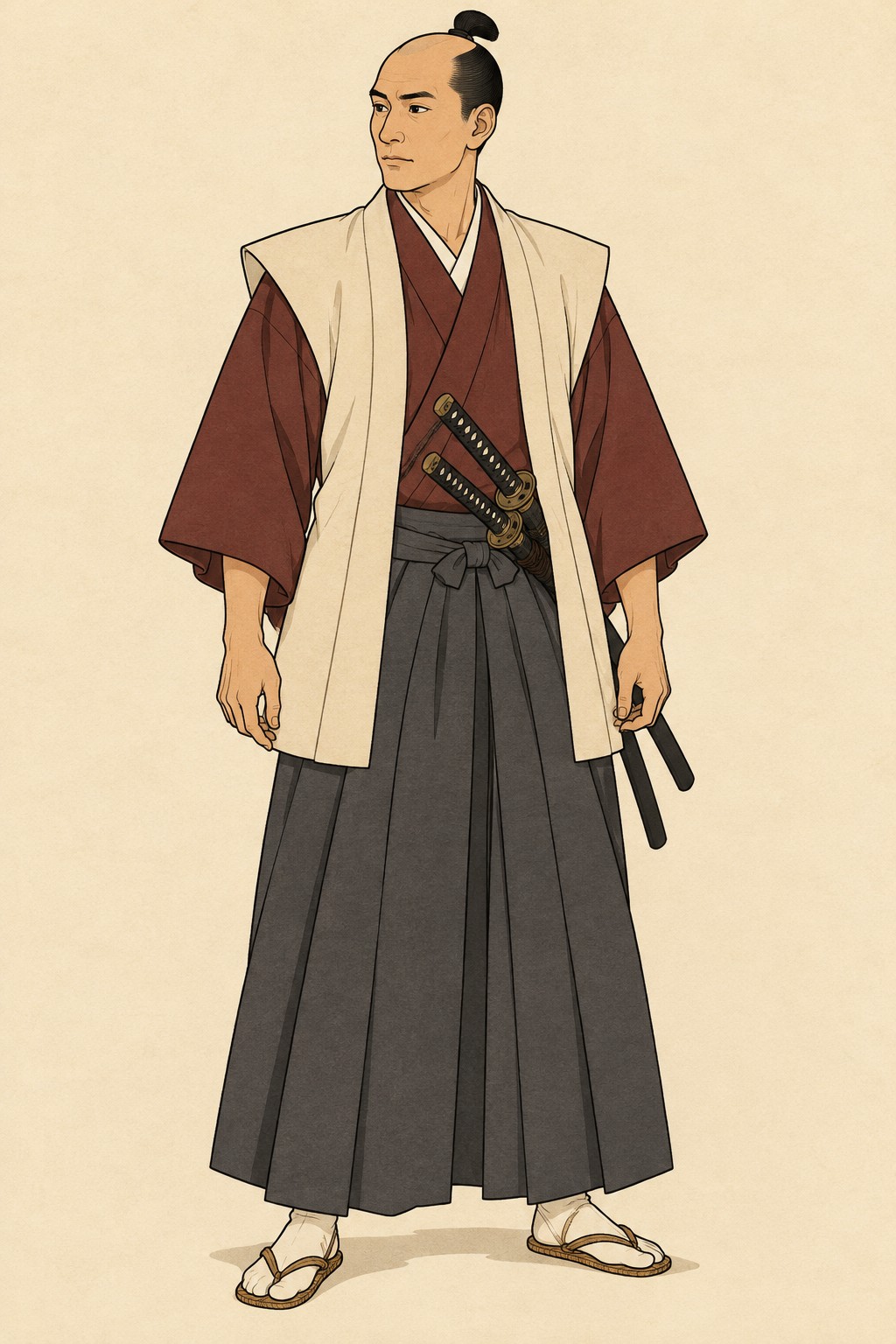

A lord's mounted retainer, or his wife, son or daughter. His fief or rice stipend is counted in koku and supports followers he brings to the muster (Era Rules, Money and Stakes, Stipends). These are GM characters (Adversaries), present at musters and otherwise on the fief. For hired men, see Gear and Prices, Hirelings and Pay. In 1600 samurai means this mid-ranking mounted retainer, rather than every fighting man. He wears a shaved crown and topknot; she ties her long hair at the nape and retains her birth family's name.
Ronin
Standing Ronin · Ties None, or a former lord's house · Lettered as a former retainer

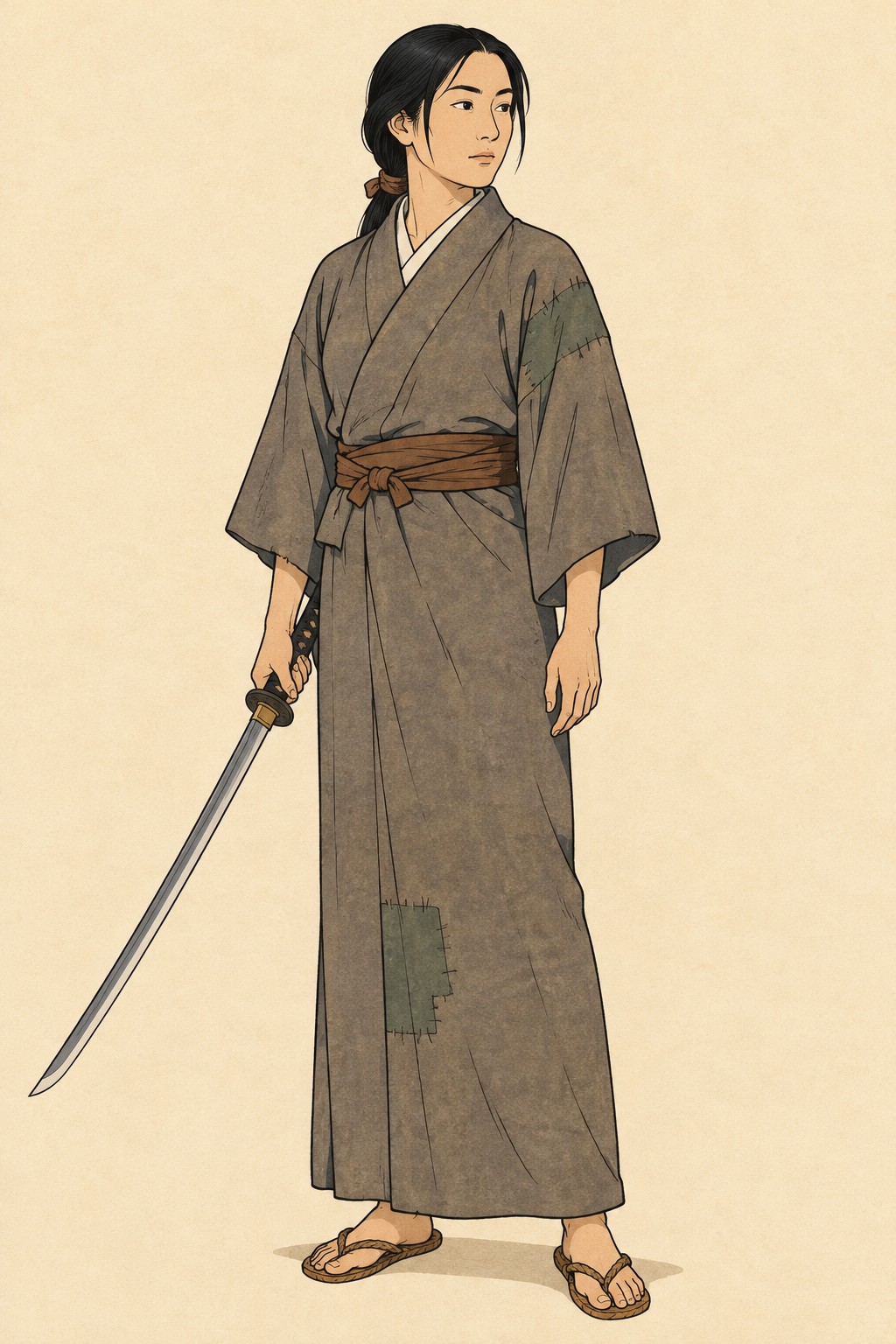
Dismissal or a house's fall leaves a warrior without a lord. A ronin lives by hired work, bouts and travel, keeping his two swords and either regrowing his crown or shaving it. After Sekigahara, former men of the Western houses crowd the roads. Women of fallen houses share this Standing and life. Campaigns hire ronin as swordsmen, spearmen or gunners.
Ashigaru foot soldier
Standing Foot Soldier · Ties Lord, through the captain · Not lettered

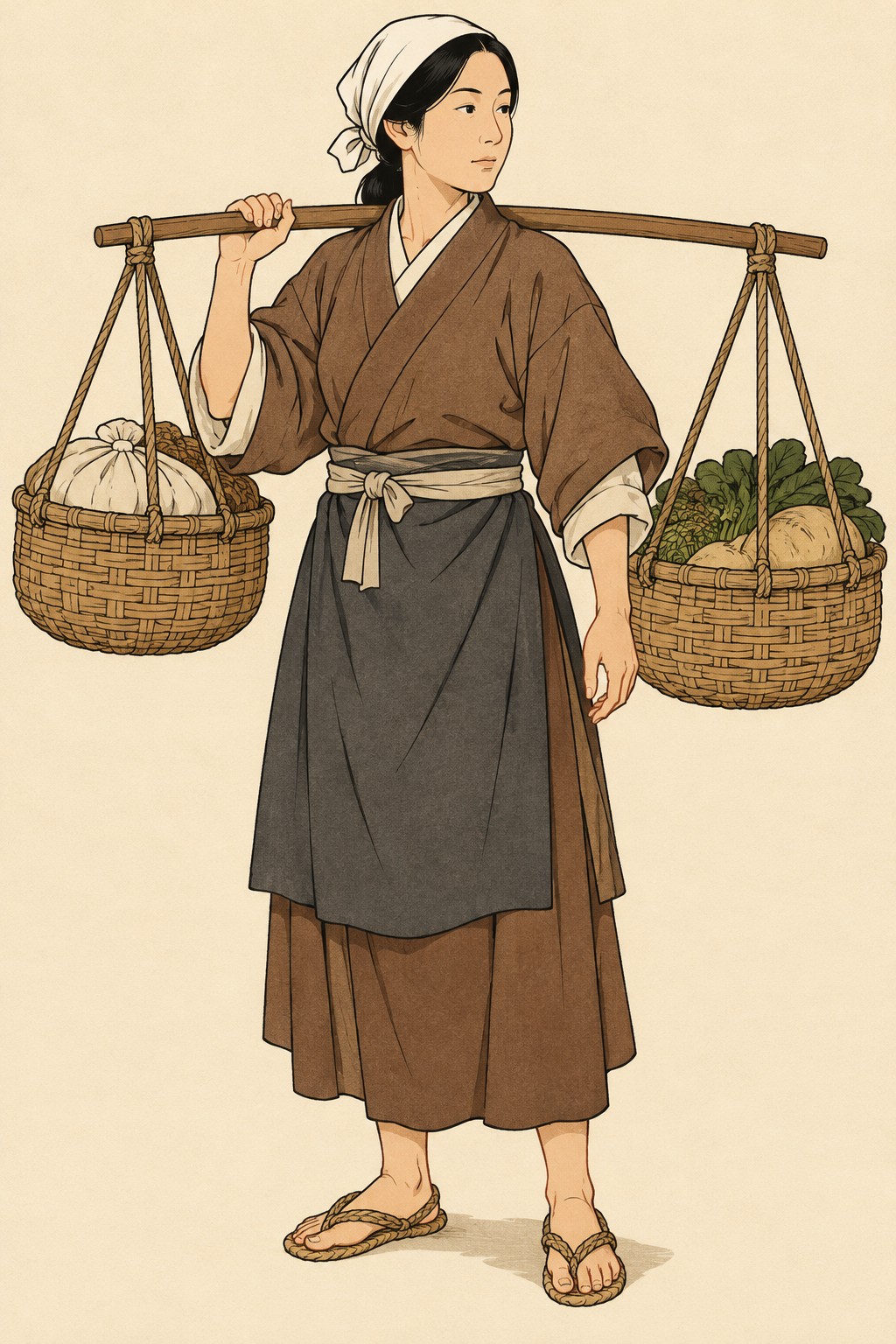
Spear, bow and matchlock companies form most armies. Their captains command campaign hires, men kept on a lord's roll and some farmers levied through the village. An ashigaru receives a man's ration and borrowed armor and pike or gun. Women of this Origin carry, cook, sell and nurse in camp, knowing the companies as well as a file leader (Peddler, Shopkeeper and Innkeeper; Scout, Irregular and Bandit).
Farmer
Standing Villager · Ties Village · Not lettered

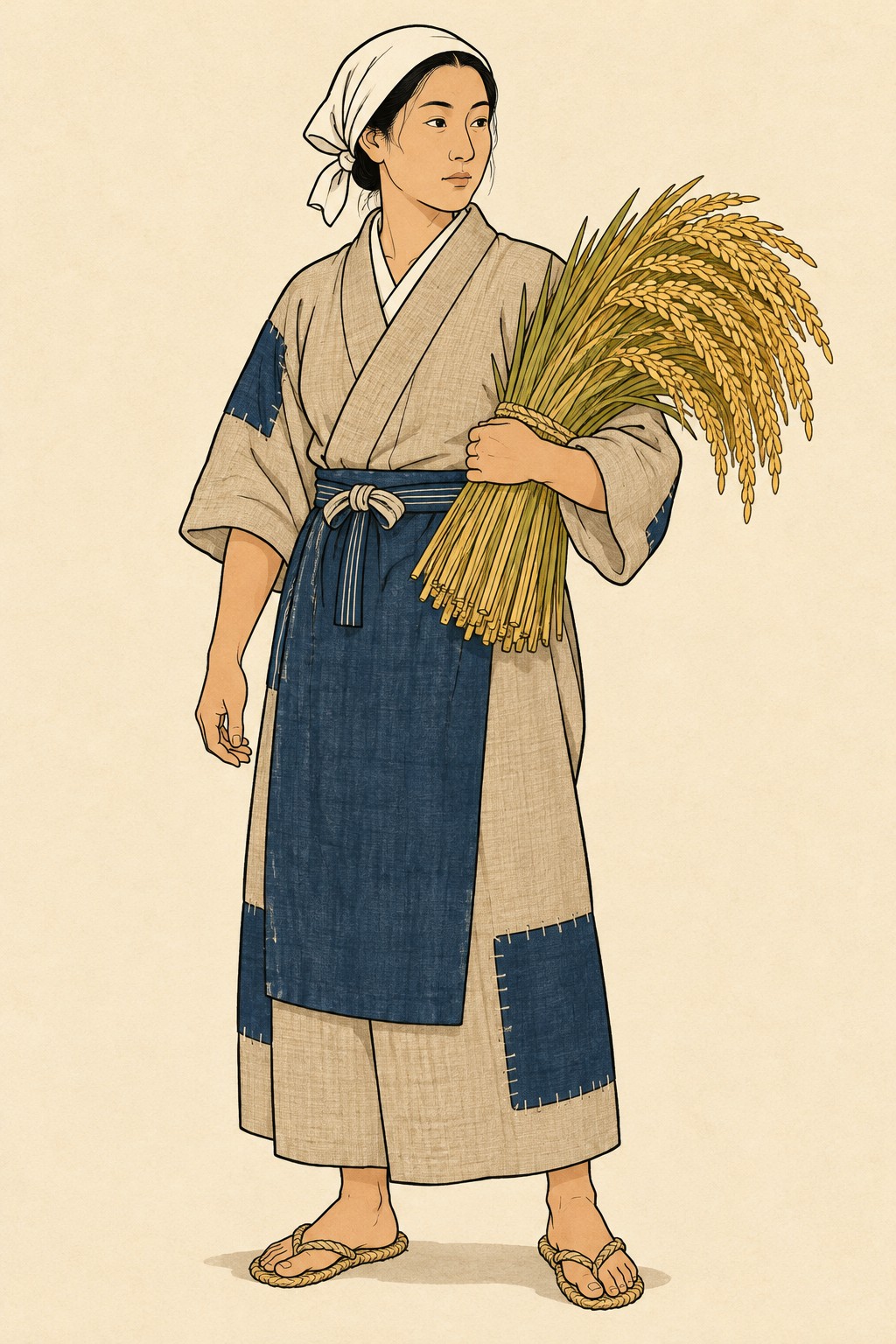
Hideyoshi's survey records the cultivator's name and yield, and the village answers collectively for the lord's tax. His rule assigns two parts of the crop to the lord and one to the farmer, though rates vary. Many farmers in 1600 fought a generation ago and keep a spear in the roof (Era Rules, Law and Justice, Who bears arms). Women cultivate, raise silkworms and weave.
Sohei or temple fighter
Standing Priest · Ties Temple · Lettered

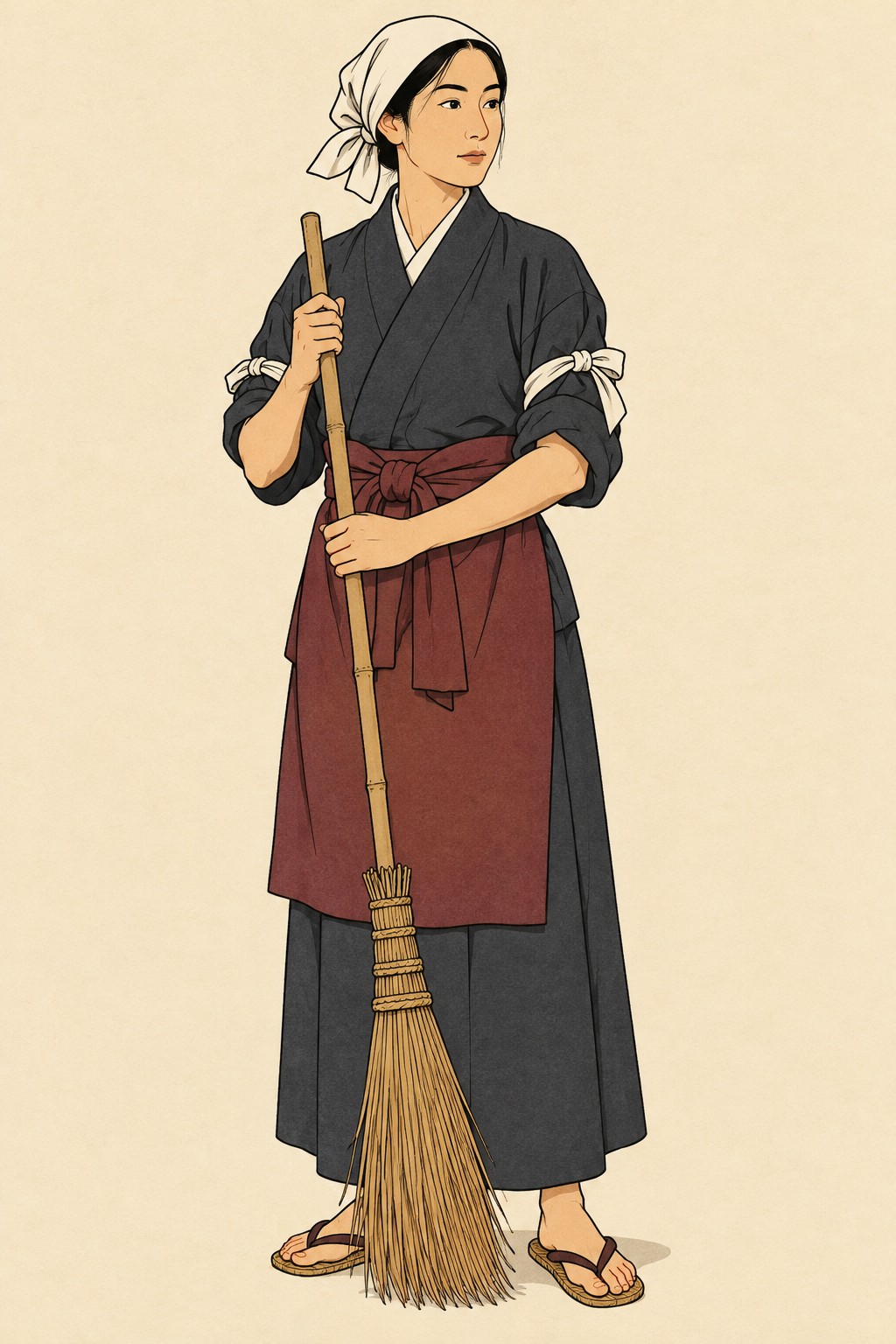
Temple armsmen include guards, an abbot's retainers and monks drilled with the naginata. The great temple armies have fallen: Hiei burned in 1571, Hongan-ji surrendered in 1580 and Negoro burned in 1585. Guards remain at Koyasan and the Nara temples; lords employ former temple gunners. The period terms are shuto, daishu and akuso; sohei comes later. Women of this Origin serve a temple or keep its gate as nuns (Priest, Nun and Shrine Attendant).
Priest or nun
Standing Priest · Ties Temple · Lettered
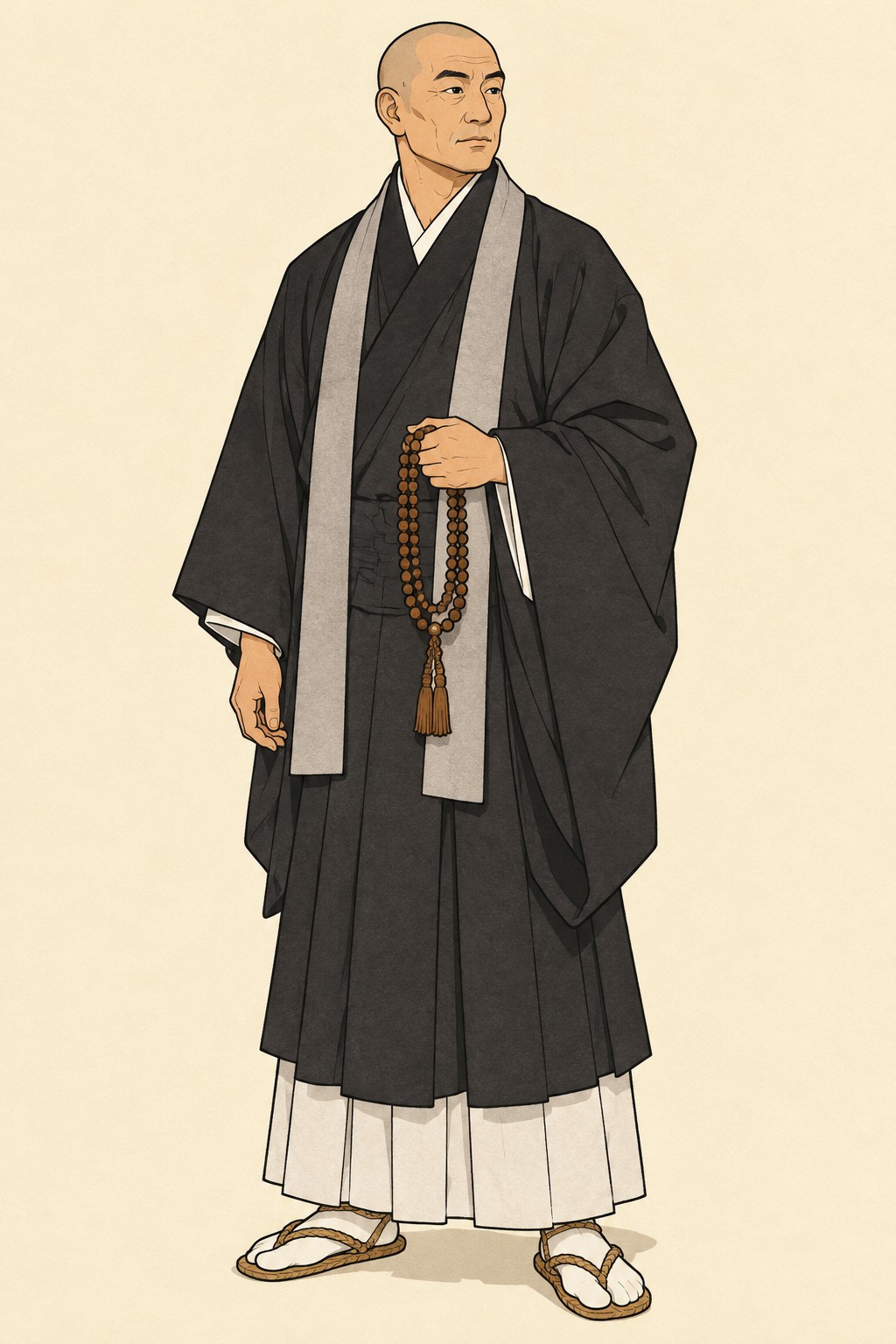
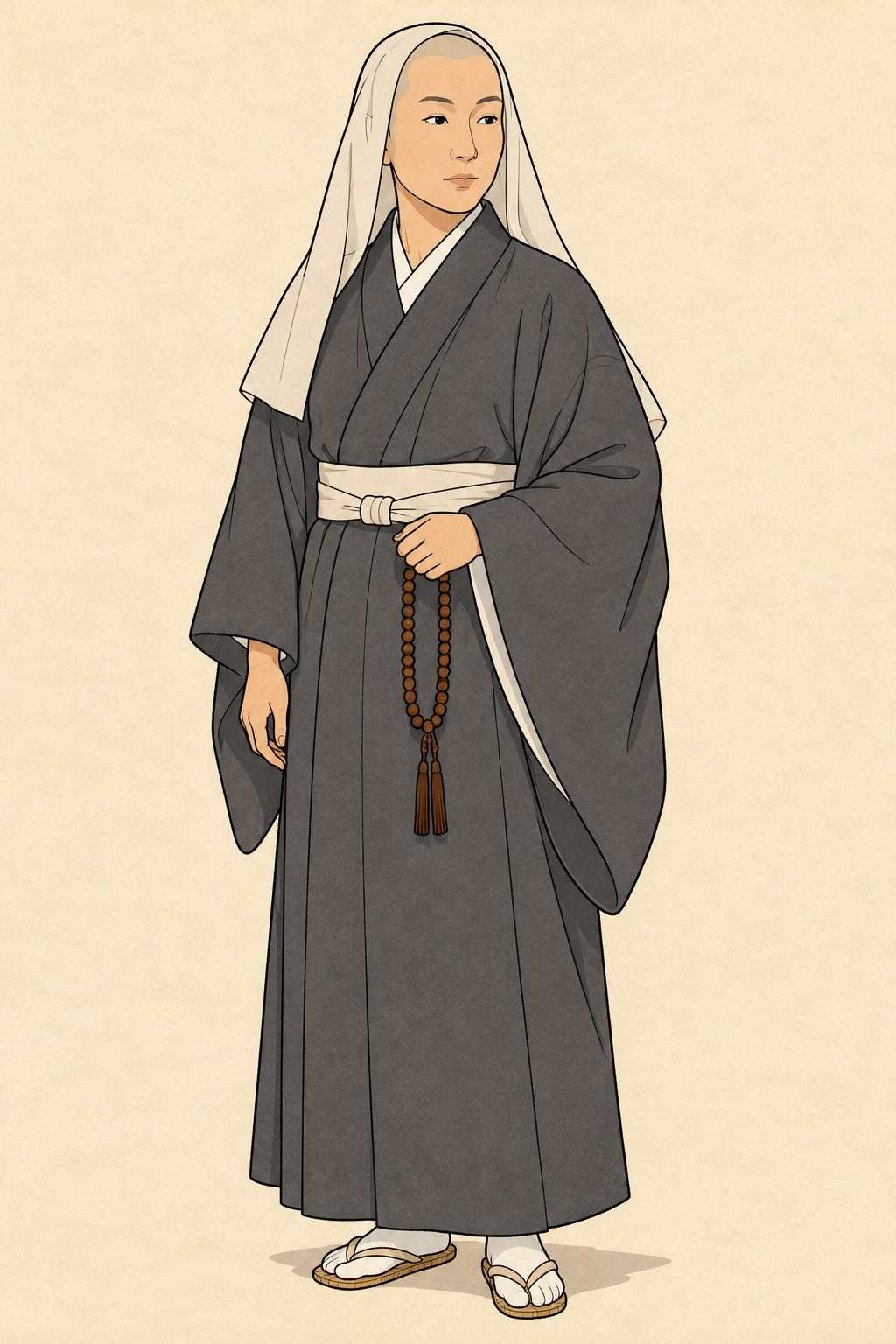
This Origin includes Buddhist priests of any sect, shrine priests licensed by the Yoshida house, shrine maidens (miko), nuns and widows who took vows. Literate Zen monks act as lords' scribes, envoys and tutors. A nun might be a lady who shaved her head on widowhood or a traveling Kumano nun selling prayers.
Merchant
Standing Townsman · Ties House · Lettered

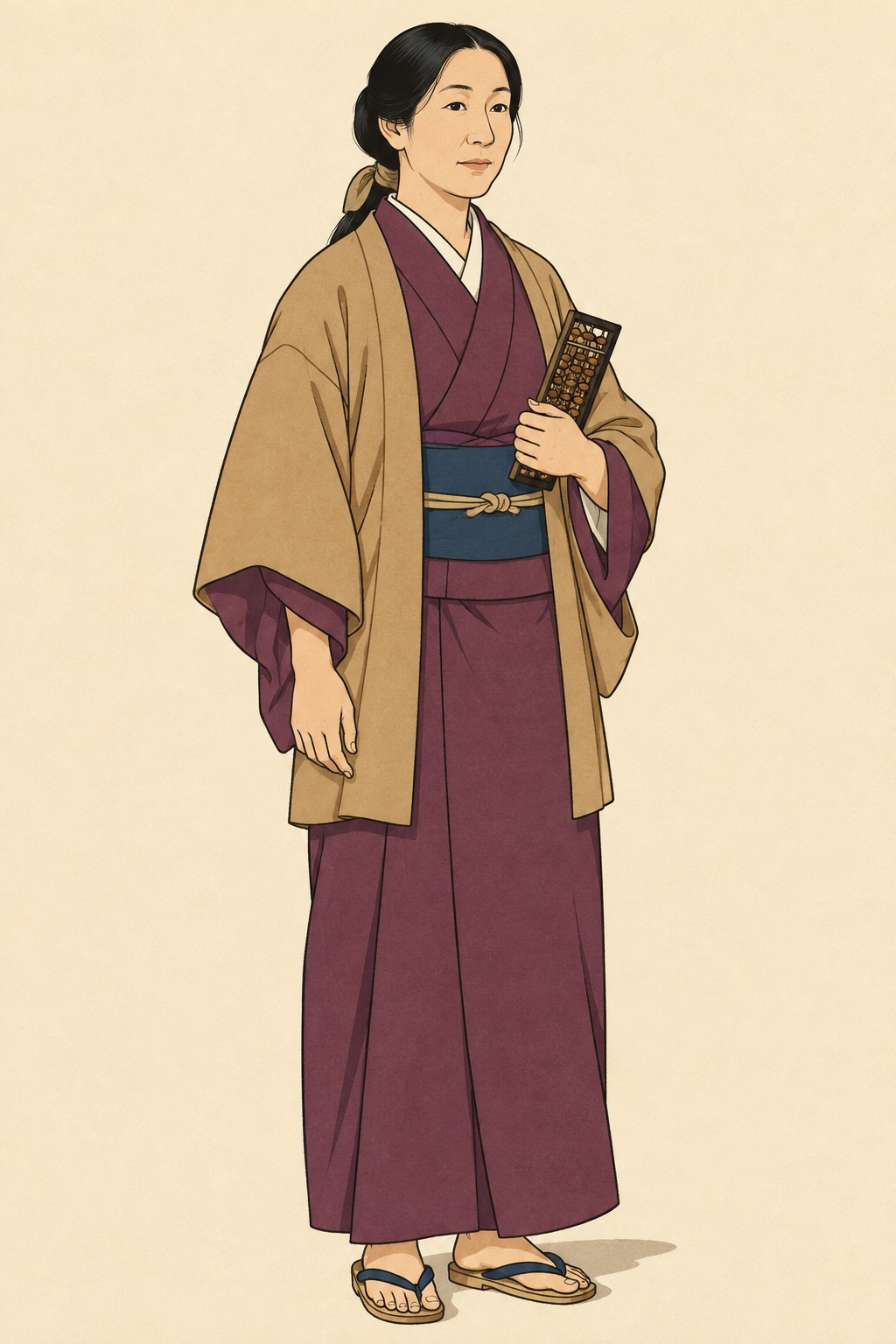
Trading houses operate in Sakai, Osaka, Kyoto, Hakata, Nagasaki and castle-town markets. Nobunaga's and Hideyoshi's free-market orders broke the old guild monopolies. Sakai's council of elders had governed the city until Nobunaga, then Hideyoshi, brought it under control. Women trade and own property in their own names.
Craftsman
Standing Townsman · Ties Master, or a house · Not lettered

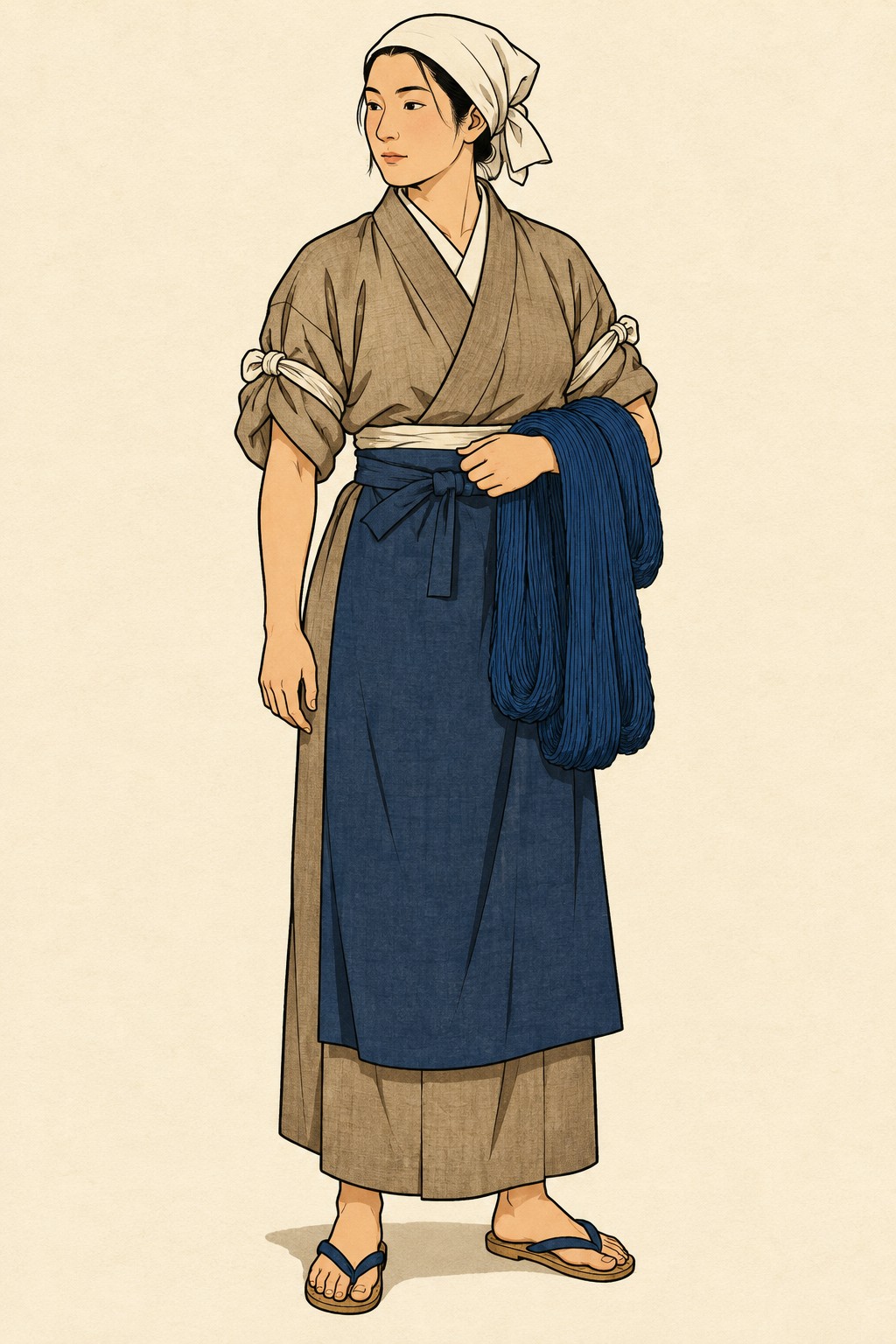
Smiths, carpenters, armorers, gunsmiths, potters, dyers, weavers and masons work under a master's roof or castle-town protection. Matchlocks come from Sakai and Kunitomo; Seki supplies plain army swords. Kyushu's kilns employ Korean potters taken during the 1592 to 1598 war. Women weave, dye and sew.
Entertainer
Standing Townsman · Ties A troupe or the quarter's house, or none · Not lettered

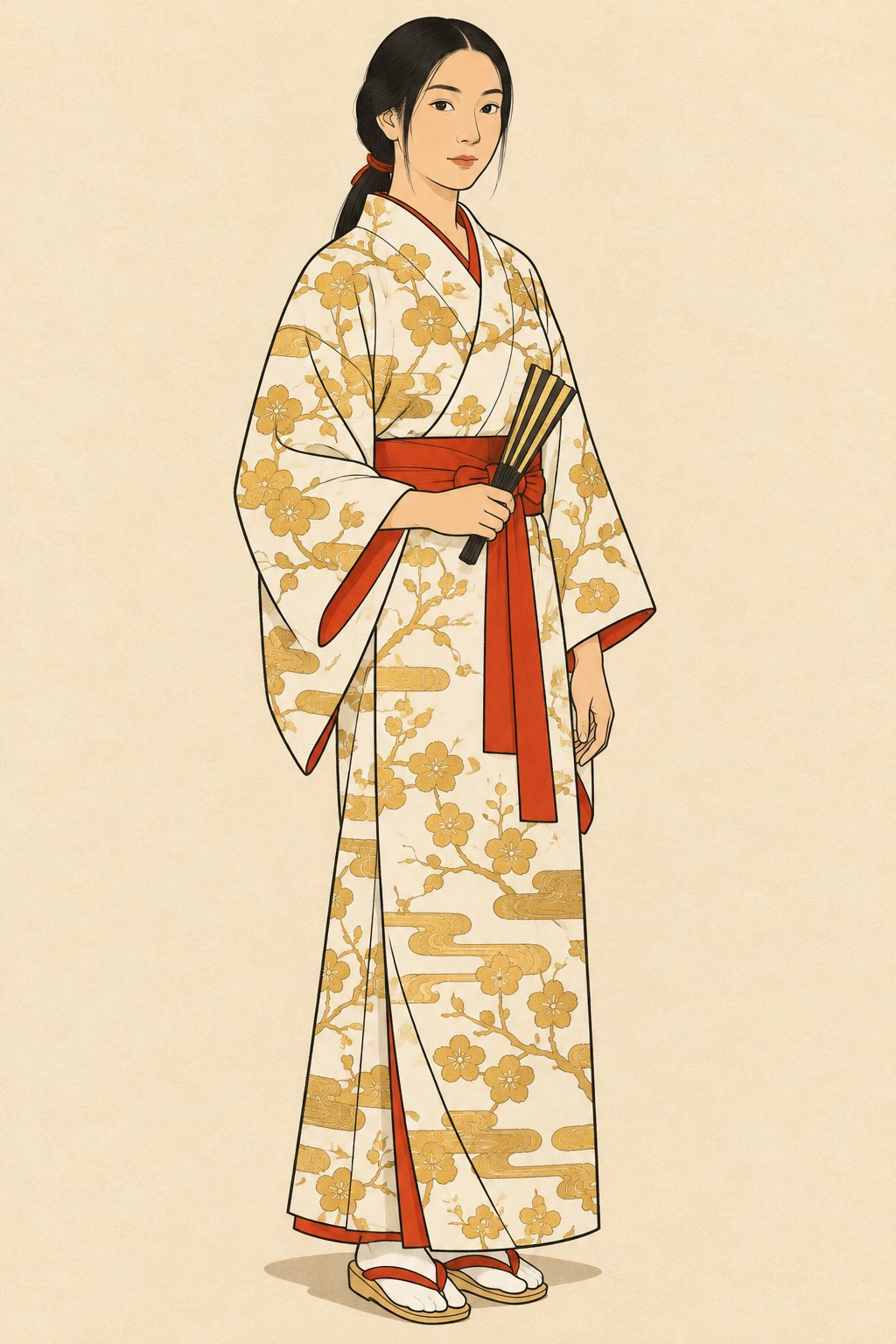
Entertainers include sarugaku players in lord-sponsored troupes, dancers, biwa and puppet reciters, acrobats, blind singers and women of Kyoto's Yanagimachi quarter, licensed in 1589. Hideyoshi acted in Noh and granted troupe stipends. The quarter's women are called yujo; later terms do not belong in 1600.
Physician
Standing Townsman · Ties Master, or a lord's household · Lettered

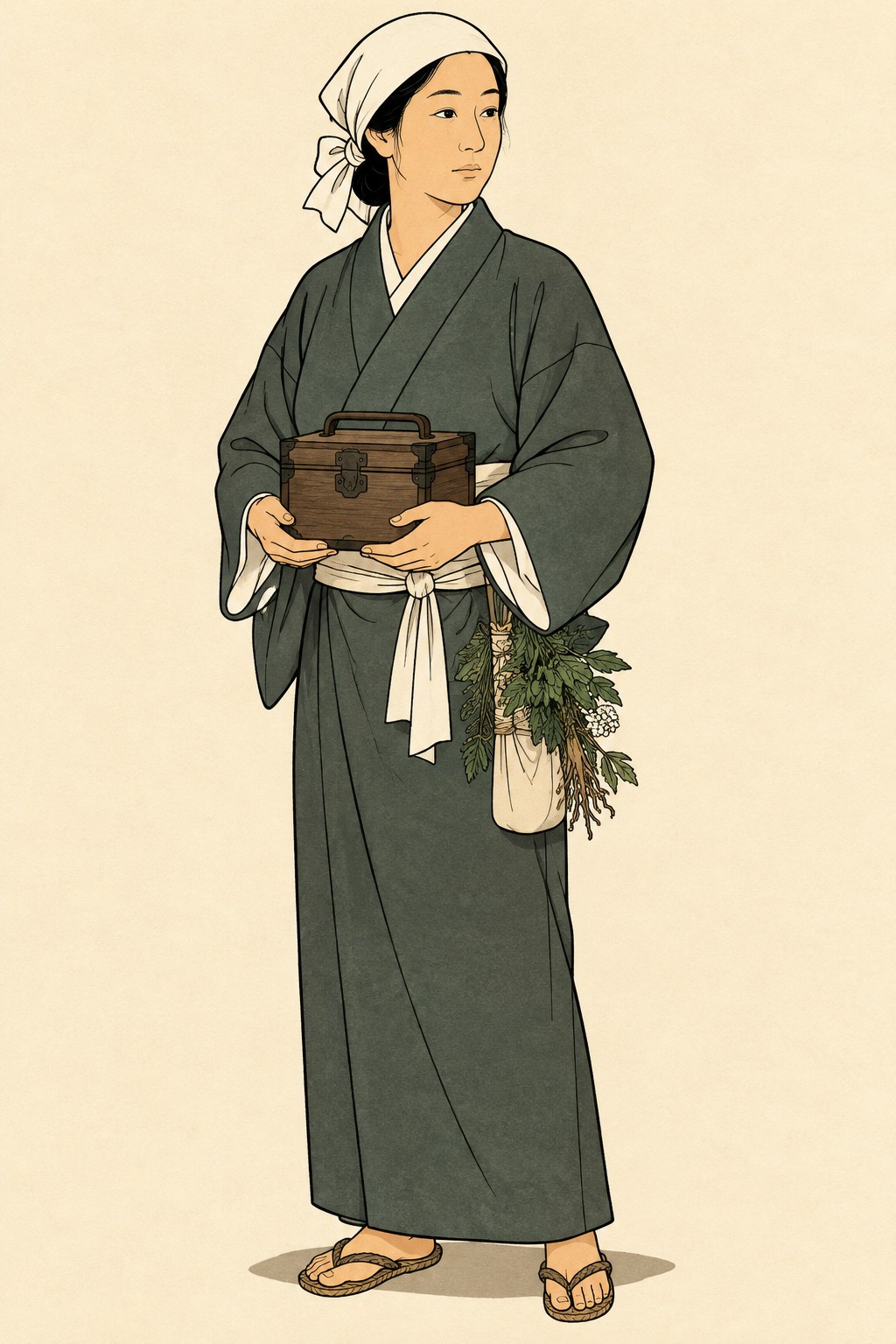
Physicians practice Chinese-derived medicine with herbs, pulse, needles and moxa. Training is in a master's house, such as Manase Dosan's Kyoto school. It covers village healers and midwives. Doctors travel where soldiers cannot and attend sick lords.
Shinobi (Village League)
Standing Villager; Foot Soldier in a lord's pay · Ties Village (the league), or a lord · Not lettered

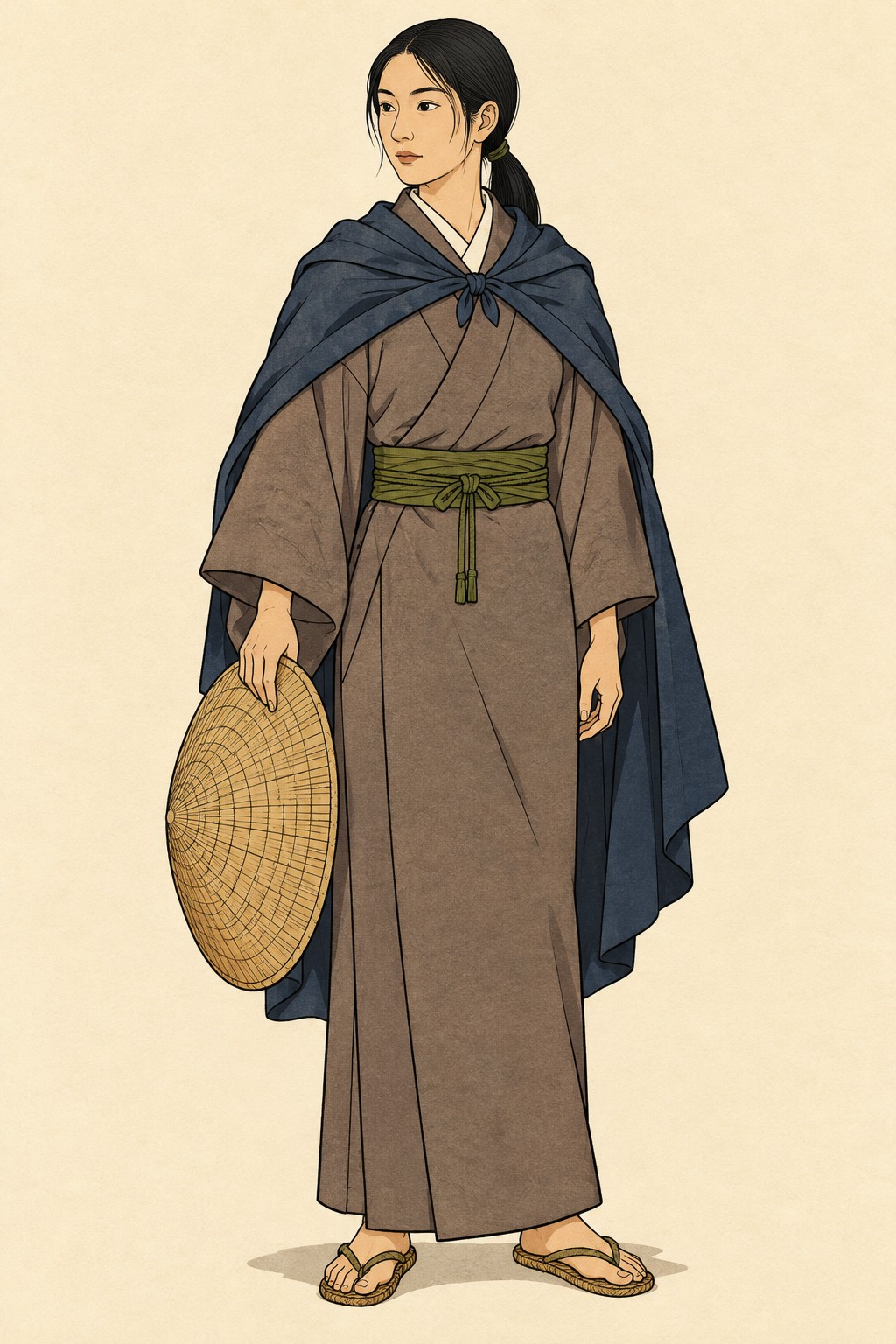
Iga, Koka, Saika and Negoro's warrior-farmer leagues held hill country without daimyo and hired out soldiers and scouts. After Iga's conquest in 1581 and Koka's demotion in 1585, surviving families farm, guard and fire guns for lords, or contract through go-betweens. Either sex may take this Origin. The work has low status and pays in rice; neither black costume nor secret clan belongs to it.
Interpreter
Standing Townsman · Ties House (the mission or a trading house) · Lettered in Japanese and the script of a second tongue
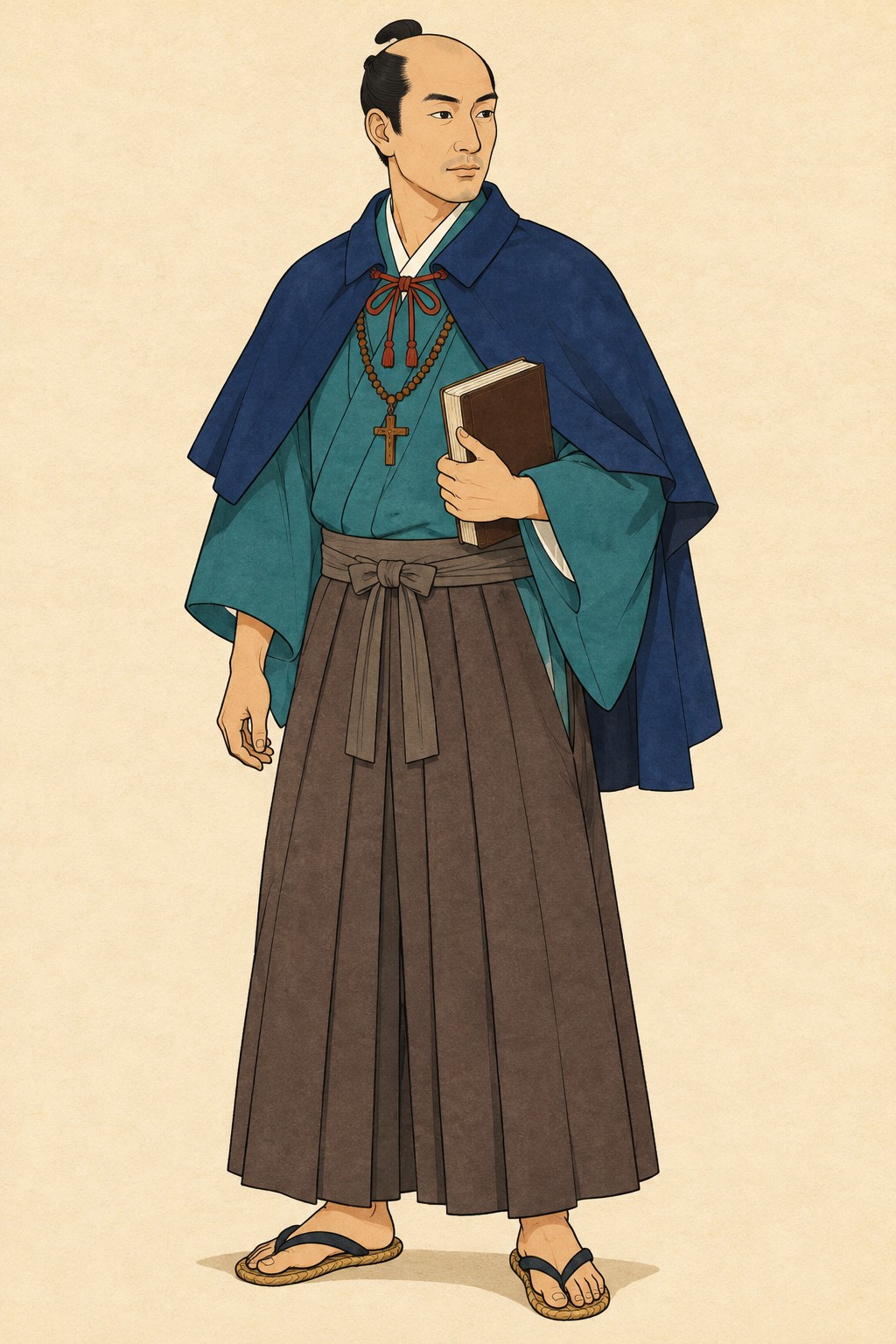

A Japanese go-between serves Portuguese traders, Jesuits or officials in Nagasaki, Sakai and lords' courts; another might speak Chinese or Korean for a trading house. Most interpreters are mission-trained Christians. Choose the second tongue and its script at creation (Letters and Tongues).
Outcast
Standing Outcast · Ties Village (the settlement and its head) · Not lettered
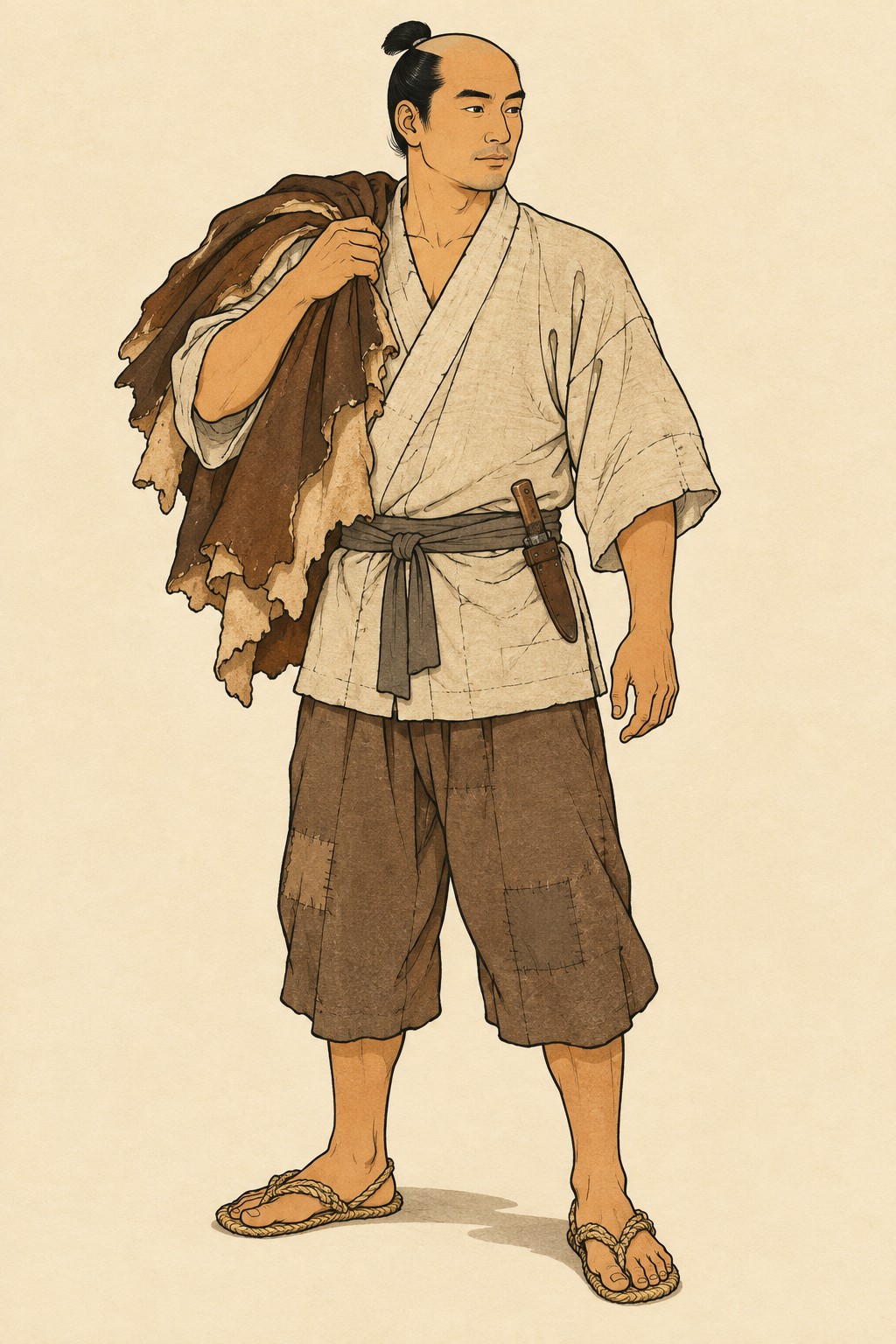
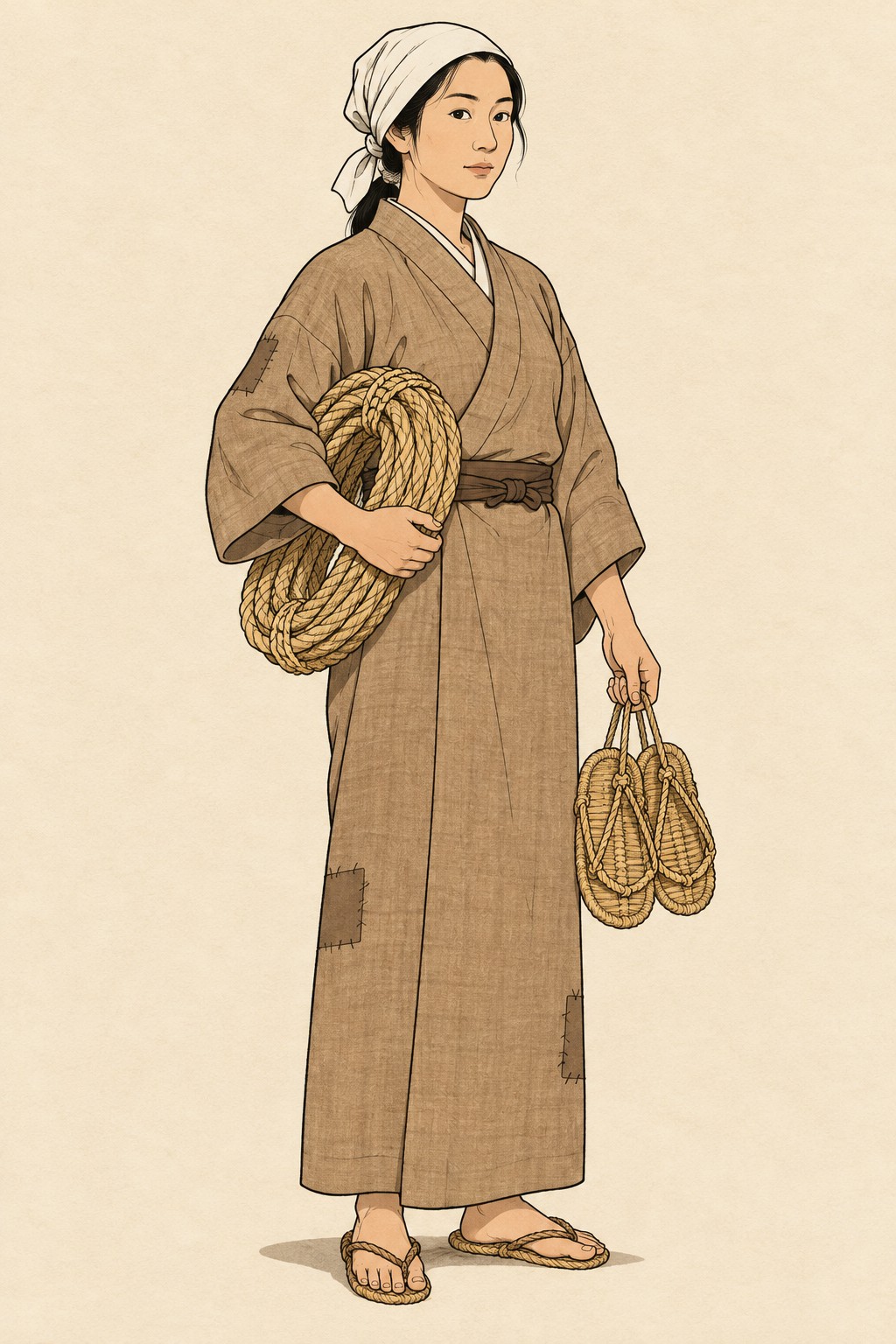
Riverbed settlements include kawata and kawaramono workers in tanning, leather, sandals, drumskins, execution grounds and graves. Hinin beg, perform and undertake watches assigned by a lord's officer. Men and women take this Origin. Lords set these groups' duties in 1600; the later legal order's two tiers remain unhardened. Higher Standing depends on their labor while overlooking the workers, providing cover (Era Rules, Covert Work).
Christian
Standing Townsman or Villager, as your family's station · Ties Church (a temple ledger: the mission and its confraternity) · Lettered if taught at the mission

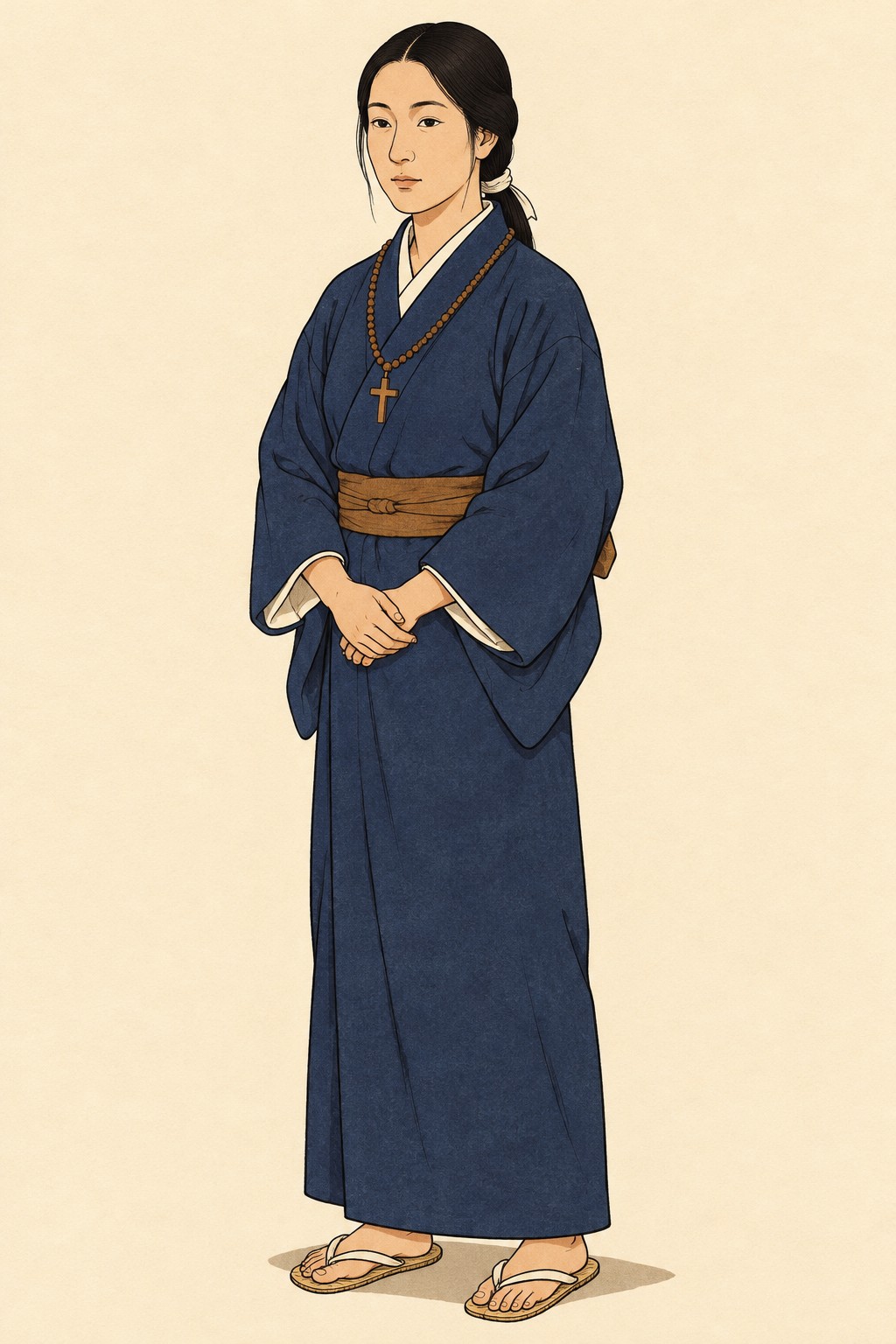
About 200,000 to 300,000 Japanese are Christians in 1600, concentrated around Nagasaki, Omura, Arima and Bungo in Kyushu, with communities in Sakai, Osaka and Kyoto. Hideyoshi's 1587 expulsion of the padres was partly enforced; twenty-six Christians were crucified in Nagasaki in 1597. In 1600 Christians worship openly in Kyushu and quietly in the Kinai. Catholic teaching bars suicide and requires one wife, and converts form confraternities to feed the sick and bury the dead. Several lords have converted. Your family's Townsman or Villager station sets Standing; faith supplies an Attitude marker (Era Rules, Name and Allegiance, Attitude). A Christian of another station takes its Origin, declares baptism at creation and may buy Confraternity (Skills and Talents).
Ainu, Ryukyuan and Korean Characters
Adds A player character may be Ainu, Ryukyuan or Korean. Each takes one of the fourteen Origins for its skills, Standing, Strength and ties, with the changes below, and any Role that Origin opens. All three speak their own tongue and Japanese at no XP cost (Skills and Talents, Letters and Tongues). Each is also a marker an audience may weigh, and the GM sets its Attitude audience by audience, as for any marker (Era Rules, Name and Allegiance, Attitude).
TERMS: THREE PEOPLES
I Ainu. The people of Ezo, the island north of the straits, hunt, fish and trade furs, dried salmon, eagle feathers and sea goods to the Kakizaki house at Matsumae, which Hideyoshi confirmed in that trade in 1593 and which took the name Matsumae in 1599. Take Farmer, read as a hunter and fisher of a village (kotan): Villager Standing, a tie to the village and its headman, and the Strength in the villages, rivers and coasts of Ezo in place of a home province. A trader who works the Matsumae market may take Merchant. The Ainu tongue has no script, so an Ainu is lettered only by paying for Japanese letters. The usual Roles are Scout, Irregular and Bandit (a hunter and guide), Sailor, Boatman and Fisher, and Peddler, Shopkeeper and Innkeeper (a trader).
II Ryukyuan. Shuri's king pays tribute to the Ming and trades with Satsuma, owing no Japanese lord in 1600. Choose Merchant for a Naha trader, Interpreter for a tribute-trade go-between with Chinese as the free tongue, Entertainer for a three-stringed sanshin player, Farmer for a ship's hand taking Sailor, Boatman and Fisher, or Priest or nun. Begin tied to a kingdom house, ship or temple, never a Japanese lord. Lettered Origins read and write Japanese, used in the kingdom's documents.
III Korean. Tens of thousands arrived as captives in the 1592 to 1598 war; most Koreans in Japan in 1600 live in Kyushu and western provinces. They work as captive potters, farm laborers, servants, physicians and learned scholars; many were baptized at Nagasaki (The Realm in 1600). Choose Craftsman for a protected potter, Farmer for a holding's laborer, Physician, Priest or nun for monk or scholar, Christian, or Outcast for an unprotected captive. Your holding lord or house is your tie; escape counts as leaving without leave (Era Rules, Name and Allegiance, Leaving II). Lettered Origins read and write Chinese characters instead of Japanese, paying 5 XP to learn Japanese letters.
Names
Put the family name before the personal name, as in Tokugawa Ieyasu. Follow these patterns for characters and contacts.
- A man of the warrior class has a common name for daily use and an adult name for documents: Hirano Heita Masatsugu is Heita to his fellows and signs Masatsugu. Common names end in -taro, -jiro, -saburo, -shiro and -goro (first to fifth son) or in the office endings -emon, -saemon, -bei, -suke, -hyoe and -dayu. An adult name is two or three characters, often with one character granted by the lord. Before the coming-of-age ceremony (genpuku), whose age varies by household, a boy has a childhood name, often ending in -maru.
- A commoner man uses a common name: Jinbei, Saburo, Zenbei, Kisuke. Farmers and townsmen of means hold family names and use them among themselves; a merchant or craftsman is often called by his shop name, as Izumiya is.
- A woman has a short name of one to three syllables: Shino, Kane, Tomi, Hana, Tsuru, Kiku. "O-" before it is polite speech, not part of the name. A lord's daughter is Tsuru-hime. A married woman keeps her birth family's name and is addressed by her husband's house, office or her room. Do not end a commoner woman's name in -ko; that belongs to the court.
- A priest or monk uses a dharma name of two characters and drops his family name in daily use: Shinkei, Joshin, Genyo. A nun's name ends in -ni: Myoshu-ni. A mountain ascetic takes a given name and his peak: Omine, Haguro, Hiko. A retired lord or a tea man takes an art name ending in -sai, -an or -ken.
- A Christian keeps the Japanese name and adds the baptismal name in brackets: Ota Sosuke [Simao], Hana [Maria]. Baptismal names are Portuguese forms: Justo, Agostinho, Simao, Paulo, Joao, Luis; Gracia, Julia, Maria, Madalena. Only a lord is "Dom".
- An entertainer uses a stage name: Waka. The quarter's women and the troupes' players are known by them; the birth name is for the register.
- Address. Warriors say -dono to one another and -sama upward. A man is called by his title, common name or seat, never by the name he signs (Era Rules, Name and Allegiance, In AD 1600).
- Do not give a fictional character the full name of a real person of the age. A name element is fine where the family name is not the famous one; Sanada Nobushige [Yukimura] shows how a real person is written when one is needed.
Men's common names: Heiroku, Jinbei, Kuroemon, Saburo, Gonroku, Hachiemon, Kyuemon, Tokubei. Adult names: Tadashige, Masatsugu, Sadayoshi, Munehisa, Kagetoshi, Tomotaka. Women's names: Hana, Ine, Kiku, Tsuru, Take, Fuyu, Shige, Kane. Family names: Yamada, Okada, Ogawa, Fujita, Nakamura, Ueda. Dharma names: Joshin, Genyo, Kokai, Daishin. Baptismal names: Joao, Thome, Monica, Marta.
EXAMPLE: NAMING A RETAINER'S DAUGHTER
Nomura Shino is the daughter of a retainer of a Western-side house. Nomura is her father's family name and stays hers when she marries. Shino is a short name of the kind a warrior's daughter bears; her father's men say O-Shino, and a letter to her father's house calls her "the young lady of the Nomura". She is not Shino-hime: her father is a retainer, not a lord.
Roles
Replaces the Career (Core Rules, Character Creation, Backgrounds and Careers). Use these entries for twenty-one occupations of AD 1600.
-
Answers to / Owns / Welcome: the Role's superiors, possessions and the places that receive it. Use them for a Cover too (Era Rules, Covert Work).
-
Open to: the Origins and the sex that may take the Role. It is a gate; another Origin takes the Role only with the GM's agreement (Any Role, Any Origin, Within the Custom).
-
Profession skills: six.
-
Kit: take it free at creation. The Japanese name comes first and the sourcebook entry in brackets; the owning sourcebook holds the stat line, and Gear and Prices holds the Japanese aliases, the prices and the items without an entry. The kit is free and is never bought from the Stake (Era Rules, Money and Stakes, Stakes). An item marked issued is a lord's, temple's or house's; it goes back when you leave its service, and the issuer replaces it if it is lost, for a Duty (Era Rules, Name and Allegiance, Leaving). An item's qualities apply to you as they do to anyone who uses it (Gear and Prices, The Essential Gear Table).
-
Stake: the Stake the Role gives, whatever your Standing. A Standing is named only where the Role changes yours (Standing, Name and Stake). Pay is what the Role earns, which covers Keep and stays out of the Stake (Era Rules, Money and Stakes).
-
Favored: five talents the Role leans on: Core talents, talents of a school in Schools of the Sword and Fist (the tree named in brackets), and Era talents (Skills and Talents). At least one is an Era Tier 1 talent.
Mounted Retainer
- Answers to: your lord, through the captain of his mounted men and his senior retainers; at home, the head of your house. Owns: two swords, a horse, a stipend of 100 to 300 koku that pays your followers as well as you (Era Rules, Money and Stakes, Stipends); the armor is issued on the lord's account. Welcome: the lord's hall, the muster, the houses of his other retainers, the castle town's better rooms.
- Open to: Samurai retainer; men. A woman of the house takes Foot Retainer and Household Officer.
- Profession skills: Melee, Ranged, Riding, Leadership, Readiness, Fortitude.
- Kit: katana (Longsword), wakizashi (Shortsword), tanto (Dagger) and yari (Short Spear) (The Fantasy Armory); tosei gusoku (Lamellar) and kabuto (Open Helm), both issued (The Armourer); Riding Horse with Riding saddle, Stirrups and Bridle and bit (The Stable); a jinbaori surcoat, a banner pole and a signal fan, which is not the iron War Fan (Gear and Prices).
- Stake: Stipend. The head of a house with its own retainers, or a lord's son or heir, takes Warrior House Standing and the House Stake with the creation Debt, with the GM's agreement (Standing, Name and Stake). Pay: the fief's revenue or the granary's rice, in koku.
- Favored: Lord's Man, Two Swords, Mounting in Armor (Otsubo), Wearing the Iron (Kumiuchi), Stance (Common Form).
- Note: A mounted messenger (tsukaiban) takes this Role and aims at Message Ride (Otsubo, Tier 3; earned in play).
Foot Retainer and Household Officer
- Answers to: the lord's officers and the head of the household: a kachi serves in the castle guard and on foot at the muster; a steward, gatekeeper or secretary runs the house; a retainer's wife or daughter runs it while he is away. Owns: a sword or two, keys, registers, the house's letters and the knowledge of where its money is. Welcome: the household's every room, the castle town, the lord's hall in attendance; the war council is shut to a woman.
- Open to: Samurai retainer; men and women.
- Profession skills: Melee, Readiness, Perception, Lore, Negotiation, Intimidation.
- Kit: katana (Longsword), wakizashi (Shortsword) and yari (Short Spear) (The Fantasy Armory); a chest guard (Leather Jerkin) and jingasa (Open Helm), issued (The Armourer); a writing set and the house's keys (Gear and Prices). A woman of the house takes a naginata (Glaive) and a kaiken (Knife) (The Fantasy Armory) in place of the katana and armor.
- Stake: Stipend. A lord's son, daughter or heir, or a woman named head of her house, takes Warrior House Standing and the House Stake with the creation Debt, with the GM's agreement (Standing, Name and Stake). Pay: the house's stipend feeds you.
- Favored: Manners of the Hall, Brush and Sorobun, Hostage Years, Low Sweep (Shugen), Wrist Seize (Torite).
- Note: A hostage of rank living in another lord's castle town takes this Role with Hostage Years.
Ronin Swordsman
- Answers to: nobody, or the man who pays this month. Owns: two swords, a hat and a straw cape. Welcome: dojo yards, wine shops, a lord's gate at the muster as a hireling, a merchant's warehouse as a guard. A magistrate's officer treats you as everybody's suspect (Era Rules, Law and Justice).
- Open to: Ronin; men in the record, and a woman of a fallen house who lives by the same trade.
- Profession skills: Melee, Readiness, Perception, Intimidation, Survival, Streetwise.
- Kit: katana (Longsword) and wakizashi (Shortsword) (The Fantasy Armory); a deep straw hat, a straw cape, a bundle and a bowl (Gear and Prices). No armor.
- Stake: Wage. Pay: a campaign hiring, a guard's fee, a bout's prize (Gear and Prices, Hirelings and Pay).
- Favored: Keen Eye, Stage and Inn, Draw and Cut (Hayashizaki), Wayfarer's Guard (Kashima), Teacher's Word (Common Form).
Ashigaru Spearman
- Answers to: your file leader and the ashigaru captain, who answers to the lord. Owns: a short blade, your sandals and your rice bag; the pike and the armor are the lord's and are counted at the muster. Welcome: the company's camp, the guardroom, the castle town's cheap lodgings; not the lord's hall.
- Open to: Ashigaru foot soldier; Farmer under the levy; Ronin hired for the campaign; men.
- Profession skills: Melee, Fortitude, Athletics, Readiness, Survival, Ranged.
- Kit: nagae-yari (Pike), issued, and tanto (Dagger) (The Fantasy Armory); okashi gusoku munition armor (Padded Jack) and jingasa (Open Helm), issued (The Armourer); a straw cape, a rice bag and a water gourd (Gear and Prices).
- Stake: Wage. A Farmer under the levy is a Foot Soldier while he serves; a Ronin stays a Ronin. Pay: a man's ration on campaign, about 5 go of rice a day (Era Rules, Money and Stakes, Stipends); a hired man's pay is in Gear and Prices, Hirelings and Pay.
- Note: The Pike is Cumbersome 3 and makes no attack at Engaged range (The Fantasy Armory). At Might 2 you add 1 Bane Die to every attack with it.
- Favored: Ration Bag, Rank Drill (Pike), Stance (Common Form), Hardy, Conditioned.
Ashigaru Gunner and Archer
- Answers to: the captain of guns or of bows, who drills his company apart from the spears. Owns: a short blade. The gun and its powder horn, or the bow and its quiver, are the lord's and are counted; a hired gunner of Saika or Negoro owns his gun and horn. Welcome: as the spearman; a gunnery master's yard if your lord keeps one.
- Open to: Ashigaru foot soldier; Farmer; Shinobi (the Iga and Koka companies in Tokugawa pay are gun companies); Craftsman; Ronin hired for the campaign; men.
- Profession skills: Heavy Ranged, Ranged, Melee, Fortitude, Readiness, Perception.
- Kit: tanegashima (Arquebus) with a Powder horn and shot bag of thirty reloads, both issued (The Black Powder Armory); or a yumi (Yumi) with a quiver of twenty arrows, both issued (The Ranged Armory); tanto (Dagger) (The Fantasy Armory); okashi gusoku (Padded Jack) and jingasa (Open Helm), issued (The Armourer); slow match, a straw cape and a rice bag (Gear and Prices). A hired gunner of Saika or Negoro, or a Ronin who brings his own gun, owns the Arquebus and the horn; the company that hires him issues only the armor.
- Stake: Wage. A Farmer, Craftsman or Shinobi on a lord's roll is a Foot Soldier while he serves; a Ronin stays a Ronin. Pay: a man's ration; a hired gunner bargains for more (Gear and Prices, Hirelings and Pay).
- Favored: Ration Bag, Loading by the Book and Cord and Pan (Inatomi), Penetrate (Heki), Keen Eye.
- Note: The Yumi is Cumbersome 3. At Might 2 an archer adds 1 Bane Die to every shot with it.
Scout, Irregular and Bandit
- Answers to: a captain if hired as a scout (monomi), your village if you are its militia, nobody if you live on the hills and the roads. Owns: knowledge of the ground, a spear, what the dead left on the field. Welcome: the camp's edge with news, the hills, your own village, a fugitive's hiding place; hanged in a castle town if taken with another man's armor.
- Open to: Farmer, Ashigaru foot soldier, Shinobi, Outcast, Ronin; men and women.
- Profession skills: Survival, Stealth, Perception, Melee, Athletics, Streetwise.
- Kit: a bamboo spear (use the Short Spear line) and a tanto (Dagger) (The Fantasy Armory); scavenged hide armor (Hide Armour, The Armourer); a rope, a straw cape and a sickle (Gear and Prices).
- Stake: Hand-to-Mouth; Wage while a company hires you, and a Villager is then a Foot Soldier. Pay: a scout's ration; a head taken from the field, if the lord's clerk will log it (Era Rules, Battle, Fire and Fear); whatever the dead carried.
- Favored: Monomi, Headman's Word, Wayfarer, Mountain Legs (Shugen), Quail Hiding (Shinobi).
- Note: After a battle the villages hunt the beaten for their arms and heads.
Shinobi Agent
- Answers to: the league's go-between, the lord who hires you this season, and the captain of the Iga guards if you are in Tokugawa pay. Owns: a cover, a set of tools, a family at home with fields and debts. Welcome: wherever the peddler, pilgrim or servant you are this week is welcome (Era Rules, Covert Work, Cover).
- Open to: Shinobi (Village League); Farmer, Entertainer, Priest or nun and Merchant as the cover suggests; men and women.
- Profession skills: Stealth, Deception, Subterfuge, Streetwise, Perception, Athletics.
- Kit: wakizashi (Shortsword) (The Fantasy Armory); a Grapnel with cord (The Black Powder Armory); a carpenter's tools, the six tools of the trade (hat, ink case, towel, flint, medicine, cord), and a peddler's pack or a pilgrim's dress for the cover (Gear and Prices).
- Stake: Hand-to-Mouth; Wage in a lord's pay, and a Villager or Townsman is then a Foot Soldier. Pay: a foot guard's rice stipend; a contract's fee, half before and half after (Gear and Prices, Hirelings and Pay).
- Favored: Stage and Inn, League Go-Between, Quail Hiding and Six Tools (Shinobi), The Seven Forms (Shinobi).
Warrior Monk and Temple Guard
- Answers to: the abbot and the temple's steward; a former temple gunner answers to the lord who took him on. Owns: a dharma name, a naginata or a spear, a place in the hall and a bowl at the temple's table. Welcome: the temples of your sect, the pilgrim roads, a lord's hall as the temple's man.
- Open to: Sohei or temple fighter; Priest or nun; men.
- Profession skills: Melee, Fortitude, Readiness, Lore, Leadership, Athletics.
- Kit: naginata (Glaive) and a staff (Quarterstaff) (The Fantasy Armory); a chest guard (Leather Jerkin), the temple's, issued (The Armourer); a robe, a white head cloth, prayer beads and a conch (Gear and Prices).
- Stake: Stipend. Pay: the temple keeps you.
- Favored: Manners of the Hall, Chant and Ringed Staff (Shugen), Low Sweep (Shugen), Cool Head.
- Note: The naginata is Cumbersome 3. At Might 2 you add 1 Bane Die to every attack with it; the staff has no such rating.
Mountain Ascetic
- Answers to: your order, under the Tendai or the Shingon line, and the guide (sendatsu) who leads your group between mountains. Owns: a conch, a ringed staff, a route of villages that expect your rites. Welcome: the mountain temples of Kumano, Yoshino, Haguro and Hiko, villages at festival time, passes and border posts that let the habit through.
- Open to: Priest or nun; Sohei or temple fighter; Farmer; men. A Kumano nun travels the same roads under the Priest, Nun and Shrine Attendant Role.
- Profession skills: Survival, Lore, Fortitude, Athletics, Charm, Medicine.
- Kit: shakujo ringed staff (Quarterstaff) and tanto (Dagger) (The Fantasy Armory); Healing Salve (The Apothecary); the ascetic's dress, small cap and conch (Gear and Prices).
- Stake: Wage: an ascetic lives by alms and rites, not a temple's granary. Pay: offerings for a rite, a guide's fee over a pass.
- Favored: Stage and Inn, Mountain Legs and Conch (Shugen), Mountain Remedies (Shugen), Wayfarer.
Priest, Nun and Shrine Attendant
- Answers to: the abbot or head priest; the Yoshida house for a shrine's license; the head of the convent. Owns: scriptures, the parish register and its funerals, the shrine's dance or oracle, the ear of the pious. Welcome: every temple and shrine of your line, sickrooms and funerals, a lord's hall when he wants a rite or a scribe.
- Open to: Priest or nun; Sohei or temple fighter; men as priests; women as nuns and shrine maidens.
- Profession skills: Lore, Charm, Medicine, Perception, Negotiation, Leadership.
- Kit: robes and prayer beads, or the shrine's dress and implements, a writing set and a sutra (Gear and Prices); a kaiken (Knife) for a nun (The Fantasy Armory); Healing Salve (The Apothecary).
- Stake: Stipend for a temple's priest or a convent's nun; Wage for an itinerant shrine maiden or a wandering nun. Pay: the temple keeps you; offerings for rites and funerals.
- Favored: Brush and Sorobun, Manners of the Hall, Chant (Shugen), Boon Reader, Helpful.
- Note: A Zen envoy-monk who carries a lord's letters takes this Role with Negotiation 2 and Letters of Passage.
Physician
- Answers to: the household that keeps you or the patients who pay; your teacher's school. Owns: a medicine chest, needles and moxa, the household's secrets. Welcome: sickrooms, a camp of the wounded, a lord's inner rooms, the Misericordia's hospital at Nagasaki if you were trained there.
- Open to: Physician; Priest or nun; Christian; men and women. The midwife is a woman.
- Profession skills: Medicine, Lore, Science, Charm, Perception, Craft.
- Kit: a medicine chest of herbs, needles and moxa (Gear and Prices); two Healing Salve, Emetic and Smelling Salts (The Apothecary); a kaiken (Knife) (The Fantasy Armory).
- Stake: Stipend. Pay: fees by the visit (Gear and Prices). Care of the sick is Era Rules, Medicine and Illness.
- Favored: Pulse and Tongue, Herbal Course, Namban Learning, Helpful, Boon Reader.
Merchant and Broker
- Answers to: the head of the house, your partners, the town's elders, the lord's magistrate who taxes the market. Owns: a shop or warehouse, stock, ledgers, credit out and credit owed, a pack animal or a ship share. Welcome: the counting rooms of Sakai, Osaka, Kyoto, Hakata and Nagasaki; a lord's hall when he needs silver or guns.
- Open to: Merchant; Christian; men and women.
- Profession skills: Negotiation, Lore, Streetwise, Perception, Deception, Charm.
- Kit: a counting board, ledgers, scales and weights and a strongbox (Gear and Prices); wakizashi (Shortsword) (The Fantasy Armory); a Pony with Pack saddle (The Stable). A warehouse agent may hold a share in a coasting ship as a creation Debt of 500 Exodus to a named partner (Gear and Prices, Goods Without an Entry; Era Rules, Money and Stakes, Stakes II).
- Stake: Stipend; the head of a great house takes the House Stake with the creation Debt, with the GM's agreement. Pay: profit and interest (Era Rules, Money and Stakes, Debt).
- Favored: House Name, Ledger Hand, Broker's Ear, House Credit, Convincing.
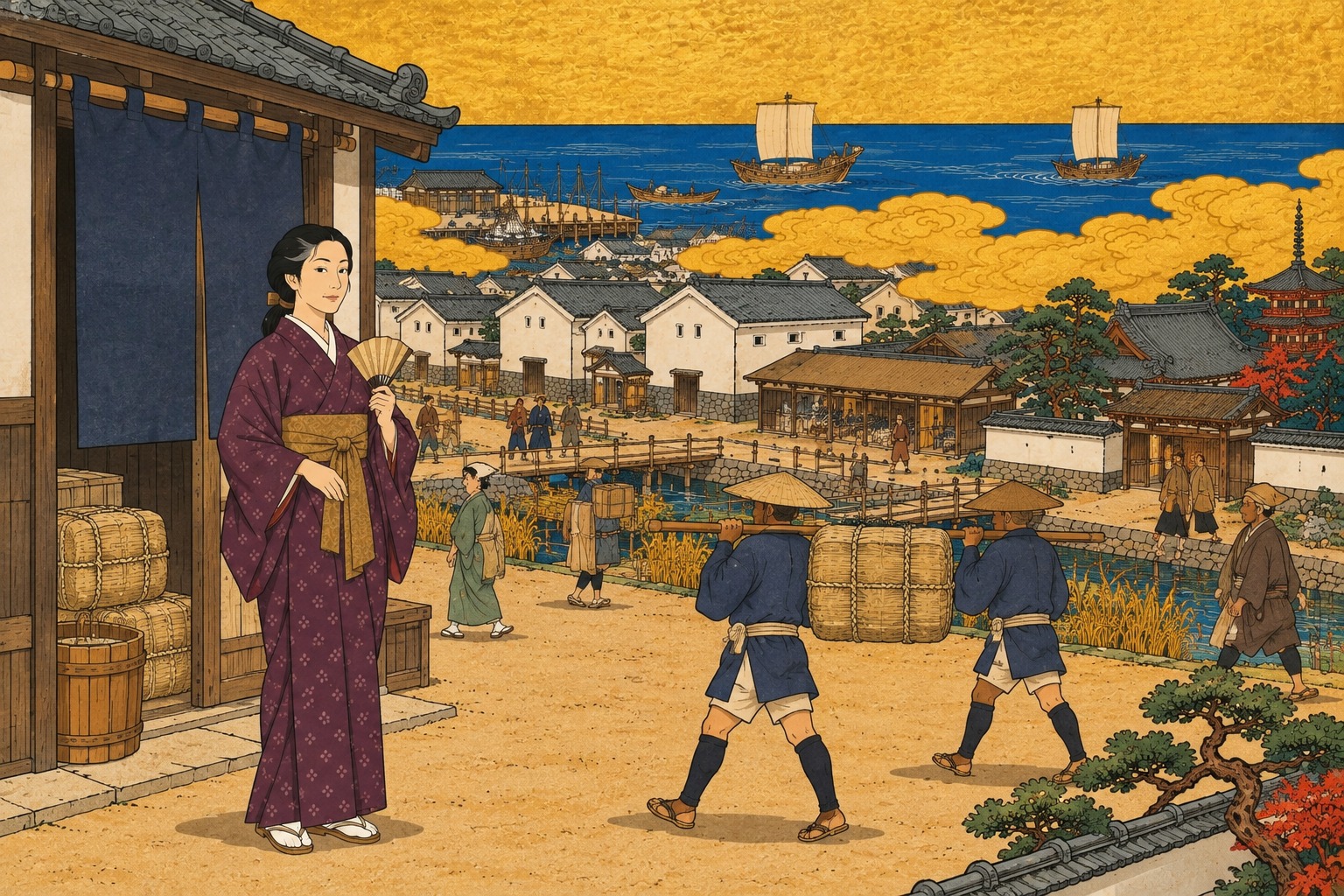
Peddler, Shopkeeper and Innkeeper
- Answers to: the landlord, the town block and its elders, the wholesaler who fronts your stock. Owns: a pack or a counter, stock, a credit tally, and the quarter's talk. Welcome: every road, every market, every kitchen door; a lodging house is where news stops for the night.
- Open to: Merchant, Farmer, Craftsman, Christian, Ashigaru foot soldier (a woman of the camp), Shinobi as a cover; men and women. Women run shops, tea houses and lodging houses.
- Profession skills: Negotiation, Streetwise, Charm, Perception, Survival, Deception.
- Kit: a pack or a counter with stock worth your Stake (medicine, needles, cloth, salt, tea or paper), scales and a tally board (Gear and Prices); a kaiken (Knife) and a Cudgel behind the counter (The Fantasy Armory).
- Stake: Wage. Pay: the pack's or the house's takings.
- Favored: Stage and Inn, House Name, Ledger Hand, Low Profile, Convincing.
Craftsman and Gunsmith
- Answers to: your master, the house that placed the order, the lord who retains the workshop, the town block. Owns: tools, a bench, the trade's secrets, half-finished work that is owed. Welcome: the workshop quarter, the castle's armory, a lord's audience when he wants guns or a blade.
- Open to: Craftsman; Outcast for the leather trades; Farmer; men and women.
- Profession skills: Craft, Science, Negotiation, Perception, Fortitude, Heavy Ranged.
- Kit: the tools of the trade (Gear and Prices); a Hatchet or a hammer on the same line, and a kaiken (Knife) (The Fantasy Armory). A gunsmith also holds one finished tanegashima (Arquebus, The Black Powder Armory) as stock, owed to the house that ordered it.
- Stake: Wage. Pay: by the piece and the day; a carpenter earns about ten times a laborer (Gear and Prices, Wages and Daily Costs).
- Favored: Ledger Hand, Barrel and Lock, Practical Expertise (Craft), Strong Arm, Specialist.
- Note: A gunsmith aims at Gunsmith's Eye (Inatomi, Tier 3; earned in play).
Tea Master and Artist
- Answers to: the patron who keeps you, a lord or a great merchant, and your teacher's line: Rikyu's heirs, the Kano workshop, the Satomura renga masters. Owns: utensils, scrolls, brushes, a repute, and the names of everyone who ever sat in your room. Welcome: tea rooms, a lord's inner chamber, the houses of Sakai and Kyoto, Daitokuji. The tea room is the one place a lord, a merchant and a priest sit as near-equals.
- Open to: Merchant, Priest or nun, Samurai retainer, Entertainer; men and women.
- Profession skills: Charm, Lore, Negotiation, Perception, Craft, Deception.
- Kit: tea utensils of modest make, brushes, ink and paper, a traveling box (Gear and Prices); a kaiken (Knife) (The Fantasy Armory). A famous utensil is a lord's gift, not a kit; the prices told of them are legend.
- Stake: Stipend. Pay: the patron's stipend and gifts.
- Favored: Manners of the Hall, Brush and Sorobun, Host of the Tea Room, Courtly Form (Ogasawara), Convincing.
Farmer and Village Headman
- Answers to: the headman, the five-household group, and the lord's intendant who collects the tax; the headman answers for everyone. Owns: a holding registered in the survey, tools, a share of the village ox, a spear in the roof. Welcome: your own village, the market on its days, the temple; the castle town as a seller of rice and firewood.
- Open to: Farmer; Shinobi (the league families farm); Ashigaru foot soldier on leave; Christian; men and women.
- Profession skills: Survival, Fortitude, Craft, Athletics, Negotiation, Perception.
- Kit: a sickle and a hoe (use the Knife line) and an axe (Hatchet) (The Fantasy Armory); the village spear (Short Spear), issued, kept in the headman's house; a straw cape and sandals (Gear and Prices). The headman has the use of the village's Ox (The Stable).
- Stake: Hand-to-Mouth. Pay: the crop after the lord's two parts.
- Favored: Headman's Word, Headman's Seal, Ration Bag, Conditioned, Stamping (Sumo).
Entertainer and Courtesan
- Answers to: the master of your troupe, the host of the night, and for a woman of the quarter the house that holds her contract. Owns: an instrument, a costume, a repertoire, a stage name, and what was said after the third cup. Welcome: a lord's hall on performance nights, the licensed quarter, festivals and temple fairs, the market crowd.
- Open to: Entertainer; Outcast for the riverbed performers; Priest or nun for the blind biwa reciters; Shinobi as a cover; men and women. The courtesan is a woman.
- Profession skills: Charm, Deception, Perception, Negotiation, Streetwise, Reflexes.
- Kit: an instrument (a biwa, a hand drum, a flute or the new three-stringed sanshin), a fan, a performance robe and masks (Gear and Prices); a kaiken (Knife) (The Fantasy Armory).
- Stake: Wage. A courtesan of rank in a licensed quarter takes Stipend, the house's purse that dresses and keeps her, and begins owing 2 Duties on the ledger of the house that holds her contract (The Quarter and the Contract, below). Pay: by the performance and the gift.
- Favored: Hall's Attention, Troupe Patron, Convincing, Low Profile, Fast Hands.
TERMS: THE QUARTER AND THE CONTRACT
I The quarter. Yanagimachi in Kyoto, licensed in 1589, is a block of houses that sell the company of women (yujo): music, dance, verse, drink, talk and sex. Other towns and the ports have houses of the same trade without a license. A house's master holds the contracts, feeds, dresses and trains the women, and takes what the clients pay. The quarter and the contract are recorded; the clauses below are this book's rules for playing them.
II The contract. A courtesan's family sold her service to the house for a term of years against a sum paid to them, or pledged her for a debt. Until the term ends she lives in the house, works the nights it sells, and does not leave the quarter without its leave. The house is an Allegiance, and she begins owing it 2 Duties. Clearing a Duty does not shorten the term. The contract ends when the term runs out, when a patron buys it (200 to 2,000 Exodus; Gear and Prices, Services and the Sick Room) or when she runs.
III The work and the money. A client pays the house for the evening or the night, 20 to 600 Exodus by her rank (the same table). Sex with the client is part of what he has bought. A courtesan of rank may turn one client away each session without owing a Duty; a woman of low rank may not. The fee is the house's. Add to your Stake only what a client puts in your own hand: a gift, a robe, a purse. The house covers your Keep.
IV Leaving the house. An evening at a lord's hall or a patron's mansion is ordinary work and needs no Ask. A journey needs a patron who pays the house for her time, or a Great Ask of the house; either way the house sends a servant with her who reports to it. A courtesan whose contract a patron bought answers to him as a retainer answers to a lord, or is free if he gives her the paper. A woman who runs has left without leave (Era Rules, Name and Allegiance, Leaving II): the house sends men, a magistrate returns her if she is found, and the house claims the sum from her family.
V Risk. The house adds the cost of a sickbed, a pregnancy or a spoiled robe to what she owes: the GM adds 1 Duty. The pox, in Japan since about 1512, runs on the Illness Clock (Era Rules, Medicine and Illness). A client who injures her answers to the house, which brings the complaint as damage to what it holds (Era Rules, Law and Justice); she cannot bring it herself.
VI What she holds. A night's client is a source for Gathering Information (Era Rules, Covert Work), and she is Welcome in any room her client brings her into.
Wrestler
- Answers to: the lord who retains you, the shrine whose festival you win, the captain whose camp you entertain. Owns: a name at the festivals, a robe a lord gave you. Welcome: festival bouts, camps, a lord's hall when he wants a match; Nobunaga made his best wrestlers retainers.
- Open to: Farmer, Ashigaru foot soldier, Outcast, Sohei or temple fighter; men.
- Profession skills: Unarmed, Athletics, Fortitude, Readiness, Charm, Intimidation.
- Kit: a loincloth and a robe (Gear and Prices); a Cudgel (The Fantasy Armory).
- Stake: Hand-to-Mouth; Wage while a lord retains you, and a Villager is then a Foot Soldier. Pay: prizes, and a retained man's rice.
- Favored: Headman's Word, Stamping and Festival Champion (Sumo), Low Stance (Common Form), Hardy.
Interpreter and Go-Between
- Answers to: the magistrate of Nagasaki, the Jesuit house if you are its lay catechist (dojuku) or its hired tongue, the Portuguese factor, a Sakai house. Owns: two tongues, letters under seal, a printed book, a rosary. Welcome: the quay and the college at Nagasaki, the Macau ship's deck, Sakai's counting rooms, a lord's hall when the Portuguese are expected.
- Open to: Interpreter, Christian, Merchant; men in the record; a woman serves as a go-between inside households.
- Profession skills: Lore, Charm, Negotiation, Deception, Perception, Streetwise.
- Kit: a writing set, a book from the mission press, letters under seal and a short cape (Gear and Prices); a kaiken (Knife) (The Fantasy Armory).
- Stake: Wage. Pay: fees by the voyage and the ship.
- Favored: Between Two Tongues, Confraternity, Namban Learning, Letters of Passage, Convincing.
- Note: You speak one foreign tongue at no XP cost, chosen at creation: Portuguese, Chinese or Korean (Letters and Tongues).
Sailor, Boatman and Fisher
- Answers to: the shipmaster, the harbor's toll-keeper or the sea lord's house that licenses the passage, the fishing village's headman, the river boat guild. Owns: nets, a knife, and a share in a boat if you took the Debt for it. Welcome: the Inland Sea ports, the Yodo river landings between Osaka and Fushimi, the quays of Sakai, Hakata and Nagasaki.
- Open to: Farmer, Merchant, Outcast, Christian; men aboard ship; women dive, salt, dry and sell the catch.
- Profession skills: Operate (Sail or Row), Athletics, Survival, Perception, Fortitude, Melee.
- Kit: nets and a straw rain cape (Gear and Prices); a kaiken (Knife) (The Fantasy Armory); a Grapnel with cord (The Black Powder Armory). A fisher or boatman who owns a share in the boat takes it as a creation Debt of 60 Exodus to the shipmaster (Gear and Prices, Goods Without an Entry; Era Rules, Money and Stakes, Stakes II); one who does not works for a share of the catch.
- Stake: Hand-to-Mouth; Wage for a shipmaster's mate. Pay: a share of the catch or the freight.
- Favored: Tide and Current, Hardy, Conditioned, Wayfarer, Strong Arm.
- Note: A sea lord's man or a wako remnant takes this Role with Melee 2 and Hold Fast (Common Form). The pirate edict of 1588 outlawed the independent sea lords; the Murakami serve the Mori.
Riverbed Trades
- Answers to: the head of the settlement, the lord's officer who assigns its duties, the temple whose graves you tend. Owns: tools, a skill no one of standing will learn, and knowledge of who comes to the riverbed and why. Welcome: the settlement, the riverbed, the execution ground, the back door of every house that buys leather; shut out of the hall and the shrine.
- Open to: Outcast; men and women.
- Profession skills: Craft, Streetwise, Perception, Fortitude, Stealth, Intimidation.
- Kit: leather tools and a straw cape (Gear and Prices); a kaiken (Knife) and the watch's staff (Cudgel) (The Fantasy Armory).
- Stake: Hand-to-Mouth. Pay: rice for the assigned duties; sales of leather, sandals and drumskins.
- Favored: Unseen Hands, Low Profile, Hardy, Quick Cord (Torite), Hold Fast (Common Form).
A Role That Is Not Listed
Adds Agree on an occupation with the GM. Pick six skills from the Core list, a Stake (Era Rules, Money and Stakes), a kit from the cited books of about the nearest Role's worth, and five favored talents including one Era Tier 1 talent. Your Origin still sets your Standing. Build a packhorse driver from Peddler, Shopkeeper and Innkeeper with Athletics in place of Deception; a magistrate's man from Foot Retainer and Household Officer with Torite talents; a Korean potter taken in the war from Craftsman and Gunsmith with Between Two Tongues (Ainu, Ryukyuan and Korean Characters); a warehouse agent who sells a lord's tax rice from Merchant and Broker. Concept-to-Role Coverage places the rest.
EXAMPLE: A HEADMAN'S CLERK FOR THE TABLE
To build the lettered son of a village headman who keeps the register and argues the tax, the GM starts with Farmer and Village Headman. Give him Lore, Negotiation, Perception, Craft, Survival and Streetwise. He keeps the Farmer's Villager Standing and takes the Hand-to-Mouth Stake. Equip him with a writing set, the register and a sickle (Knife, The Fantasy Armory). Favor Brush and Sorobun, Headman's Word, Headman's Seal, Ledger Hand and Boon Reader. He pays 5 XP for his letters (Letters and Tongues), which Brush and Sorobun requires.
Concept-to-Role Coverage
Every occupation of AD 1600 a player is likely to ask for lands on a Role and at least one talent.
| Concept | Role | Talent |
|---|---|---|
| Mounted retainer, samurai of a lord's house | Mounted Retainer | Lord's Man; Mounting in Armor (Otsubo) |
| Foot retainer, castle guard, lord's secretary | Foot Retainer and Household Officer | Manners of the Hall; Brush and Sorobun |
| Retainer's wife or daughter; hostage of rank | Foot Retainer and Household Officer | Low Sweep (Shugen); Hostage Years |
| Mounted messenger | Mounted Retainer | Lord's Man; Message Ride (Otsubo, in play) |
| Ronin, sword for hire, duelist on a pilgrimage of arms | Ronin Swordsman | Draw and Cut (Hayashizaki); Teacher's Word |
| Student of a sword school | Foot Retainer and Household Officer, Mounted Retainer or Ronin Swordsman | Wide Gaze (Shinkage); Teacher's Word (Common Form) |
| Ronin hired as a spearman or gunner | Ashigaru Spearman or Ashigaru Gunner and Archer, with the Ronin Origin | Rank Drill (Pike); Loading by the Book (Inatomi) |
| Lord's son, daughter or heir; head of a house | Mounted Retainer or Foot Retainer and Household Officer, at Warrior House | Lord's Man; Manners of the Hall |
| Ashigaru spearman, pikeman | Ashigaru Spearman | Rank Drill (Pike); Ration Bag |
| Gunner, matchlockman, Saika or Negoro mercenary | Ashigaru Gunner and Archer | Loading by the Book (Inatomi) |
| Archer | Ashigaru Gunner and Archer | Penetrate (Heki) |
| Scout, skirmisher, bandit, fugitive hunter | Scout, Irregular and Bandit | Monomi; Mountain Legs (Shugen) |
| Village militiaman | Farmer and Village Headman or Scout, Irregular and Bandit | Headman's Word; Rank Drill (Pike) |
| Shinobi, Iga or Koka man, spy | Shinobi Agent | Quail Hiding, The Seven Forms (Shinobi) |
| Warrior monk, temple guard | Warrior Monk and Temple Guard | Chant, Low Sweep (Shugen) |
| Yamabushi, mountain guide | Mountain Ascetic | Mountain Legs, Conch (Shugen) |
| Priest, temple scribe, Zen envoy-monk | Priest, Nun and Shrine Attendant | Brush and Sorobun; Letters of Passage |
| Nun, widow who took vows, woman of a temple's guard | Priest, Nun and Shrine Attendant | Chant (Shugen); Brush and Sorobun |
| Miko, shrine attendant, itinerant diviner | Priest, Nun and Shrine Attendant | Hall's Attention; Boon Reader |
| Physician, household doctor, midwife | Physician | Pulse and Tongue; Herbal Course |
| Namban surgeon | Physician | Namban Learning |
| Merchant, head of a Sakai house, moneylender, rice broker | Merchant and Broker | House Name; Ledger Hand; Broker's Ear |
| Peddler, medicine seller, shopkeeper, innkeeper, tea-house keeper | Peddler, Shopkeeper and Innkeeper | Stage and Inn; House Name |
| Porter, carrier | Peddler, Shopkeeper and Innkeeper | Stage and Inn; Conditioned |
| Woman of the camp, sutler | Peddler, Shopkeeper and Innkeeper, with the Ashigaru foot soldier Origin | Stage and Inn; Ration Bag |
| Craftsman, carpenter, smith, swordsmith, armorer, potter | Craftsman and Gunsmith | Barrel and Lock; Practical Expertise |
| Gunsmith | Craftsman and Gunsmith | Barrel and Lock; Gunsmith's Eye (Inatomi, in play) |
| Tea master, painter, calligrapher, renga poet | Tea Master and Artist | Host of the Tea Room; Brush and Sorobun |
| Noh player, chanter | Entertainer and Courtesan | Hall's Attention; Troupe Patron |
| Farmer, smallholder, village headman | Farmer and Village Headman | Headman's Word; Headman's Seal |
| Entertainer, dancer, minstrel, biwa reciter, blind singer | Entertainer and Courtesan | Hall's Attention |
| Courtesan of the licensed quarter | Entertainer and Courtesan | Hall's Attention; Convincing |
| Wrestler, strongman | Wrestler | Stamping, Festival Champion (Sumo) |
| Interpreter, go-between, letter carrier | Interpreter and Go-Between | Between Two Tongues; Letters of Passage |
| Christian convert, lay catechist, confraternity leader | Physician, Merchant and Broker, Peddler, Farmer, Interpreter or Sailor, with the Christian Origin | Confraternity |
| Christian retainer of a Christian lord | Mounted Retainer or Foot Retainer and Household Officer, with the Samurai retainer Origin and baptism declared | Confraternity; Lord's Man |
| Sailor, boatman, ferryman, fisher, salt-maker | Sailor, Boatman and Fisher | Tide and Current |
| Sea lord's man, pirate | Sailor, Boatman and Fisher | Hold Fast (Common Form); Tide and Current |
| Leatherworker, tanner, executioner's man, grave attendant, the hinin watch | Riverbed Trades | Unseen Hands; Quick Cord (Torite) |
| Riverbed performer | Riverbed Trades or Entertainer and Courtesan | Hall's Attention; Unseen Hands |
| Ainu hunter or trader, Ryukyuan trader or sailor, Korean potter or physician | By Origin (Ainu, Ryukyuan and Korean Characters) | Monomi; House Name; Between Two Tongues |
Worked Examples
Each build spends 110 XP. Use its ratings in the examples in Era Rules and Schools of the Sword and Fist; full sheets appear in Pregenerated Characters.
EXAMPLE: BUILDING HIRANO
Origin and Role. Hirano is a Samurai retainer Mounted Retainer. The Origin gives Melee, Riding, Leadership and Lore; the Role gives Melee, Ranged, Riding, Leadership, Readiness and Fortitude. Melee, Riding and Leadership are on both lists, which leaves seven profession skills. His Standing is Samurai, his Name starts at 2, his natural tie is his lord, of the Eastern side, and he is lettered.
Characteristics. All six start at 2. The free adjustment raises Might to 3 and lowers Intellect to 1. He buys no other rating.
Skills. Melee, Leadership and Riding to rank 2 cost 5 + 10 = 15 XP each, 45 XP. Ranged, Readiness, Fortitude and Lore at rank 1 cost 5 XP each, 20 XP. Charm is on neither list, so rank 1 costs 10 XP. Skills: 75 XP.
Talents. Lord's Man is his free Era Tier 1 talent. He enters the Otsubo school: Mounting in Armor, the first Tier 1 talent of the tree, costs 20 XP, and Stance, a Common Form the school teaches, costs 10 XP as the second. Hardy (Core Tier 1) costs 5 XP. Talents: 35 XP.
Total. 75 + 35 = 110 XP. He has Might 3, Agility 2, Intellect 1, Savvy 2, Willpower 2 and Charisma 2. Charisma 2 and Leadership 2 give 2 Mastery Dice ; Charisma 2 and Charm 1 give 1 Mastery Die and 1 Ability Die , the pool his Request uses in Era Rules.
Derived values. Wound Points 10 + 3 = 13, and Hardy makes it 15. Strain Points 10 + 2 = 12. Resistance 4 in his tosei gusoku: half his Might, rounded up, is 2, and Lamellar adds 2. Melee Defense 1 from the armor; Ranged Defense 0. Initiative: Savvy 2 with no Perception on watch; Willpower 2 and Readiness 1 when surprised.
Kit and Stake. The Mounted Retainer's kit, with the armor and helmet issued, and a Stipend Stake of 200 Exodus, one ryo, with a credit limit of 400.
EXAMPLE: BUILDING ONO
Origin and Role. Ono Kane is a Shinobi (Village League) Shinobi Agent of Iga. The Origin gives Stealth, Deception, Survival and Melee; the Role gives Stealth, Deception, Subterfuge, Streetwise, Perception and Athletics. Stealth and Deception are on both lists, which leaves eight profession skills. Her Standing is Villager and her Name starts at 0; she takes no ledger, because her family's league was broken in 1581 and she works for whoever pays.
Characteristics. All six start at 2. The free adjustment raises Savvy to 3 and lowers Might to 1. She buys no other rating.
Skills. Stealth and Streetwise to rank 2 cost 15 XP each, 30 XP. Deception, Perception, Subterfuge and Survival at rank 1 cost 5 XP each, 20 XP. Skills: 50 XP.
Talents. Stage and Inn is her free Era Tier 1 talent. In the Shinobi tree she buys Quail Hiding (20 XP, the first Tier 1), Six Tools (10 XP) and, holding two Tier 1 talents of the tree, The Seven Forms at Tier 2 for 30 XP. Talents: 60 XP.
Total. 50 + 60 = 110 XP. She has Might 1, Agility 2, Intellect 2, Savvy 3, Willpower 2 and Charisma 2. Savvy 3 and Streetwise 2 give 2 Mastery Dice and 1 Ability Die , the pool she uses in Ogaki in Era Rules; Agility 2 and Stealth 2 give 2 Mastery Dice.
Derived values. Wound Points 11. Strain Points 12. Resistance 1. Defenses 0. Initiative: Savvy 3 and Perception 1 on watch; Willpower 2 with no Readiness when surprised.
Kit and Stake. The Shinobi Agent's kit with a medicine seller's pack for her cover, and the Hand-to-Mouth Stake of 20 Exodus, with no credit limit.
EXAMPLE: BUILDING IZUMIYA
Origin and Role. Izumiya Tomi is a Merchant Merchant and Broker, the head of a small house in Sakai. The Origin gives Negotiation, Streetwise, Operate and Craft; the Role gives Negotiation, Lore, Streetwise, Perception, Deception and Charm. Negotiation and Streetwise are on both lists, which leaves eight profession skills. Her Standing is Townsman, her Name starts at 1 (it is 2 by the time of the Era Rules examples, earned in play), her tie is her own house, and she is lettered.
Characteristics. All six start at 2. The free adjustment raises Charisma to 3 and lowers Might to 1. Raising Intellect from 2 to 3 costs 30 XP.
Skills. Negotiation, Streetwise and Perception to rank 2 cost 15 XP each, 45 XP. Lore, Charm and Deception at rank 1 cost 5 XP each, 15 XP. Skills: 60 XP.
Talents. House Name is her free Era Tier 1 talent. Convincing (Core Tier 2) and Broker's Ear (Era Tier 2) cost 10 XP each. Talents: 20 XP.
Total. 30 + 60 + 20 = 110 XP. She has Might 1, Agility 2, Intellect 3, Savvy 2, Willpower 2 and Charisma 3. Charisma 3 and Negotiation 2 give 2 Mastery Dice and 1 Ability Die .
Derived values. Wound Points 11. Strain Points 12. Resistance 1. Defenses 0. Initiative: Savvy 2 and Perception 2 on watch; Willpower 2 with no Readiness when surprised.
Kit and Stake. The Merchant and Broker's kit and a Stipend Stake of 200 Exodus with a credit limit of 400. She is not the head of a great house and does not take House.
The Cast at a Glance
| Character | Origin / Role | Characteristics (Mig, Agi, Int, Sav, Wil, Cha) | Skills | Talents (free first) | XP |
|---|---|---|---|---|---|
| Hirano Heita Masatsugu | Samurai retainer / Mounted Retainer | 3, 2, 1, 2, 2, 2 | Melee 2, Leadership 2, Riding 2, Ranged 1, Readiness 1, Charm 1, Fortitude 1, Lore 1 | Lord's Man; Mounting in Armor, Stance (Otsubo); Hardy | 0 + 75 + 35 |
| Nomura Shino | Samurai retainer / Foot Retainer and Household Officer | 2, 3, 2, 2, 2, 1 | Melee 2, Readiness 2, Perception 1, Lore 1, Fortitude 1 | Manners of the Hall; Stance, Firm Grip, Low Sweep (Shugen) | 0 + 50 + 60 |
| Sugiyama Jinbei Tomotaka | Ronin / Ronin Swordsman | 3, 2, 1, 2, 2, 2 | Melee 2, Perception 2, Readiness 1, Streetwise 1, Charm 1 | Keen Eye; Draw and Cut, Sash-Worn Sword, Idle Hands (Hayashizaki) | 0 + 50 + 60 |
| Ono Kane | Shinobi (Village League) / Shinobi Agent | 1, 2, 2, 3, 2, 2 | Stealth 2, Streetwise 2, Deception 1, Perception 1, Subterfuge 1, Survival 1 | Stage and Inn; Quail Hiding, Six Tools, The Seven Forms (Shinobi) | 0 + 50 + 60 |
| Shinkei | Sohei or temple fighter / Warrior Monk and Temple Guard | 3, 1, 2, 2, 3, 2 | Melee 2, Readiness 2, Fortitude 2, Lore 1 | Cool Head; Chant, Stance (Shugen) | 30 + 50 + 30 |
| Morita Zenbei | Craftsman / Craftsman and Gunsmith | 3, 2, 3, 2, 2, 1 | Craft 2, Science 2, Heavy Ranged 1, Negotiation 1, Perception 1 | Specialist (Craft with guns); Barrel and Lock; Loading by the Book (Inatomi) | 30 + 45 + 30, and 5 for letters |
| Izumiya Tomi | Merchant / Merchant and Broker | 1, 2, 3, 2, 2, 3 | Negotiation 2, Streetwise 2, Perception 2, Lore 1, Charm 1, Deception 1 | House Name; Convincing; Broker's Ear | 30 + 60 + 20 |
| Ota Sosuke [Simao] | Christian / Interpreter and Go-Between | 1, 2, 3, 2, 2, 3 | Negotiation 2, Charm 2, Lore 2, Deception 1, Perception 1, Streetwise 1 | Between Two Tongues; Confraternity; Convincing; Helpful | 30 + 60 + 20 |
| Waka | Entertainer / Entertainer and Courtesan | 1, 3, 2, 2, 2, 3 | Charm 2, Deception 2, Perception 2, Streetwise 1, Reflexes 1, Negotiation 1 | Hall's Attention; Convincing; Troupe Patron | 30 + 60 + 20 |
XP is characteristics + skills + talents. Fortitude is an other skill for Nomura (10 XP) and Charm for Hirano and Sugiyama (10 XP each); every other listed skill is a profession skill. Morita, a Craftsman, pays 5 XP to be lettered (Letters and Tongues). Nomura's naginata is Cumbersome 3 against her Might 2, so she adds 1 Bane Die to every attack with it (Pregenerated Characters).
Failure states. Rebuild before play if you spend more than 110 XP, raise a skill above rank 2, take a Tier 3 talent, take a school talent as your free talent, buy a Tier 2 school talent without two Tier 1 talents of its tree, or take a Role outside its Open to line without the GM's agreement.