Welcome
In the autumn of AD 1600, a retainer, ronin, shinobi, warrior monk or townsperson must answer the same question as every lord in Japan: which side will you take before Sekigahara? Rising Shoguns: Honor and Steel brings the Exodus NDS Core Rules to the months before that battle, with people, places, schools, prices and rules for play. Hideyoshi has died, leaving a seven-year-old heir. Five regents have sworn to serve the boy, though some intend otherwise. Your characters will be asked where their loyalties lie wherever they travel.
The Banners
- 慶長 Keicho (keh-ee-CHOH): "long celebration", the era name of AD 1596 to 1615. AD 1600 is Keicho 5.
- 日本 Nihon (nee-HOHN): Japan, "origin of the sun".
- 戦国 Sengoku (sen-GOH-koo): "warring states", the age of civil war that this book ends in.
Getting Started
Start in five steps.
- Pick a character. Take a sheet from Pregenerated Characters or use the seven steps in Character Creation and Roles: characteristics, Origin and Role, 110 experience points, a free talent, kit and name.
- Read the key rules. Players need Era Rules, Name and Allegiance, plus their martial art's entry in Schools of the Sword and Fist. The GM also needs The Sekigahara Clock in Name and Allegiance; consult Covert Work, Law and Justice and Travel when those situations arise. Look up other rules as needed.
- GM: read Running the Era. Find guidance on the GM's approach, common anachronisms, campaigns without a lord and pacing toward Sekigahara.
- Run the Starter Adventure. Three to seven players can play A Commission in the Ninth Month: five scenes spanning the 8th and 9th months of Keicho 5, followed by an epilogue in the 10th month.
- Keep the Quick Reference nearby. Use its digest of Era Rules, creation, essential gear and adversaries during play.
Dates and Region
| Item | Statement |
|---|---|
| Region | Honshu from Edo to the Inland Sea, Kyushu, and the roads between. The five cities, Kyoto, Osaka, Sakai, Edo and Nagasaki, have a chapter of their own. The Realm in 1600 names the powers, and Places and Campaign Tools covers the country between the hubs. Ezo and the Ryukyu Kingdom lie past the edge of the map and are described, not played (The Realm in 1600). |
| Play range | AD 1598 to 1603, from Hideyoshi's death to Ieyasu's appointment as shogun. Set a campaign in any year of it. The Starter Adventure and the campaign tools are centered on the autumn of AD 1600. |
| History range | AD 1467 to 1615, from the Onin War to the fall of Osaka Castle. Earlier events explain how the realm came to be divided. Later events are what the characters cannot know yet (The Era, The Timeline, AD 1467 to 1615). |
| Map year | AD 1600. Every place, road, castle and holding on the period map stands as it stood in the autumn of that year (The Era, Japan in AD 1600). |
| Dates | Japanese date first, Gregorian in brackets: Keicho 5, 9th month, 15th day [AD 21 October 1600] (The Era, Dates in This Book; Historical Reference, The Calendar). Years are AD and BC. |
Tone
Moving armies and crowded roads give the game the feel of the best samurai films: even an unimportant man may carry a consequential letter. Play can begin in a counting room, on a road, at a temple gate or at a lord's muster, and center on a house, temple, school or town. Characters secure what they need from their superiors through service and favor (Running the Era, The GM's Approach, and Honor and Obligation Without a Lecture). Loyalty matters in AD 1600, but it has conditions.
Four touchstones guide the book. The first three supply mood rather than historical evidence; the fourth offers further reading.
- Kurosawa's Seven Samurai and Kagemusha. People caught between powers: villagers hire swords they cannot trust, and a thief replaces a lord while the houses wait to learn who dies.
- Clavell's Shogun. Many readers first encounter this year through its foreign pilot, interpreter and regent's court.
- Yoshikawa's Musashi. A swordsman's road through schools and away from defeat at Sekigahara.
- Turnbull's histories. Further reading on the weapons, armies and sieges that inform this book.
The historical record takes precedence over film. Truth and Legend identifies stories the sources cannot establish.
What Is in This Book
Setting chapters introduce the era before Character Creation and Roles through Schools of the Sword and Fist explain how to build and play characters. The remaining chapters supply opponents, GM guidance, historical reference, an adventure and ready characters.
| Chapter | What it does for you |
|---|---|
| 1. Welcome | The pitch, the dates, the tone, what to bring and the Era Cast. |
| 2. The Era | AD 1600 as a place to live: the year, Japan on the map, who holds power, how people are ordered, law, rice and money, roads, armies, religion, daily life and the timeline from AD 1467 to 1615. |
| 3. The Realm in 1600 | The five regents, the great houses, the two sides of Sekigahara and what comes after, then temples, outcast groups, and the Ainu, Ryukyuan and other peoples beyond the warrior houses. |
| 4. Kyoto, Osaka, Sakai, Edo, Nagasaki | The five cities (Kyoto, Osaka, Sakai, Edo and Nagasaki), with places, people and hooks for each. |
| 5. Character Creation and Roles | Seven steps to a character: fourteen Origins, the Roles, names, and worked examples. |
| 6. Skills and Talents | The skills as renamed for the era, letters and tongues, and the Era talents in card form. |
| 7. Gear and Prices | Koku, ryo and mon, what things cost, what a place or a standing will sell you, the essential gear table and the Source Book Map. |
| 8. Era Rules | How the rules fit the Core Rules, then schools and popularity, Name and Allegiance, the Sekigahara Clock, covert work, law, illness, travel, money and nerve. |
| 9. Schools of the Sword and Fist | The martial-art talent trees: the sword and spear schools, the temple and grappling arts, and the shinobi. |
| 10. Adversaries | Retainers, bandits, shinobi, monks, officers, beasts and mobs, as stat blocks, with rules for sizing an encounter. |
| 11. Places and Campaign Tools | Distances on the great roads, the places between the hubs, a campaign clock and tracks, rumors, hooks and encounters. |
| 12. Running the Era | The GM's approach, anachronisms, play without a lord, difficulty and the cast at the table. |
| 13. Historical Reference | The anchors, Truth and Legend, a glossary, offices and ranks, the calendar, money and measures, and Who's Who. |
| 14. Starter Adventure | A Commission in the Ninth Month, in five scenes, with handouts. |
| 15. Pregenerated Characters | Seven ready characters from the Era Cast, and how to change one. |
| 16. Quick Reference | The Era Rules, creation, essential gear and adversary use in digest form. |
| 17. Sources and Further Reading | Where the facts come from, what the book is unsure of, and what to read next. |
What a Table Needs
Use this supplement with the Exodus NDS Core Rules, whose rules it does not repeat.
| You need | For | Required? |
|---|---|---|
| Exodus NDS Core Rules | Dice, checks, character creation, structured play, recovery, adversaries. | Required |
| This book | Origins and Roles, the Era talents, the Era Rules, the schools, the essential gear table, adversaries, the Starter Adventure, the pregenerated characters and the Quick Reference. | Required |
| The Fantasy Armory | The katana, the tachi, the naginata, the yari, the dagger and every other blade and spear of AD 1600. | For more gear |
| The Ranged Armory | Bows, the yumi, arrows and the ranged ammunition rules. | For more gear |
| The Black Powder Armory | The matchlock, powder, shot and the rules for loading and misfires. | For more gear |
| The Armourer | Lamellar, mail, laced armor, helmets and the armor of an ordinary soldier. | For more gear |
| The Stable | Horses, packhorses, tack, litters and carts. | For more gear |
| The Apothecary | Remedies and drugs. Gear and Prices holds its poisons; the illness rule is in Era Rules, Medicine and Illness. | Optional |
| The Heavy Armory | Siege guns, ship cannon and fortification engines, which the Sekigahara and siege material cites. | Optional |
This book and the Core Rules suffice for the Starter Adventure: every stat line it uses appears in the essential gear table or pregenerated sheets. For other items, use the owning sourcebook's statistics under this book's Japanese names. Gear and Prices, The Source Book Map, identifies equipment available in AD 1600 and exclusions.
No knowledge of Japanese or the period, and no other game, is required. One touchstone film gives a table enough background to start.
How Era Rules Relate to Core
Use the Core Rules wherever this book makes no change. Each Era Rules entry identifies whether it adds a rule, modifies or replaces one, or limits its scope. Resolve conflicts in this order of precedence: Core Rules, cited sourcebooks, Era Rules, then a scoped exception in a talent, Role, item or adversary entry. Later entries in that order are more specific and take precedence (Era Rules, How Era Rules Relate to the Core Rules).
History and Legend
Two devices distinguish the historical record from the stories told about it.
The marks. Well-recorded facts need no qualification. Tables in Historical Reference and Running the Era use four marks: RECORDED, DEBATED, LATER and LEGEND. Running prose conveys the same distinctions with words such as "is debated" or "is later". Historical Reference, Truth and Legend, defines the marks and lists the claims they describe.
The sidebars. Stories inherited from the Edo period, including Sekigahara's cannon and the warriors' code of bushido, appear apart from the main text. A sidebar labeled "What the stories say" identifies a legend worth including. Characters may believe such stories; use them as rumors at the table.
Sekigahara. Kobayakawa Hideaki attacks the Western army early in the account drawn from the earliest letters, which the main text follows. A sidebar gives the traditional version and its noon signal shots (The Realm in 1600, Sekigahara).
What the Book Leaves Out
The scope excludes the following.
- Ryukyu. Shuri is the capital of an independent Ryukyu Kingdom in AD 1600, with a king, court and language of its own. The Realm in 1600 describes it beyond the playable map. Karate is absent from Japan in 1600; Okinawan te is undocumented before 1762 and is excluded here (Historical Reference, Truth and Legend).
- Ninja clichés. Shinobi have a Village League Origin and Shinobi Agent Role, a headman, debts and an employing lord. Black suits, shuriken, straight "ninja swords" and secret villages are excluded. For questions drawn from films and games, see Running the Era, Anachronisms at the Table.
- Bushido as a creed. Warriors live by house law, family precepts and a lord's favor. A written code of bushido has yet to appear in 1600 (Historical Reference, Truth and Legend).
- Magic. Priests, shrines and charms belong to the beliefs of AD 1600. Spells, effective talismans and monsters are absent. Tales of the uncanny appear only as sidebar rumors.
- A required lord. Ronin, villagers, townspeople and priests can play without serving a daimyo (Running the Era, Running Without a Required Lord).
- Edo-period history. Historical coverage stops at AD 1615, before the closed country, Tokugawa order and subsequent history of Japan. In AD 1600, Edo remains a young castle town with raw earth ramparts (Kyoto, Osaka, Sakai, Edo, Nagasaki).
The Era Cast
The art, examples and adventures follow nine fictional people between Edo and Nagasaki: an Eastern retainer, a Western house's daughter, a ronin, an Iga shinobi, a warrior monk, a gunsmith, a merchant, an interpreter and an entertainer. Together they represent the competing sides of autumn AD 1600. Pregenerated Characters provides seven playable sheets; the GM plays the remaining two. None represents a real person.
Hirano Heita Masatsugu, mounted retainer of an Eastern house (fictional)

Mikawa-born Hirano, 34, serves a Tokugawa-side lord as a mid-rank samurai commanding a few men. His manner is plain and steady, his temper slow. In the book: a pregenerated character and the seven-step worked example (Character Creation and Roles).
Nomura Shino, naginata daughter of a Western house (fictional)

At 19, Nomura has learned the naginata at home and is prepared to serve when the men are absent. Her father is a retainer of a Western-side house. In the Starter Adventure, that house's allegiance places her opposite Hirano. In the book: a pregenerated character.
Sugiyama Jinbei Tomotaka, ronin swordsman (fictional)

After his house fell before the campaign, Sugiyama, 38, became a masterless samurai. He carries long and short swords, wears a patched sleeve and is owed a debt by a Sakai house. No side supports him or claims his loyalty. In the book: a pregenerated character.
Ono Kane, shinobi of Iga (fictional)
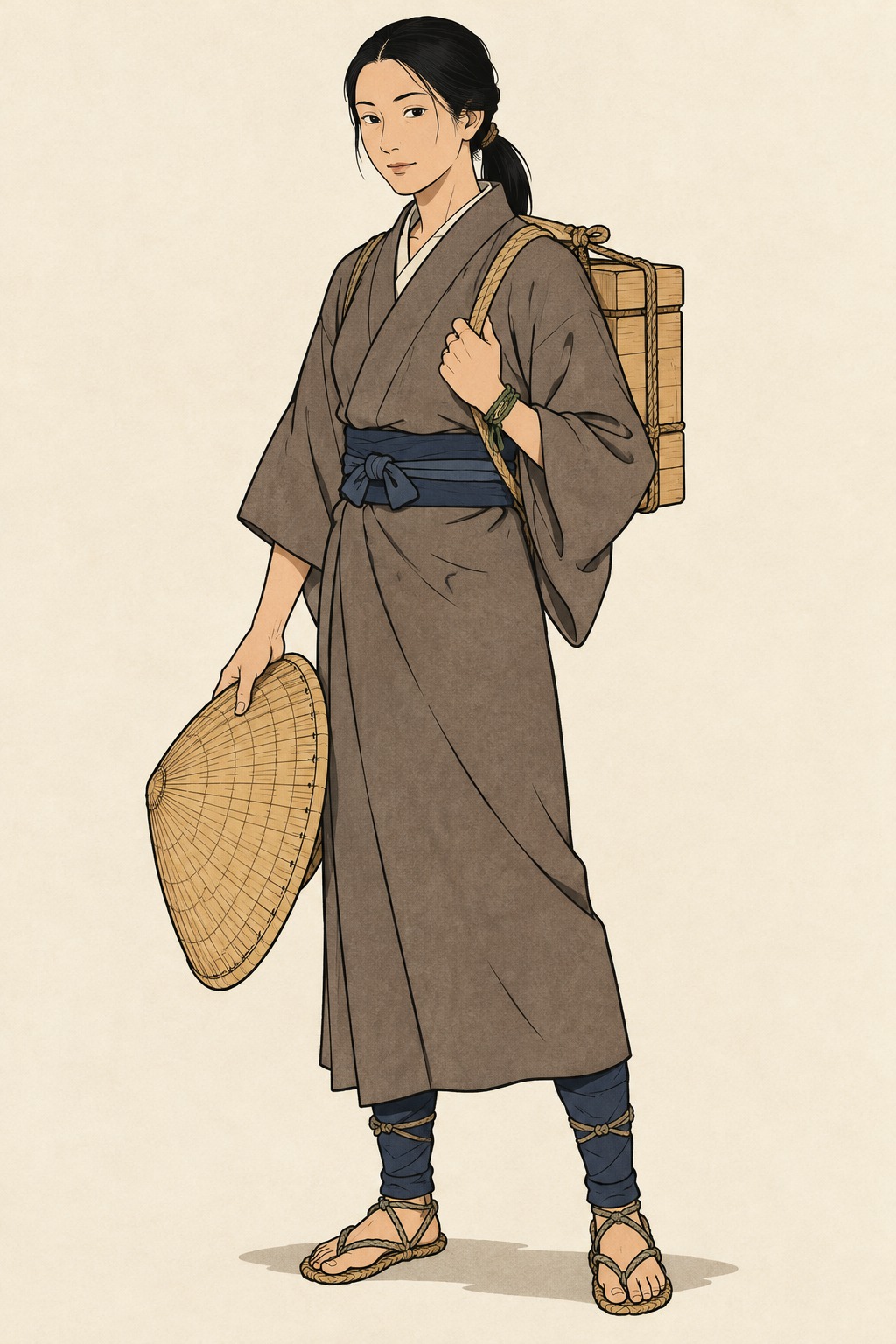
Ono, 28, sells her work as a spy without allegiance to either side. Born in Iga, her family was broken in 1581. Her clothes are those of an ordinary traveler, never black. In the book: a pregenerated character and the Covert Work example (Era Rules).
Shinkei, warrior monk of a temple community (fictional)
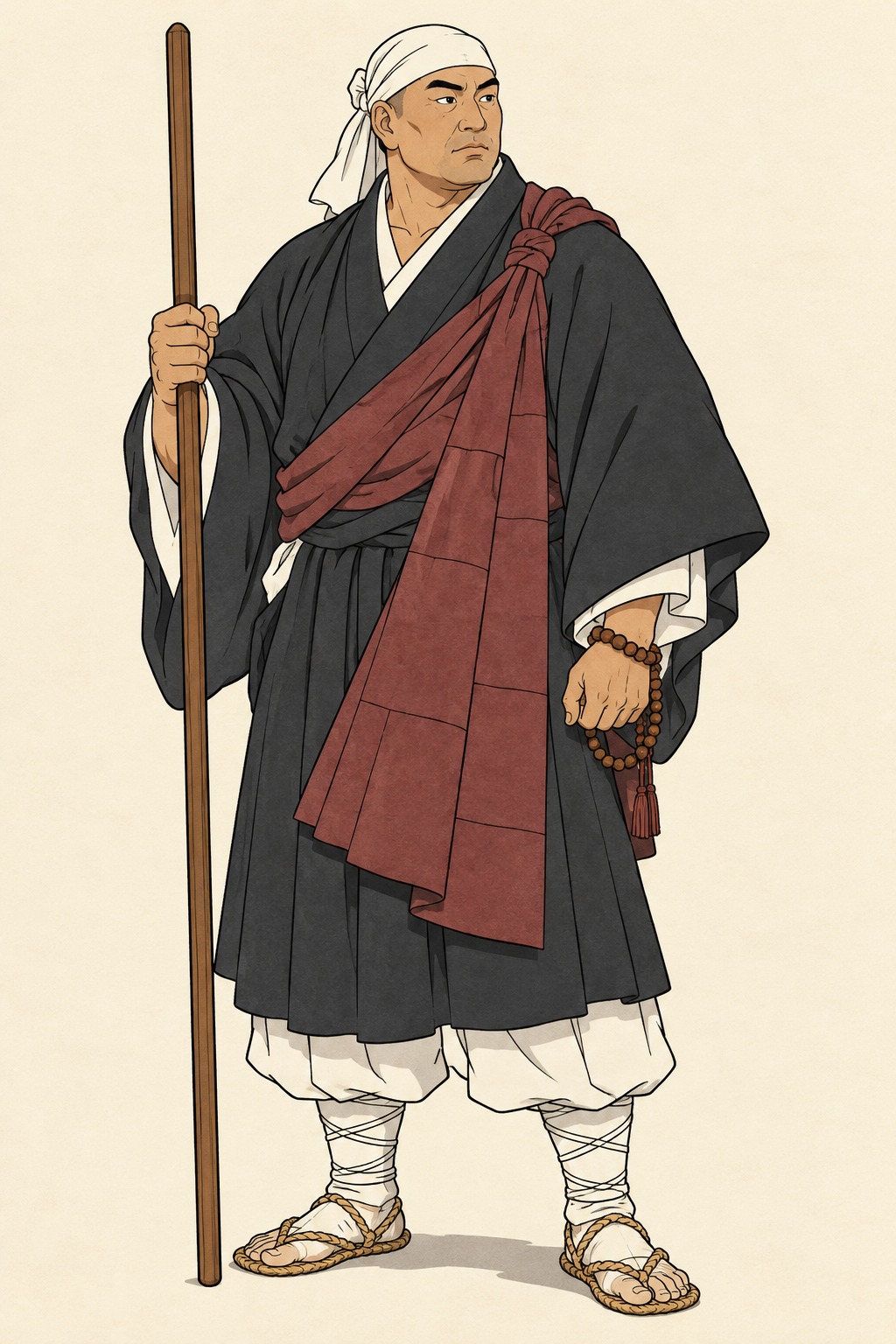
Shinkei, 36, guards a temple gate with a naginata. His community survived the wars that broke Hiei and Negoro before 1600. He uses a dharma name without a family name, practicing his faith without lecturing others. In the book: a pregenerated character.
Morita Zenbei, gunsmith of Sakai (fictional)

Sakai gunsmith Morita, 46, supplies matchlocks to daimyo and merchant houses. He recognizes Sakai and Kunitomo barrels at sight and is the cast's most skilled letter forger (Craft). In the book: a GM character (Pregenerated Characters, Izumiya Tomi and Morita Zenbei), built in Character Creation and Roles.
Izumiya Tomi, Sakai merchant and broker (fictional)
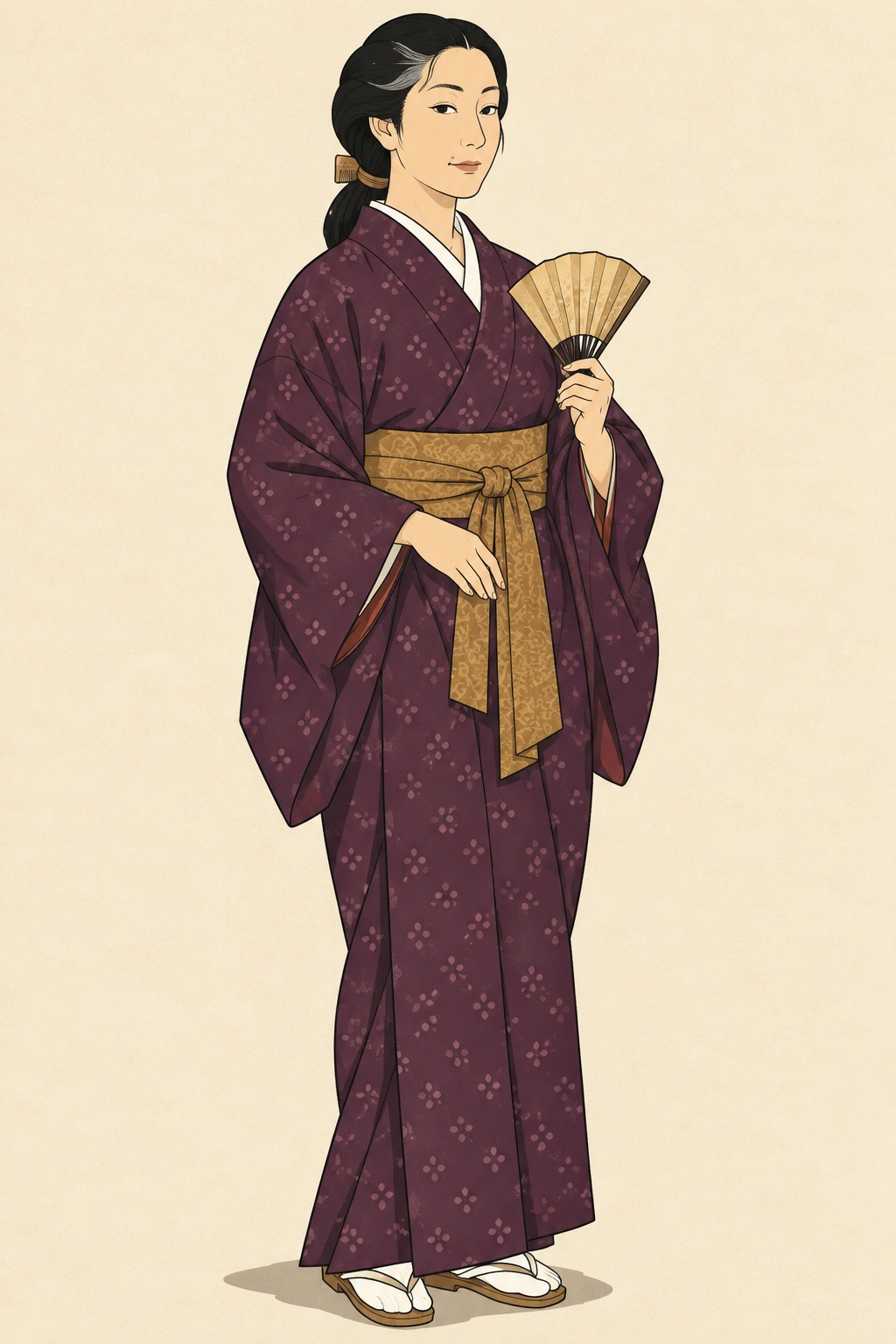
Izumiya, 41, runs a small Sakai house dealing in goods, credit and rumors. Like her city, she trades with all sides without joining one. She employs the party in the Starter Adventure. In the book: a GM character (Pregenerated Characters, Izumiya Tomi and Morita Zenbei), built in Character Creation and Roles.
Ota Sosuke [Simao], Nagasaki interpreter (fictional)

Japanese Christian Ota, 33, interprets for Portuguese traders, Jesuits and local officials. Neither of the worlds he connects trusts him. At baptism he took the name Simao. In the book: a pregenerated character.
Waka, entertainer of the Kyoto licensed quarter (fictional)
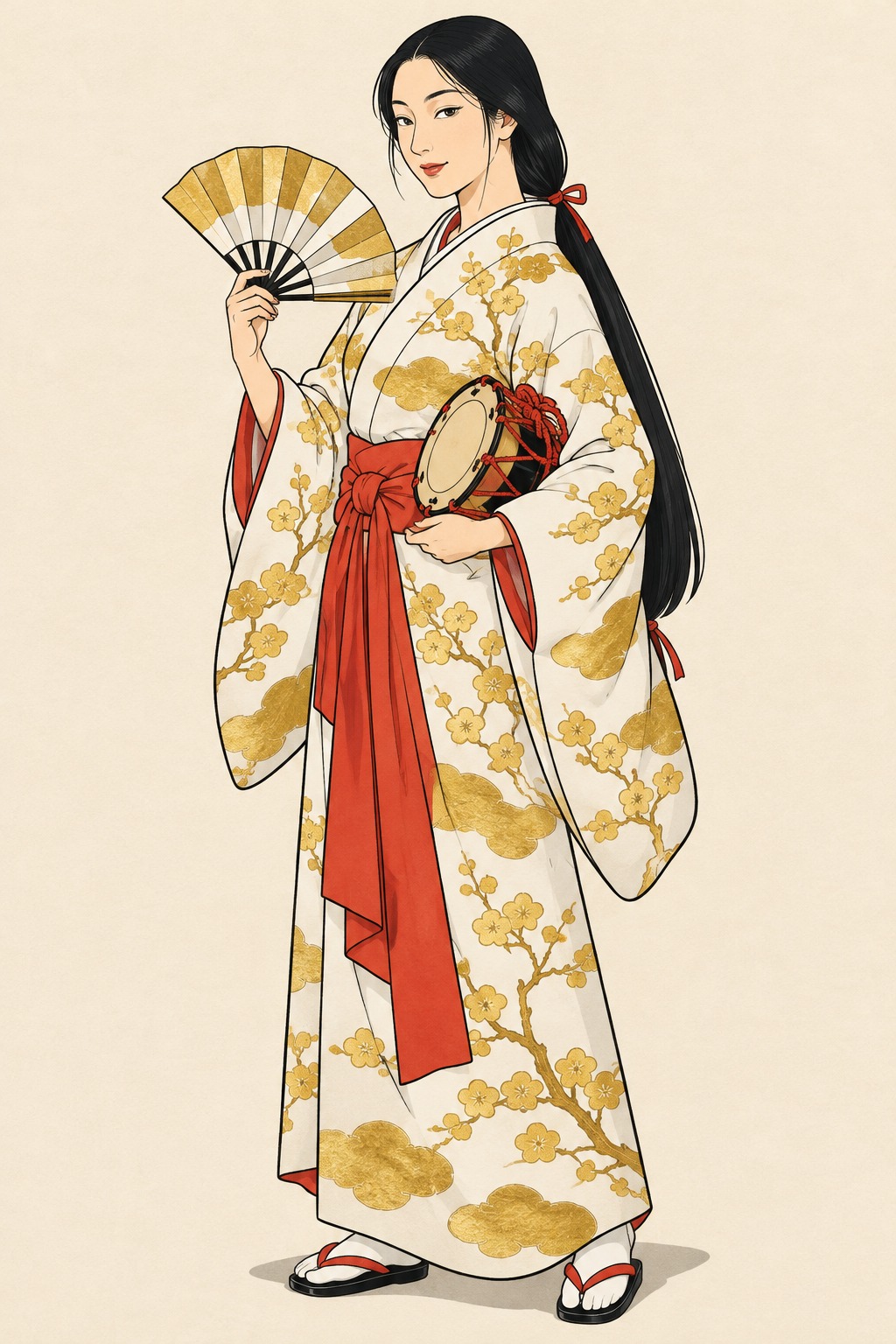
Waka, 26, dances and plays music in Yanagimachi's licensed quarter and in halls beyond it. Her knowledge of debts, affairs and arrivals in the city makes her conversation worth more than her performance fee. In the book: a pregenerated character.
A consistent face, build and dress identify each cast member across the artwork. Use these people as examples or NPCs, or create someone entirely different. Running the Era, Running the Cast, explains how to play the GM's two characters.
How to Play a First Session
Take a pregenerated sheet or build a character using Character Creation and Roles. The GM needs the Starter Adventure's GM Overview and Era Rules, Name and Allegiance, including The Sekigahara Clock. Begin in Izumiya's Sakai counting room, where she hires the party and provides the letter that opens the first door on the Omi road. Follow the Core Rules for rolls and consult Era Rules for requests to lords, school forms, climbing a wall at night or barrier tolls. End a session at a scene break and record Name and Duty on every Allegiance ledger. Natural breaks are marked in the Starter Adventure.
Reading Order
Players. After this chapter, read Character Creation and Roles, Skills and Talents, your school in Schools of the Sword and Fist, and Era Rules, Name and Allegiance. Consult Kyoto, Osaka, Sakai, Edo, Nagasaki for your Origin's city or region, and Gear and Prices for purchases.
Game Masters. Follow this chapter with The Era, The Realm in 1600, Running the Era and all of Era Rules. Read the Starter Adventure alongside Places and Campaign Tools. Keep Adversaries, Quick Reference and Historical Reference at hand.
Readers who want only the history. Read The Era, The Realm in 1600, Historical Reference and Sources and Further Reading for a short history of Sekigahara's year, without learning rules.