Running the Era
Plan sessions in AD 1600 Japan around obligation, the war and the party's place in society. This chapter covers correcting popular misconceptions, a lord's demands at each Clock step, and campaigns with mixed Standings or no lord. Look up procedures by heading in Era Rules, and roads, places and campaign tables in Places and Campaign Tools. The Era and The Realm in 1600 supply dates and people.
The Banners
- 心得 kokoroe (koh-koh-ROH-eh): understanding, a guide to how a thing is done.
- 采配 saihai (sye-HYE): the baton a commander holds to direct his men; taking charge.
The GM's Approach
What the Game Is About
In autumn AD 1600, lords, retainers and towns choose whom to support, usually through letters, hostages and pledges rather than swords. Give players choices with visible costs: a Duty, Name, a friend or access to a road.
- Say what is true, then what the popular version gets wrong. Films and novels shape players' expectations. Establish the period, correct a misconception in one sentence, then continue (Anachronisms at the Table).
- Keep the rules out of the lord's mouth. Have the lord ask a favor and the steward name its price; record the request and cost through Era Rules, Name and Allegiance. Instead of saying "you owe one Duty," say "he lends you the horse and you leave knowing he will send for you."
- Use the failures the rules give you. Favor a called Duty, lost Name, an attainted house or a late letter over killing a character.
- A rule's roll comes after the question. Establish the character's action and its obstacle before calling for a roll.
Ordinary Competence in Practice
- Let a retainer carry a message, a merchant weigh silver, a physician read a pulse or a ferryman cross a river without a roll.
- Roll when a rival, a deadline, a picket or a hostile lord can spoil the work. Think of a forged seal, a flooded ford or a letter read at the gate.
- When the work belongs to a character's Role, describe the success and ask what makes the job difficult today.
The Dates Stand
Follow the Sekigahara Clock's fixed dates (Era Rules, Name and Allegiance, The Sekigahara Clock). Fushimi falls and Kobayakawa Hideaki acts as recorded; decide where the characters are when the news reaches them. Build tasks around those dates and the intervening weeks (Your Lord's War).
Honor and Obligation Without a Lecture
Show obligation through transactions: a request, a payment and a debt. Let those dealings convey the era's loyalty.
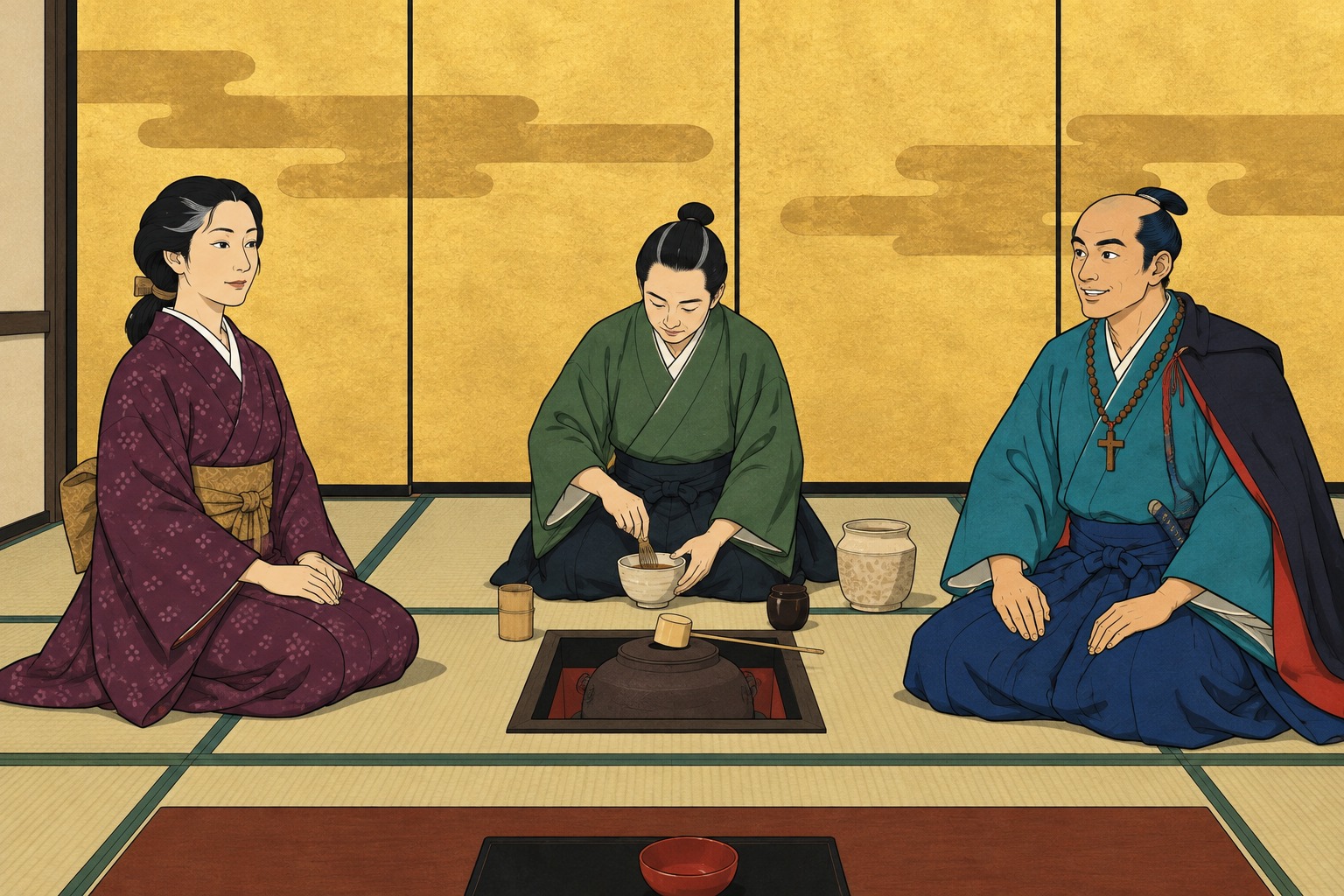
- Put the obligation in a person. Give every Allegiance someone the party can meet (Era Rules, Name and Allegiance). A steward saying "my lord remembers" conveys duty without a speech.
- Let the call be small and the cost be real. Carrying a letter across a picket can fill a session and force a choice between the party's route and the lord's errand.
- Show what refusing costs, once. Refusing a called Duty costs 1 Name and leaves the Duty outstanding. Show a retainer turning away in the next scene; leave the consequence unspoken.
- Give both sides a good reason. Keep both reasons in play: the lord must feed his men and maintain his house; the refusing retainer has a mother in the next province.
- Let a gift cost something. State the debt when someone grants a horse, a seat in the hall or a word at the gate.
- Ask what the character believes, once. Let players decide what real but conditional loyalty means to them (The Era, Warriors). They need no creed from the GM.
The Cost of a Name. Keep the number on the sheet and show its public effect: after a change in Name, a guard bows lower or a host seats the character farther from the lord.
Obligation among people with no lord. A broker, an abbot, a school master, a village headman and a dead man's family can each hold a ledger (Era Rules, Name and Allegiance, Calling In). A townsman with no lord is not free; he is owed by people who are not samurai.
Anachronisms at the Table
Film, television and games supply players with samurai and ninja drawn largely from later periods or invention. Offer the period equivalent with a brief, kind correction, then continue the scene.
Bushido. The written bushido code belongs after 1600; the idea draws on the Edo age and a book of 1900 (The Era, Warriors). Warriors follow house law, family precepts (kakun) and their lord's favor; many change sides at Sekigahara. Ask what a samurai's house, teacher and lord expect, rather than assigning him a "code."
| The table expects | In AD 1600 | Advice |
|---|---|---|
| A ninja in a black suit and mask | There are shinobi (Schools of the Sword and Fist). They dress as ordinary people; the black suit is a stage convention of the 1700s (LATER) | Describe a peddler, a pilgrim, a servant; let the party discover the spy |
| Shuriken, a straight "ninja sword" (ninja-to), a blowgun | None of these is a recorded shinobi tool of 1600; fire, the matchlock and ordinary blades are what the record gives them (LATER, LEGEND) | Give a shinobi a matchlock, a short blade, a rope and a hook |
| A secret village of ninja | Iga and Koka are real hill country of warrior-farmers whose leagues were broken in 1581 and 1585 (Places and Campaign Tools, Iga and Koka) | Give the village a headman, debts and a lord who hires |
| Hattori Hanzo, master of ninja | A Tokugawa spear officer of Iga descent who died in 1596 or 1597; the ninja Hanzo is later fiction (LEGEND) | Use the Iga foot guards at Edo, under his son, and leave the ninja Hanzo out |
| The Sanada Ten Braves | Fiction of later centuries (LEGEND). Sanada Nobushige is called Yukimura only in later tales | Use the Sanada as a family with a castle and a siege |
| "Ninja taijutsu" schools with long histories | No record of Shinden Fudo-ryu or Togakure-ryu before the 1890s (LEGEND) | Use the schools in Schools of the Sword and Fist |
| Karate, a Shaolin link, a master from Okinawa | None in Japan in 1600; Ryukyu is a separate kingdom (LATER, LEGEND) | Use the wrestling and grappling arts the book gives |
| A ritual of seppuku with a fixed form, a banned junshi | The ritual form and the ban of 1663 are Edo (LATER) | Use The Era, Death and Seppuku: no fixed ceremony in 1600, and junshi is not banned |
| Geisha | Geisha appear in the 1750s (LATER). The licensed quarter has courtesans and performers | Name the performer or the woman of the quarter by what she is |
| Kabuki | Okuni's kabuki dance begins about 1603 (LATER) | Use noh, tea, poetry and street performers |
| Edo as the shogun's capital | Edo is a ten-year-old castle town; the shogunate begins in 1603 | Edo is a building site |
| A closed country and a ban on the Christians | The ban comes later. In 1600 an old edict stands, unenforced, and the Jesuits work openly | Christians in Nagasaki, Osaka and Kyoto go about their lives (The Realm in 1600, Christians) |
| Tomoe Gozen and the "women samurai" of film | Tomoe's existence is unsupported (LEGEND); "onna-bugeisha" is a modern term. Women of arms are recorded in three forms | Use the recorded forms (The Era, Women): a woman who holds a house for an absent lord, a woman who defends a castle, and Nomura Shino of the cast |
| Inns with meals at every stage, an official lodging for lords on every road | The standardized post-station system is of 1601 and after | Use temples, tea houses and lodging houses (Places and Campaign Tools, A Town on the Road) |
What the Stories Say: The Samurai Film
Samurai films offer the lone, principled swordsman defeating a hundred men and delivering a speech. The record offers rice debts, matchlock companies and negotiated surrenders. Combine cinematic courage with historical costs: the swordsman is a ronin without a stipend; his hundred opponents are a levy longing to go home.
Running Without a Required Lord
Ronin, townspeople, priests and wanderers can sustain a campaign without ever meeting a daimyo (Places and Campaign Tools, Three Campaign Shapes). Use other sources of pressure on such a party.
- Use ledgers that are not a lord's. Obligation among people with no lord, above, lists who can hold one.
- Let the war come through other people. As the Clock advances, brokers need letters delivered, priests need missing men found, and headmen need villages concealed.
- Give a ronin a living. Without a stipend or lord's ledger, a ronin lives on bouts, contracts and debts owed to him. Gear and Prices, Hirelings and Pay, sets a contract's pay and obligations. Summarize a month in a paragraph (Gear and Prices, Keep, Lodging and Travel).
- Count the days. Use Places and Campaign Tools, Travel Days by Land, to establish arrivals when no lord's summons directs the party.
- Offer a patron, not a master. A seasonal hire contract can employ a ronin (Gear and Prices, Hirelings and Pay). It opens no Allegiance ledger; the lord owes only the agreed pay.
- Let them choose the side late. Leave the Sekigahara side undecided until letters reach the party. Your Lord's War lists each step's offers in the free party column.
Mixed Standings
Retainers, ronin, townspeople, priests and outcasts commonly share a party. Each has a Standing that determines access (Era Rules, Name and Allegiance, Standing).
-
Use the Attitude markers. Set the markers that matter to the audience (Era Rules, Name and Allegiance, Attitude), then show their effect: the gate keeper bows to the retainer and ignores the townsman.
-
Spend the high Standing on the party. A retainer can ask his own house to introduce the others to a man above them: an Ordinary Ask of his lord or steward (Era Rules, Name and Allegiance, The Request), which costs him 1 Duty when granted. The introduction waives the raise for Reaching Up (Name III). A fellow player character's word alone does not; the rule asks for an Allegiance.
-
Split the scene when the door shuts. A Closed 3 door is closed (a townsman at the muster of mounted men, a stranger in the lord's keep). Let the character at the door do something else: listen at the kitchen, ask the servants, hold the horses. The scene continues in two rooms.
-
Give the lower Standing a place where it wins. Set scenes where each character has access: the townsman knows rice prices and brokers, the outcast the riverbed and the dead, the priest temples and sickrooms.
-
Do not penalize the player. Give a low-Standing character's scenes the same attention as a lord's.
-
Keep the rungs from freezing play. When Standing blocks progress, offer a costly route through: sponsorship, bribery, disguise or debt.
Pacing a Sekigahara Campaign
Pace the Clock's eleven steps, 0 to 10, over 8 to 13 sessions for a short campaign (Places and Campaign Tools, Seasons of Play). Use the table for timing and Your Lord's War for each step's demands.
| Clock step | What happens | Sessions | What to hold back | How to speed it |
|---|---|---|---|---|
| 0 to 1 | The summons to Uesugi; Ieyasu goes east | 1 | Who is on which side | Start at step 1 with the party in Osaka or Fushimi |
| 2 | The Western combination; hostages; Gracia | 1 to 2 | The letters from both sides | Let the first letter come in the first scene |
| 3 to 4 | Fushimi falls; Tanabe; Oyama, and the East turns | 1 | The siege, the lord's choice and the news from the east | A Duty call to march or hold; a rider's arrival at the end of the session |
| 5 | Gifu falls; Ogaki faces Akasaka | 1 to 2 | Who sells what to whom | Open at the forward line |
| 6 | Ieyasu marches; Otsu; Tanabe opens | 1 to 2 | Who will fight | A pledge or a bribe in a hurry |
| 7 | The night march to the basin | 1 | The party's place | Play the night, not the plan |
| 8 | Sekigahara | 1 to 2 | The field | Three scenes: the approach, the line, the flight |
| 9 and 10 | The pursuit; the settlement | 1 to 2 | Who is attainted | Ronin and fugitives; Attitudes reset |
- One step is not one session. Stay on a step while the party has work there, then advance.
- Give the day of the battle three scenes. The approach in the dark, the place in the line (Era Rules, Battle, Fire and Fear) and the flight. Do not play the whole army; a character who commands a file uses the Battle rule (Era Rules, Battle, Fire and Fear), and three units a side is the most the table should run.
- Let the field be local. Describe the mud, banner and ditch within the party's hundred yards. Bring the wider result through a rider, a displayed head or a rumor.
- Open the next season with a month. After step 10, summarize winter in a paragraph. Open the next season with a stipend, a road or a gate (Seasons of Play).
- The revision and the tale. Follow Kobayakawa Hideaki's opening attack in the main text; the probing shots and noon defection belong to an Edo story (The Realm in 1600, The Day). Describe events visible from the party's place in the line.
Your Lord's War
Use the tables for a house's retainers or a free party caught in the war. Follow the fixed steps and dates of the Sekigahara Clock (Era Rules, Name and Allegiance, The Sekigahara Clock). Read the East, West or free column as it advances, then locate the house on battle day. Answer a called Duty by obeying, refusing for 1 Name (Calling In II), or leaving (Leaving).
The Call at Each Step
| Step | A retainer of an Eastern house | A retainer of a Western house | A free party |
|---|---|---|---|
| 0 | March or stay. The levy against Aizu is announced in Hideyori's name; the house musters by its koku | March or stay. The same levy reaches houses that will later be Western; the lord sends men or an excuse | No call. Work for the levy: rice, powder and horses bought, porters hired |
| 1 | March east with the lord, or hold his house at Osaka or Fushimi with his wife and heir | Stay. The lord waits at his castle or in Osaka and reads his letters | A letter to carry east while the roads are open |
| 2 | In the west, hold the house and get the lord's family out of Osaka before the Western guard takes it. On the march, carry the news east | The house declares. March to the castle or to Osaka, sign the muster, watch the Eastern houses' gates | A letter from each side, and pickets on both roads. The first offer of hire from each |
| 3 | Hold at Fushimi, which falls on 8.1 [8 September], or at Tanabe. Elsewhere, march on with the Aizu column | March to the siege lines at Fushimi or Tanabe | Powder sold, a family carried out of a siege, a line scouted for pay |
| 4 | The house declares at Oyama. March south-west with the vanguard. A retainer in the west learns that the hostages in Osaka are in Western hands | Hold the hostages and the roads of Omi and Mino; carry the lords' pledges | Choose whose papers to carry. Eastern papers pass east of Kiyosu, Western papers in Omi and the home provinces |
| 5 | With the vanguard: march on Gifu, which falls on 8.23 [30 September], then hold at Akasaka | Hold Ogaki and its pickets | The forward line buys what a stranger has seen, on both sides of 4 km of fields |
| 6 | With Ieyasu: march from Edo on 9.1 and reach Akasaka on 9.14. With Hidetada: march the Nakasendo and stand before Ueda. In Otsu or Tanabe: hold | Hold Ogaki, or march to the siege of Otsu or Tanabe. Carry letters to the lords who have not chosen | Letters, bribes and pledges between the camps. The last days in which either side pays for information |
| 7 | March from Akasaka in the night, behind the Western army | March the 4 ri from Ogaki to the basin in rain | The last chance to be in the basin or well out of it |
| 8 | Your place in the line (Era Rules, Battle, Fire and Fear), by the house's place in the table below | The same | At the edge of the field as carriers, guides or villagers, or a day away when the news comes |
| 9 | March on Sawayama, or hunt fugitives in Omi and on Mount Ibuki. Heads are logged for reward (Name IV) | No call: the house is broken. A retainer is a fugitive or follows his lord's flight (Places and Campaign Tools, Sekigahara and Its Basin, After the battle) | Hide a fugitive or sell him. A village that shelters one answers for it |
| 10 | The lord is rewarded and moved. Hold the new land, among people who served the house before | The house is attainted or cut. A retainer is a Ronin unless a new lord takes him, with the marker West at Hostile 2 before the victors' officers (the Clock IV) | The marker neither side is Wary 1 with both. New lords hire guides, clerks, builders and interpreters |
The House on the Day
| The house stands | On 9.15 [21 October] | The call | Steps 9 and 10 |
|---|---|---|---|
| In the Eastern front line (with Fukushima, Ii Naomasa, Kuroda, Hosokawa, Kato Yoshiaki, Tanaka) | On the plain, facing the Western center | Attack at the opening, then pursue | The pursuit and the largest rewards: Fukushima goes from 200,000 koku to 498,000 |
| With Ieyasu's main body | Behind the front line, east of the village | Hold in reserve, then advance when the line breaks | Sawayama, the guard on the prisoners, the escort to Otsu and Osaka |
| With Hidetada (East) | On the Nakasendo, not at the field; reaches Otsu on 9.20 [26 October] | The siege of Ueda, then a forced march through the Kiso rains | Arrives after the battle. The house keeps its lands and has nothing to show for the war |
| In the Western center (with Ukita, Konishi, Otani, Ishida, Shimazu) | On the west side of the basin and on Sasao hill | Hold the line; it breaks when Kobayakawa turns | Flight by Mount Ibuki, the Ise road or the road to Osaka. The house is attainted. Shimazu's men cut their way out and go home by sea, and that house keeps its domain |
| On Mount Nangu (with Mori Hidemoto, Kikkawa, Ankokuji, Natsuka, Chosokabe) | On the hill to the south-east | None comes. Kikkawa's vanguard blocks the path and the lord gives no order; a retainer who goes down to fight goes without leave | Withdrawal without a fight. The Mori are cut to two provinces; Chosokabe and Natsuka lose everything |
| On Matsuo hill or below it (with Kobayakawa; Wakisaka, Ogawa, Akaza, Kutsuki) | On the hill to the south-west | Attack Otani's flank. The lord has changed sides and the call is his: a retainer who follows it has not left his Allegiance, and one who refuses it has (Leaving III) | Kobayakawa is rewarded; Wakisaka and Kutsuki keep their fiefs; Ogawa and Akaza are attainted. The marker switched is Wary 1 with warriors of both sides (the Clock IV) |
| Away from the field | East: in Otsu or Tanabe under siege, in Kyushu with Kato Kiyomasa or Kuroda Josui, in the north against the Uesugi. West: in the siege lines at Otsu or Tanabe, in Osaka castle with Mori Terumoto, in the north with the Uesugi | Hold, or keep the siege; the news of the 15th arrives days later | The house's fate follows its side. A Western house that was never on the field is attainted or cut all the same |
Find the lord's side and position in The Realm in 1600, The Great Houses and The Plain. Place an invented retainer house with its daimyo.
Pacing a Session
For a three-to-four-hour session, use Places and Campaign Tools, Session Shapes.
- Open on the shape's first beat. A letter, a summons, a gate. Do not review the last session for more than two minutes.
- Call one Duty. If a character owes at least 1 Duty, call one in at the start of the session (Era Rules, Name and Allegiance, Calling In).
- Give one rumor. Roll on a table in Places and Campaign Tools, or choose. A rumor is something the party can act on.
- Offer one Name chance. A bout, a task, a witnessed deed (Era Rules, Name and Allegiance, Gaining Name).
- End on the next step. Close with a date, a letter or a knock. Note the Clock step in your records.
Peoples and Faiths at the Table
Find each people's name, aims in AD 1600 and owning section below.
| People | Called | What they want in AD 1600 | Where they are written |
|---|---|---|---|
| The Ainu | Ainu, of Ezo | Their trade in furs, fish and hawks; the Matsumae house holds a trading post at the south tip of Ezo | The Realm in 1600, Ezo and the Ainu |
| The Ryukyuans | The people of the Ryukyu Kingdom | A kingdom kept, in tribute to China and trade with Japan | The Realm in 1600, The Ryukyu Kingdom |
| The Koreans in Japan | Korean craftsmen and captives; the potters of Kyushu | To go home, or to make a life | The Realm in 1600, Korea |
| The Portuguese and the Jesuits | Portuguese; fathers and brothers of the Society | The silk and silver trade and the mission | Kyoto, Osaka, Sakai, Edo, Nagasaki, Nagasaki |
| The Chinese | Chinese merchants and smugglers | Silver for silk, quietly | The Realm in 1600, China |
| The Dutch and the English | Will Adams, the pilot of the Liefde, and the survivors of her crew | Release, and a place | Kyoto, Osaka, Sakai, Edo, Nagasaki |
- Faith is a marker. A Christian, a Nichiren believer or a priest of the True Pure Land sect before an audience carries a marker you set (Era Rules, Name and Allegiance, Attitude). No rule gives a faith a magic power.
- Rank is seen before it is heard. A man's dress, his sword and his seat in a hall show his Standing before he speaks.
Setting Difficulty
- Use the scrutiny. The harder the eye on the character, the higher the difficulty: a gate guard at night is Average, a magistrate who knows the station is Hard, a lord's steward who knows the face is Severe (Era Rules, Covert Work, Disguise).
- Use the Ask. A small favor is Easy, an ordinary one Average, a great one Hard, a very great one Severe (Era Rules, Name and Allegiance, The Request). Standing raises a Request only through Reaching Up (Name III): one step when the Ask goes two or more rungs up without an introduction. Add nothing more for low Standing; everything else Standing does is an Attitude marker.
- Use the stakes. Hard and Severe belong to checks the story turns on. Do not roll a gate twice.
- Let a failure move the story. A failed Request leaves the party owing a service. A failed ford leaves them a day late. Neither stops the session.
Real People at the Table
Represent real people through their households, letters and armies (The Realm in 1600). Use third-person references, retain recorded death dates, and give them no dialogue in play or stat blocks.
Apply this to everyone named in the record, from Ieyasu and Mitsunari to Furuta Shigekatsu at Matsusaka, Kinoshita Iesada at Himeji and lords retired on Mount Koya. Let the party meet a real lord's people while he remains in his castle, dispatches stewards and signs letters. Fictional retainers, stewards, wives, clerks and captains may speak for real houses; invented retainer lords may also speak.
- Use the office, not the officeholder. A steward, a clerk or a fictional retainer speaks for the great man and carries the scene.
- Use the letter and the crowd. Read a letter aloud, post a decree, describe a column passing.
- Quote from the record only. Will Adams is quoted only from his own letters.
- No killing, no changing. The plot to kill or turn a great man before his date fails short of him; the party is left with the consequences.
Running the Cast
Pregenerated Characters supplies seven of the nine cast sheets. The GM plays Izumiya Tomi and Morita Zenbei, with builds in Character Creation and Roles; any cast member can be an NPC. Use the first table for wants and opening scenes, the second for sides, ledgers, campaign shapes and Clock effects.
| Cast member | What he or she wants | A first scene |
|---|---|---|
| Hirano Heita Masatsugu, Eastern-side retainer | To carry out his lord's call and keep his Name | A summons to the castle gate before the first day of the 8th month |
| Nomura Shino, Western-side retainer's daughter | To reach her father's house and be useful to it | A letter that her father's lord wants carried west |
| Sugiyama Jinbei Tomotaka, ronin swordsman | A stipend, or a bout worth fighting | A hire from a Sakai broker; a challenge in a wine shop |
| Ono Kane, Iga shinobi | Pay and a safe road home | A contract from a lord who will not say his name |
| Shinkei, sohei warrior monk | To keep his temple out of the war | A guest the abbot will not turn away |
| Ota Sosuke [Simao], Nagasaki interpreter | A place in the silk trade and a safe faith | A Portuguese captain who wants a message put into Japanese |
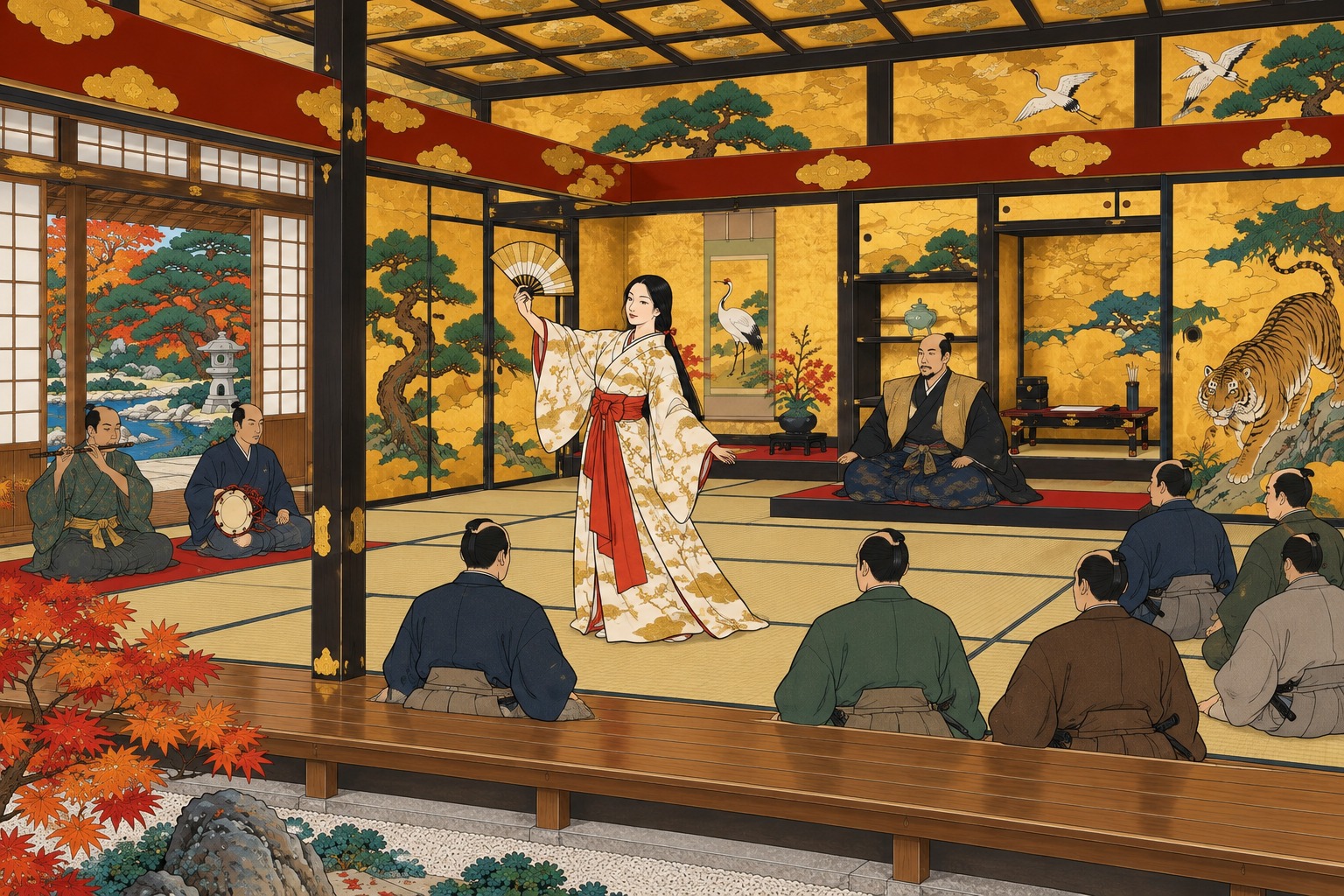
| Waka, entertainer of the Kyoto licensed quarter | A patron who pays her debts | An invitation to dance for a lord whose hall has ears |
| Izumiya Tomi, merchant and broker of Sakai (GM) | Information that moves silver | A letter to the east that must not be read |
| Morita Zenbei, gunsmith of Sakai (GM) | Orders from both sides and no questions | A Western officer orders twenty barrels to a Portuguese pattern and wants no record |
| Cast member | Side and ledger | Campaign shape | At step 2 | At step 10 |
|---|---|---|---|---|
| Hirano | East. His lord's house | Under a Lord | In the west with his lord gone east; the lord's wife and daughter are held in Osaka | His house is rewarded and he is sent to a new land, or he is dead on the plain |
| Nomura | West. Her father's house | Under a Lord | Called home with what she knows of the eastern roads | Her father's house is attainted; she is a ronin's daughter unless a new house takes her |
| Sugiyama | None. No ledger | Free Agents, or A Ronin or Shinobi Band | Offered hire by both sides | One ronin among many, or a retainer again if a lord grants a stipend (Standing II) |
| Ono | None. No ledger; a Koka go-between finds her work | A Ronin or Shinobi Band | Sells what she saw on the Tokaido | Paid, or hunted by the side that learned of the other sale; her village answers for a guest |
| Shinkei | Neither. His temple | Free Agents, or a band on the temple's errand | The abbot wants a Western temple's silver stopped on the road | The temple stands under the new order and owes the victors an account |
| Ota | Neither. The mission and its confraternity at Nagasaki | Free Agents | Interprets for a Portuguese factor who sells to both sides | Works for the new masters of Nagasaki and Sakai, with the Christian marker unchanged |
| Waka | Neither. The house at Yanagimachi that holds her contract | Free Agents | Dances in halls where the lords' letters are read | The patrons have changed; the contract has not |
| Izumiya | Neither. Her own house; she holds other people's ledgers | Free Agents, as the broker who hires | Needs a letter in the east before the pickets close | Lends to the victors and collects from the ruined |
| Morita | Neither. His shop and his guild | Free Agents, as the maker who supplies | Takes orders from both sides | Sakai is in Tokugawa hands and his orders come from one buyer |
See Pregenerated Characters for sheets and ties. No cast member speaks for a real person.