Reading an Entry
Entries follow a common structure. The opening card lists territory, population, trade, defences and officials in 1716; Reach points to the relevant Era Rules. The sections below cover Trade and Economy; Ships, Forts and Force; Society and Law; From 1660 to 1730; In 1716; Pirates, Privateers and Smugglers; and Meeting Them. Sections are omitted where the record supplies nothing useful. Smaller powers and trading companies receive a card and a shorter account.
Truth and Legend. Established history carries its date. Disputed or unverified accounts appear in Legend boxes and enter play as rumours.
Dates and numbers. The map shows 1716; play spans 1660 to 1730. Every figure from another year is dated. Ranges acknowledge differences between sources.
Pirates are one part. These powers govern colonies, wage wars, collect taxes and regulate commerce. Piracy operates within that larger world. For the spread of a Company's Name, see Era Rules, Infamy and Reach; for official responses, see Law at Sea and Ashore. Entries refer to those rules without repeating them.
Hooks. Meeting Them offers fictional situations involving ordinary people of the period. Named historical officials are real.
Part One: Britain and Spain
The Crown, the Colonies and the Navy

- Holds. Jamaica; Barbados; the Leeward Islands (Antigua, Nevis, Montserrat, the Virgins and all of St Kitts, held since the French surrender of 1702 and ceded at Utrecht in 1713); Bermuda; the Bahamas on paper; the mainland from Carolina to New England; Nova Scotia and Newfoundland; and the Bay of Honduras logwood camps, which Spain does not recognise.
- People. Jamaica about 7,000 whites and 55,000 enslaved (1713). Barbados 16,888 whites (1715). Virginia about 80,000 by one estimate; New England about 160,000 (1715). Bermuda 8,364 (1721).
- Trade. Out: sugar, rum, tobacco, logwood, rice, tar and pitch, deerskins, salt cod, flour, lumber. In: manufactures, provisions, enslaved people.
- Ships and Defense. A few small King's ships; no commander in chief on the Jamaica Station from 1713 until Vernon's commodore's command in 1720; militias everywhere. Merchant hulls: sloop, brigantine, snow, pink, schooner.
- Officials in 1716. George I; Peter Heywood at Spanish Town; Robert Lowther at Barbados; Walter Hamilton at Antigua; Benjamin Bennett at Bermuda; Alexander Spotswood in Virginia; Robert Hunter at New York; Samuel Shute at Boston from 5 October; Robert Daniell, Deputy Governor of South Carolina from April 1716; Charles Eden in North Carolina.
- Reach. Era Rules: Infamy; Law at Sea and Ashore.
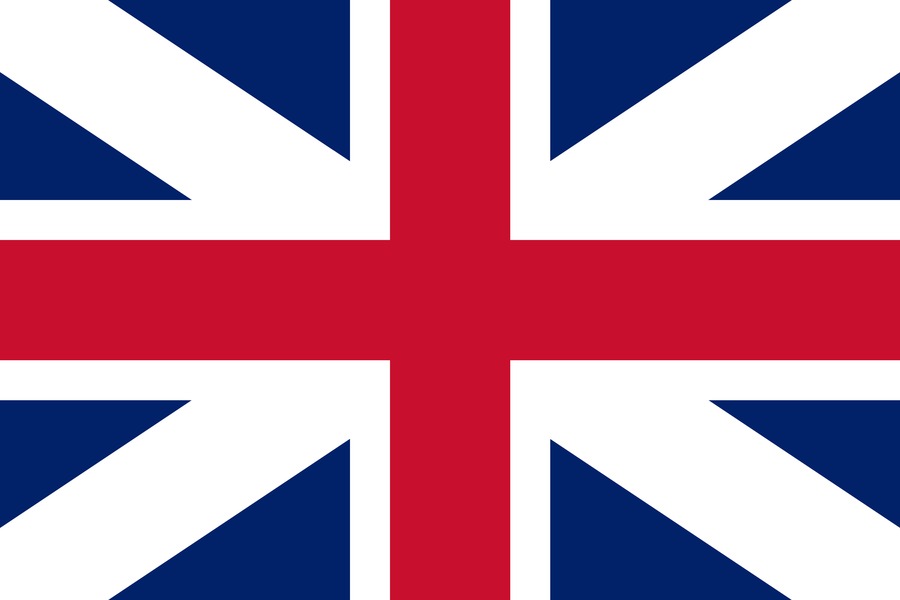
- Flags in 1716. The Union flag of 1707, the crosses of St George and St Andrew on blue, flies from the King's ships (St Patrick's cross joins it only in 1801). Merchant ships fly the red ensign with the Union in the corner.
Britain

Trade and Economy
The Navigation Act of 13 September 1660, the Staple Act of 1663 and the Act of 1696 govern commerce. Customs officers may board, search and seize; Admiralty courts hear offences without a jury (Trade and Shipping, The English Frame). One estimate puts the cost to a colonist at about £4 per £1,000 of income. Evading the collector therefore improves profits rather than making trade possible.
Sugar concentrates wealth. By 1680, 175 large Barbados planters owned over half the island's arable land. Jamaica's 57 sugar estates of 1673 became 430 plantations by 1739. Chesapeake tobacco travels in hogsheads of about 1,000 pounds, escorted by the Navy during war. Carolina first exported deerskins and enslaved Native people; by 1717 its tar, pitch and turpentine exports reached 35,000 barrels. The Council of Trade valued logwood from the Bay and Laguna de Términos at £60,000 annually; England received 4,965 tons between 1713 and 1716.
Northern colonies supply plantation food and materials. New England exchanges fish, lumber and provisions for molasses, increasingly buying from cheaper French, Dutch and Spanish islands. Newfoundland sends cod to Iberia, the Mediterranean and the islands. Philadelphia and New York export bread and flour, although guardacostas shut New York out of its Spanish provisions market after 1715. Bermuda builds sloops and produces salt: 65 Bermudian vessels worked the Turks salt ponds in 1716.
People form the largest cargo. In the 1660s the Royal Adventurers sold Africans at Bridgetown for £16 to £17 each. The Royal African Company (the African Company, or RAC) received its monopoly by charter in 1672 but was insolvent by 1708. From 1698 any English merchant could enter the trade by paying 10 per cent towards the forts. That levy expired in 1712; Bristol and Jamaica merchants can now fit out Guineamen without it. Bristol entered after 1698. Jamaica also supplies enslaved people to Spanish America under the asiento (Spain).
Ships, Forts and Force
Based at Port Royal since 1655, the Jamaica Station has had a resident Naval Officer overseeing its wharf since 1675. In 1716 the facilities are an anchorage and a careening hulk; dockyard wharves and storehouses will follow in 1735. No commander in chief is listed between 1713 and Vernon's arrival as commodore in 1720. Captains command their own vessels. HMS Adventure is present in July 1716. HMS Swift, Captain Thomas Durell, arrives on 4 December with six guns and 40 men, then waits for orders from home. Captain Balchen's HMS Diamond also serves here.
Parliament funded 10,000 naval seamen in 1715, down from about 40,000 during the war; by 1722 the figure is 7,000. Sixth rates mount 20 to 28 guns. Under the 1719 Establishment a 20-gun ship measures 106 feet on the gundeck, about 374 tons, with 140 men: larger than most vessels pirates encounter. Fifth rates carry 30 to 42 guns, fourth rates 50 or 60. The Leewards' station ship is Seaford, a 24-gun sixth rate of 248 tons, dismissed by Walter Hamilton as "such a small bable". Captain Tobias Hume's 32-gun fifth rate Scarborough joins that station in 1717. Virginia has Shoreham and Lyme, with the 42-gun Pearl arriving in 1717.
Sickness, death and desertion keep warships in harbour. In July 1717 Lowther reported that Barbados's ships spent nearly two thirds of the year there. Leeward captains are forbidden to careen, leaving their hulls foul. Naval wages, fixed in 1653 and unchanged for the rest of that century, cannot match merchant pay; men desert in Kingston. Scarborough reached the pirates at St Croix in January 1717 only after Hamilton's associates subscribed money to hire a crew. Impressment remains disputed. The Attorney General ruled in 1716 that colonial mariners' exemption under the American Trade Act of 1708 (6 Anne c. 37) expired with the war; colonists rejected that view. Jamaica's Instructions place naval captains under the governor from 1718.
LEGEND
One popular history counts ten small Royal Navy vessels in American waters in 1716: four fifth rates, four sixth rates and two sloops of war. Admiralty lists have not verified this total.
Colonial fortifications are weak. Fort Charles survived Port Royal's 1692 earthquake, but Lawes found Jamaica's defences ruinous in 1718. Barbados appointed six Commissioners to oversee fortification expenditure in 1715. Since 1702 the Leewards' planters have paid over £78,000 in the 4½ per cent export duty and received £15,241 in Ordnance stores. Brimstone Hill, St Kitts, remains unfinished after guns were hauled up in 1690. English Harbour has Fort Berkeley but no yard. By 1718 the Bahamas fort is decrepit. Antigua drills white males aged 14 to 65 monthly. Carolina has about 1,400 men fit for arms in 1716 and also arms enslaved men.
Society and Law
London appoints each colony's governor, who nominates a council alongside an elected planter assembly. Jamaica adopted this arrangement in 1662; its Assembly has disputed governors' authority since the 1670s. Established in 1696, the eight-commissioner Board of Trade examines correspondence and drafts Instructions. From 27 September 1717, colonial trade acts require a suspending clause before taking effect. Under the Piracy Act of 1698, at least seven commissioners try pirates; merchants, planters and naval officers may serve. Vice-Admiralty courts condemn prizes.
A small white planter class controls an enslaved majority. Jamaica has roughly eight enslaved people per white inhabitant; Barbados has lost white smallholders since the 1660s. Barbados's 1661 slave code punishes an enslaved person's violence against a Christian with whipping for a first offence, nose-slitting and branding for a second, and death for a third. A master who kills during punishment faces no penalty. Jamaica adopted the code in 1664, Carolina in 1696 and Antigua in 1702. Jamaica's 1703 deficiency law requires white servants in proportion to enslaved workers. Planters prefer paying fines to hiring them.
Freedom brings few rights. Antigua ordered landless free Black people to choose a master in 1702. Jamaica's Maroons defend their ground through treaties or force (Maroons and Free Black Communities).
Anglicanism is established by law. The Society for the Propagation of the Gospel, chartered in 1701, inherited Codrington's Barbados plantations in 1710, including some 600 to 1,200 enslaved people. Gordon, the Bishop of London's commissary, disputed an ecclesiastical court with Lowther in 1717. Jewish settlers came to Port Royal after 1655 and established a Spanish Town synagogue in 1704, but cannot vote or hold office. Maryland excluded Catholics from office in 1704; Irish settlers on Montserrat answer to an English governor. Transportation supplies labour: 639 Preston rebels left Liverpool for colonial sale in 1716, including 47 sent to Jamaica. The Transportation Act of 1717 makes convict transport a business.
From 1660 to 1730
- 1660 to 1670. Barbados is the richest colony, with about 26,000 whites and 27,000 Black people; Jamaica, taken in 1655, has a few thousand people. The Royal Adventurers are chartered in December 1660. The Second Dutch War reaches the Leewards, where the French take Antigua, Montserrat and St Kitts and Breda returns them in 1667. The Leewards are separated from Barbados in 1671. By the Treaty of Madrid in 1670 Spain accepts English possession of what England actually holds.
- 1670 to 1700. Morgan sacks Panama in January 1671. Port Royal grows to about 6,500 people by 1692, then loses between half and two thirds of the town (the counts leave from about 18 to 25 of its 50-odd acres) in the earthquake of 7 June 1692. Kingston is founded that July and begins to grow after the fire of 1703. A French landing under du Casse burns plantations at Port Morant in 1694. The Board of Trade and the colonial Admiralty courts are set up in 1696. The African trade opens in 1698.
- 1700 to 1716. Queen Anne's War brings the French raids on St Kitts and Nevis in February and April 1706, when 3,400 enslaved people were carried off from Nevis, and the Franco-Spanish attack on Charles Town in 1706. Nassau is sacked in 1703 and 1706. Utrecht gives Britain all of St Kitts, Nova Scotia, Newfoundland and the asiento. Jamaica's enslaved population nearly doubles from about 30,000 in 1690 to 1713.
- 1716 to 1730. Crown government reaches the Bahamas with Rogers in 1718. A revolt in 1719 installs a royal governor in South Carolina, and in 1729 seven Proprietors sell out to the Crown. The hurricane of 28 August 1722 kills about 400 at Port Royal. Admiral Hosier's squadron dies of fever at Portobelo in 1726 and 1727. The Maroon wars start about 1728, and Newfoundland gets a naval governor in 1729.
In 1716
Three years after peace, naval manpower has fallen from about 40,000 to 10,000. Jamaica's recalled and arrested governor, Lord Archibald Hamilton, leaves Peter Heywood signing as Commander in Chief until Sir Nicholas Lawes arrives in 1718. The Assembly funds troop subsistence for only one year and demands 200 white immigrants in return. Government sits in Spanish Town, commerce in Kingston, careening at Port Royal. Walter Hamilton reaches Antigua in April but lacks a man of war to leave; drought continues into 1717. The Crown debates selling some 15,000 acres of unclaimed former French land on St Kitts. The Yamasee War still unsettles Carolina (Historical Reference, The Yamasee War). Shute assumes government at Boston on 5 October. Methuen succeeds Stanhope as colonial Secretary of State on 22 June.
Spanish action threatens trade: guardacostas seize Virginia and New York sloops, and logwood cutters lose Términos. The asiento's first annual ship departs in August. War with Spain comes in December 1718.
Pirates, Privateers and Smugglers
Governors share the profits of seizures and favour commissions that deliver prizes. Jamaica's Hamilton commissioned ten vessels with over 800 men; Carolina's deputy governor was granting commissions by August 1716. London's policy hardens with the proclamation of 5 September 1717 and Rogers's commission. From 1718 Jamaica's Instructions subordinate naval captains to the governor. Smuggling attracts less danger than piracy: a collector may accept duty in hogsheads. For procedure, see Era Rules, Law at Sea and Ashore and Infamy.
Meeting Them
- The Antigua Purse. Governor Walter Hamilton's circle at Antigua is raising money to hire seamen so that Captain Hume's Scarborough can sail. In the winter of 1716 to 1717 a Company with idle hands may sign them for a season. The hands will be paid by subscription and not by prize.
- The Kingston Factor. A factor of the South Sea Company at Kingston protests a 40-shilling duty on every enslaved person re-exported, and will pay for a cargo moved before the Assembly votes it.
- The Masterless Acres. On St Kitts, squatters and speculators claim the former French lands before the Crown sells them. A Company may be hired to carry a surveyor, or to land men on the beach by night.
Spain

The Indies, the Fleets and the Guardacostas

- Holds. Cuba; Santo Domingo, the eastern part of Hispaniola; Puerto Rico; Trinidad, Margarita and the Cumaná coast; Florida, which is two presidios, St Augustine and Pensacola; and the mainland ports of Veracruz, Campeche, Cartagena, Portobelo and Caracas.
- People. Cartagena a count of 10,230 in 1701 (men able to bear arms are counted, so it is approximate); Veracruz about 6,000 around 1700 (an estimate); the colony of Santo Domingo about 18,410 (1718); Cuba about 36,000 at the end of the seventeenth century, more than half of them in Havana, which a traveller of about 1697 put near 27,000. San Juan's garrison is about 400 on its establishment of 1596; its 1716 strength is not recorded.
- Trade. Out: silver, cochineal, indigo, cacao, vanilla, hides, tobacco, logwood. In: mercury, tools, wine, flour, silk, enslaved people.
- Ships and Defense. A flota of a dozen or so ships; a small Armada de Barlovento; guardacostas under governors' commissions; castles at Havana and St Augustine; walls at Campeche and Cartagena.
- Officials in 1716. Philip V, with Giulio Alberoni (made a cardinal in July 1717) as chief minister; the Marquis of Valero, viceroy of New Spain from 16 August; Vicente de Raja at Havana from 26 May; Constanzo at Santo Domingo; Ayala y Escobar at St Augustine from 30 October; Vértiz at Yucatán; Salinas Varona at Pensacola.
- Reach. Era Rules: Infamy; Law at Sea and Ashore.
- Flags in 1716. The Cross of Burgundy, a red saltire of ragged staves on white, the colours of Spanish troops, forts and colonial ships. The King's warships, under the Bourbon dynasty since 1700, fly a white ensign with the royal arms.
Trade and Economy
The Council of the Indies, established in 1524, administers the Americas under laws codified in 1680. Philip V's Secretaría de Marina e Indias, created in 1714, centralises orders under a Madrid minister. Seville's Casa de Contratación licenses captains, examines pilots and assigns ships' clerks. It moves to Cádiz in May 1717; José Patiño, Intendant of Marine from 28 January 1717, becomes president. The Audiencia of Santo Domingo hears high-court cases for the islands and Tierra Firme coast. New Spain's viceroy governs from Mexico City. The Duke of Linares departs in July or August 1716; Valero succeeds him on 16 August.
New Spain's treasury funds the situado, the yearly subsidy supporting garrisons at Havana, St Augustine, Pensacola, San Juan and Santo Domingo. Payments often fail to arrive. A known silver shipment on a known schedule makes the subsidy ship an attractive prize.
The New Spain flota sails to Veracruz; the galeones serve Cartagena and Portobelo. Both assemble at Havana to return before hurricane season (Trade and Shipping, Convoys, Fleets and Escorts). Fleets once numbering about 50 large ships have more than halved, and New Spain received no flota between 1699 and 1706. Portobelo's fair forms a tent city to receive Peruvian silver carried across the isthmus by mule. Only one fair occurred in 1696 and one in 1708; none is recorded for 1716. Registered Potosí silver declined from about 198,000 marks in 1700 to 114,000 in 1720, while Mexican output rises.
Spain's fleet disaster precedes the pirates' opportunity. The New Spain flota under Juan Esteban de Ubilla and the galeones under Antonio de Echeverz left Havana about 24 July 1715. A storm early on 31 July sank all eleven Spanish ships and drowned Ubilla. Cuban records put deaths at about 1,500; other counts begin at 1,000. Indigenous divers worked the salvage from a camp guarded by about 60 soldiers under Salmón. Havana's governor, the Marquis of Casa Torres, supervised the first months before leaving office on 26 May 1716 (Historical Reference, The plate fleet hurricane).
LEGEND
One popular source gives the 1715 fleet's registered value as about 14 million pesos and says "nearly half" was recovered. Both figures rest on single summaries. The book prints eleven ships and about 1,500 dead by Cuban records, and no cargo value. Jamaica's governor Hamilton is said to have barred commissioned ships from the wrecks by proclamation in April 1716, and the salvage camp is said to have paid the English to leave it alone; both rest on one summary.
Scarce fleet arrivals force colonies to buy abroad. Jamaican merchants supply Cartagena's necessities. Only five ships sailed from Spain to Venezuela between 1700 and 1728; Caracas exports cacao through Curaçao. St Augustine buys Charles Town flour, San Juan depends on contraband, and Trinidad's governor purchases from foreign ships. Santo Domingo exports hides, beef and tobacco; Campeche supplies logwood and salt. During the fleet's stay, Havana charges fleet prices for provisions, water, repairs and hardwood.
The asiento is the Crown's sole authorised foreign trade, held by Britain since 1 May 1713. No Spanish-flag embarkations of enslaved people are recorded for 1701 to 1725. English and Dutch vessels supply Cartagena, Portobelo and Havana. The South Sea Company entry below gives contract terms and Jamaican deliveries.
Ships, Forts and Force
Founded in 1635 and funded by Mexican treasuries, the Armada de Barlovento patrols, escorts and carries troops with a fluctuating force of two to about twelve ships. Three galleons were lost at Vigo in 1702; San Juan Evangelista sank in a Bahamas hurricane in 1714. Its strength is near the lower limit in 1716. Three frigates will lead the Nassau expedition in 1720; dissolution follows in 1748. Carrera merchantmen have generally ranged from 100 to 500 tons.
Guardacostas police the coast: private vessels sailing under governors' commissions, a practice Charles II began in 1674. Owners provide ships and share prizes, usually selling captured vessels and goods immediately. Crews include mestizos and others of mixed ancestry, Indigenous and Black men, peninsulares, Italians, renegades and former pirates, sometimes amnestied. San Juan's Miguel Enríquez, a free shoemaker of mixed ancestry born about 1674, began privateering in 1701. Named Captain of Sea and War, he received knighthood with the Medal of the Royal Effigy on 12 March 1712. A royal decree credits him with ten or twelve corsair vessels in 1716. Margarita and Cumaná governors also issue licences. A list dated 3 September 1717 values 37 British vessels seized since peace at £76,143.
LEGEND
The record describes the guardacostas' craft, the periagua (a half-galley of two masts, up to 120 men, hidden by day and used at night) and the balandra (a sloop of up to 25 men, working in groups to board), from the 1730s and 1740s. The one firm 1716 figure is the royal decree crediting Enríquez with ten or twelve corsair vessels. Whether the craft were afloat as described in 1716 is not confirmed.
Havana's defences include El Morro and La Punta at the harbour mouth, La Fuerza on the inner town front, and walls begun in 1674. Eight companies of free pardos (men of mixed descent) and free Black men parade there. At St Augustine, forced Timucua, Guale and Apalachee labour built coquina Castillo de San Marcos between 2 October 1672 and 1695. It sheltered 174 regulars and about 1,500 civilians in 1702. For Campeche's walls, see Other Ports. Cartagena's completed walls extend eleven kilometres, with Bocachica forts guarding the harbour. Veracruz ships shelter under San Juan de Ulúa's island fortress. Havana's shipyard is beginning: Juan de Acosta arrives in 1717; ships of the line follow in the 1730s.
Orders take months to cross the ocean and receive an answer. Recorded voyages include Cádiz to Dominica in 38 days (1622), Havana to Vigo in 61 days (1702), and Veracruz to Havana in 26 days (1702). Places and Campaign Tools gives Caribbean distances.
Society and Law
Spanish towns contain peninsulares, officials and merchants born in Spain; criollos; free pardos and morenos (free Black people), with their own militia companies; enslaved Africans; and Indigenous peoples within or beyond mission control. St Augustine has maintained a Black militia since 1683. Charles II's 1693 decree freed runaways reaching Florida who accepted baptism; fugitives from Carolina had arrived since 1687. Francisco Menéndez, born about 1704 on the Gambia and enslaved in Carolina, fights alongside the Yamasee in 1715 to 1717 and receives baptism at St Augustine in 1718. Santo Domingo settled fugitives from French territory at San Lorenzo de los Minas from 1678. The Peoples of the Islands and Coasts covers Moore's Apalachee raids.
Franciscans dominate Florida's Church until 1704. Havana houses Santiago de Cuba's bishop, Jerónimo de Nosti y Valdés; the Holy Office reaches throughout the colonies (Churches and Faiths). Against foreign traders, Spain invokes Madrid's treaty of 1670, barring commerce in each crown's Caribbean territory. The Anglo-Spanish treaty of 13 July 1713 also commits Britain to excluding its subjects from Spanish colonies without local officials' permission.
From 1660 to 1730
- 1660 to 1670. Spain has lost Jamaica and the fleets are half their old size. Campeche is sacked in 1663. Louis XIV recognises French settlers in the west of Hispaniola in 1665. Morgan destroys the Armada's ships at Maracaibo in 1669. Spain accepts English America in 1670.
- 1670 to 1700. The Castillo at St Augustine rises from 1672 to 1695. Havana's wall is begun in 1674. De Graaf and his companions sack Veracruz in May 1683 and take over 1,400 people of African descent, and Campeche in 1685. Spain lets the French west of Hispaniola stand after Ryswick in 1697, the year Pointis and du Casse take Cartagena. Charles II dies childless in 1700.
- 1700 to 1716. The Bourbon Philip V takes the throne. The French hold the asiento from 1701. Rooke destroys the fleet at Vigo in 1702. Moore besieges St Augustine in 1702 and Wager blows up the San José in 1708. Utrecht ends the war in 1713, and the asiento passes to Britain.
- 1716 to 1730. The Casa moves to Cádiz in 1717. The tobacco estanco comes to Cuba in April 1717 and the vegueros rise in August 1717, in 1720 and in 1723. Britain and Spain fight from December 1718 to 1720; Pensacola changes hands three times in 1719. Patiño's Proyecto of 1720 shifts trade to registry ships. The Guipuzcoan Company is chartered in 1728 to break the Dutch hold on Caracas cacao.
In 1716
Two years after peace, Spain faces rapid changes in office before Bourbon reforms begin. Havana changes governor in May; Mexico City changes viceroy in August. Florida has three governors: Córcoles until 13 July, Olivera y Fullana until 30 October, then Ayala y Escobar. Puerto Rico also has three. Ribera's removal, ordered on 10 February, takes effect on 3 May; José Francisco Carreño follows, then Alberto Bertodano y Navarra from 30 August. The small Armada leaves coast enforcement to guardacostas. Yamasee refugees from Carolina's 1715 war begin settling near St Augustine as Spanish allies.
The tobacco estanco, the Casa's transfer and New Granada's viceroyalty follow in 1717. In December 1716 (New Style), Alonso Felipe de Andrade sails from Tabasco and seizes the logwood cutters' vessels at Triste. English cutters lose the lagoon (Historical Reference, The Campeche expulsion).
Pirates, Privateers and Smugglers
Without permission, a foreigner in Spanish waters is a smuggler; an English sloop on the wreck coast is a pirate. Paid from seizures, guardacosta captains profit by treating merchants as offenders. Each side denounces the other's trade as piracy. Spanish officials themselves buy illicit supplies from Jamaica, Curaçao and Charles Town when fleets fail to arrive. Enríquez demonstrates privateering's rewards. Ayala y Escobar, a merchant seaman for twenty years, shows that governors also trade privately. See Era Rules, Law at Sea and Ashore and Infamy.
Meeting Them
- The Flour Run. Ayala y Escobar, interim governor at St Augustine from 30 October 1716, needs flour and has silver (the record gives no price). The only seller is Charles Town, and a Company that carries it under a Spanish flag risks being called a smuggler on both coasts.
- The Knight of San Juan. Enríquez, knighted in 1712, wants sloops and hands for the coast. He can sponsor a letter of marque. He has outlasted governors, and a Company that takes his pay will be remembered by the next one.
- The Cutters Put Out. After Andrade's expedition of December 1716, displaced logwood cutters and their families need passage from the Bay to Nassau. The governor of Yucatán, Juan José de Vértiz y Hontañón, wants the island held.
Part Two: France, the Dutch and the Smaller Powers
France

The Crown, the Sugar Islands and the Gulf
- Holds. Saint-Domingue (the north, west and south coasts of Hispaniola: Cap-Français, Léogâne, Petit-Goâve), Martinique, Guadeloupe with Marie-Galante and Saint-Barthélemy, Grenada, the French part of Saint-Martin, Cayenne, and on the Gulf Mobile. Tortuga is deserted and Saint-Croix empty. Saint Lucia is claimed, Dominica left to the Caribs and French woodcutters. French St Kitts went to Britain in 1713.
- People. Saint-Domingue in 1715: 6,668 whites and 35,451 enslaved people. Martinique about 16,000 enslaved around 1700. Louisiana in 1717: 550 people, 300 of them soldiers. Cayenne: under 3,000, of whom 296 are white.
- Trade. Out: raw sugar (by one count about 7,000 tonnes from Saint-Domingue in 1715), indigo, cocoa, cotton, tafia. In: wine, flour, salt meat, iron, cloth, guns, in French hulls only.
- Ships and Defense. Marine companies of 45 to 65 men, about 600 in the Windwards in 1713; planter militia; no royal station ship is named for either governor general in 1716.
- Officials in 1716. Abraham Duquesne-Guitton, governor general of the Windward Islands, at Martinique. Louis de Courbon, comte de Blénac, governor general of Saint-Domingue, at Léogâne and leaving. Jean-Jacques Mithon de Senneville, intendant there (the English record prints "Michon"). Jean-Pierre de Charitte, lieutenant to the governor general from this year. Louisiana: Cadillac, recalled this year; Bienville acting.
- Reach. Era Rules: Infamy; Law at Sea and Ashore.
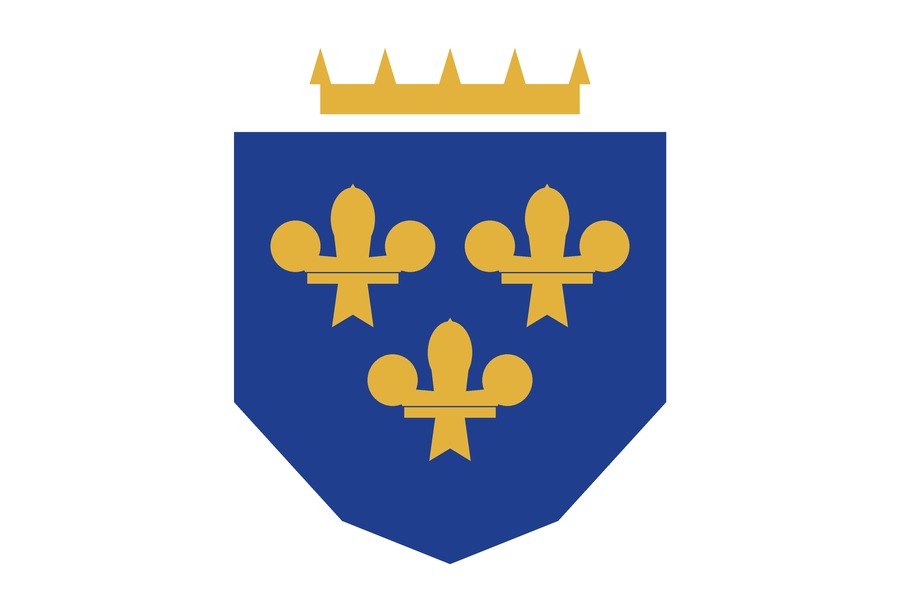
- Flags in 1716. White, the Bourbon colour: the King's ships fly the white flag with the royal arms, three gold fleurs-de-lis on blue, and French privateers fly white under their commissions.
One flag and trade system unite two colonial administrations. Fort-Royal on Martinique governs the older, wealthy Windward sugar islands. Younger Saint-Domingue, growing faster, has had its own governor general since 1 January 1714. Cargo legality falls to the intendant rather than the governor. Dates use New Style.
Trade and Economy
The Exclusif confines imports and exports to France, French vessels and authorised ports. Even a foreign ship from a neighbouring island is barred. A royal ordinance first prohibited foreign commerce on 10 June 1670; letters patent of April 1717 will restrict the trade to thirteen metropolitan ports. Enforcement fails along Saint-Domingue's long coast near Jamaica, despite Blénac's strict orders. French sugar reaches Antigua and Boston in 1716. In July, Leeward Governor Hamilton submits an Antigua act against French and other foreign sugar, rum and molasses.
Colonial sugar ships raw. Since 1684 the Crown has forbidden new island refineries, keeping refining in France. Martinique leads the older sugar economy. Saint-Domingue had 52 sugar works in 1701, but indigo still dominates its west and south. Small Martinique planters grow cocoa until a 1718 storm destroys the trees. Coffee arrives as a novelty in the 1720s. The declaration of 24 January 1713 excludes cane spirit from France (Trade and Shipping, The French and Spanish Frames); islanders continue producing cheap, unaged tafia.
Officials await salaries amid a shortage of money (Trade and Shipping, Money, Credit and News). Cattle, draught animals and timber cross the Spanish frontier; Curaçao sloops sell captives in French roadsteads.
January 1716 letters patent open Guinea-coast commerce to private merchants from Rouen, Nantes, La Rochelle and Bordeaux. The Crown pays about 13 livres for each captive landed. Nantes dispatches two ships in 1716, down from twenty in 1715. Between April 1714 and August 1716, 2,635 people are landed at Cap-Français.
Louisiana depends on rare French convoys for food, drink, arms, tools and cloth. Antoine Crozat has monopolised its trade since 1712. Exports include tobacco, indigo, rice, pelts and timber; the French Antilles buy wood, rice and maize.
Ships, Forts and Force
The compagnies franches de la Marine supply regular troops, dressed in grey-white coats with blue cuffs. Late pay drives soldiers to hire out for road and fort labour. Fort Saint-Louis at Fort-Royal follows a rebuilt Vauban design; Saint-Pierre's Saint-Nicolas battery overlooks the Anchorage. Cap-Français has batteries and timber barracks; stone barracks follow in 1720 and 1721. New Léogâne, laid out in 1709 to 1710, remains half finished, with barrack construction short of bricks.
France cannot spare a fleet. Naval losses in 1692 pushed the Marine towards commerce raiding; only 31 ships are seaworthy in 1721. Heritage sources credit Saint-Malo with over 900 armed vessels during 1688 to 1713. Shipowner's son Duguay-Trouin captured Rio de Janeiro for private investors in 1711. Cassard extracted ransoms from Surinam, Berbice and Curaçao in 1712 to 1713 and equips Argonaute in 1716. A 150-ton slaver is a typical merchant hull. A royal frigate's arrival usually announces a new governor.
Society and Law
Officials and planters govern. Saint-Domingue's councils sit at Petit-Goâve, established in 1685, and Cap-Français, in 1701. Martinique's planter council dates to 1645. Irish Jacobite officers settled the Plaine du Nord from 1691. White engagés owe three years' service for passage. Dominicans, Jesuits and Capuchins own estates and operate hospitals and schools. The Dominican Labat managed his order's sugar plantation and manned Basse-Terre's guns in 1703.
The Code Noir of March 1685 regulates slavery, registered at Martinique on 6 August 1685, Petit-Goâve on 6 May 1687 and Cayenne on 5 May 1704. It mandates baptism and Catholic instruction, prohibits other worship and expels Jews. Masters may chain and whip, but not torture or kill. A month's flight costs a runaway an ear and a fleur-de-lis brand; a second escape brings hamstringing, a third death. Striking a master's family or stealing a horse or cow is punishable by death. Freed people have other subjects' rights, although the edict of 24 October 1713 requires permission and a fee for manumission. Few free people of colour live here; discriminatory laws have yet to single them out. About 300 enslaved people rose at Quartier Morin in May 1697; a Martinique conspiracy led to 17 death sentences in 1710.
From 1660 to 1730
In 1660 France is proprietors; in 1664 the Compagnie des Indes occidentales bought the islands, failed, and was dissolved on 2 December 1674, and the Crown governs directly. The capital moved from Tortuga to Port-de-Paix in 1676 and to Cap-Français in 1711. The filibusters sailed from Tortuga and Île-à-Vache until the Truce of Ratisbon (1684) was meant to end them, and Ryswick (20 September 1697) left the French west of Hispaniola in place, without a clause ceding it. Cap-Français was burned in 1691 and sacked in 1695. Louisiana began with a fort of 81 men in 1699. The wars of 1702 to 1713 were raids and ransoms: The raids on Nevis in 1706 are told under Britain. Utrecht (11 April 1713) cost France its part of St Kitts. After 1716 the lull ends: the Gaoulé on Martinique (May 1717), Law's Compagnie d'Occident (1717), New Orleans (1718), war with Spain (1719 to 1720), and the Natchez rising of 28 November 1729.
In 1716
Defeat has brought peace; rapid colonial growth is still ahead. Blénac's successor, Charles Joubert de La Bastide, Marquis de Châteaumorand, takes office on 1 January 1717. Duquesne-Guitton obtained his post by renouncing Protestantism. His replacement, Antoine d'Arcy de La Varenne, will be arrested and shipped home by Martinique planters. Meanwhile, private slave trading, Exclusif enforcement and English seizures of French ships in the Bay of Hondo increase tensions.
Pirates, Privateers and Smugglers
Seizing French shipping in peacetime is piracy under both crowns' laws; a French captain's 1712 commission no longer protects him. Léogâne protests English attacks. On 18 June 1716 the intendant complains to Jamaica's Hamilton about Jennings and other captains fitted out in English ports; on 18 July Blénac condemns "daily robberies and piracys". Pirates claim French and Spanish vessels as fair prizes. Officials have legal grounds to arrest smugglers and private incentives to overlook them. See Era Rules, Law at Sea and Ashore and Infamy.
Meeting Them
- The Bay of Hondo Claim. Mr Morett, whom Blénac sent to Jamaica in late July 1716, wants a 32-gun French ship, taken in the Bay of Hondo on the coast of Cuba and shared out at Providence, accounted for. He will pay a finder's fee. The cargo has been spent.
- The Pork Barque. M. de Chouppe, writing from Léogâne on 24 July 1716, lost a pork barque to "an Irishman named Dennis". He wants the robber found and the load repaid, and Blénac has promised to speak for him.
- The Senegal Wreck. The goods of a wreck at Inagua belonged to the Royal French Company of Senegal and went to Bermuda. Its agent will pay for their recovery. Lacoste's Rum Line (Places and Campaign Tools) runs on the same law.
The Dutch
The Carriers and the Entrepôt

- Holds. Curaçao, with Bonaire and Aruba; Sint Eustatius, Saba and the south of Sint Maarten, under one commander; Suriname, Berbice and Essequibo on the mainland; Elmina and about a dozen forts on the Gold Coast, with a lodge at Ouidah.
- People. Curaçao about 6,000 around 1700, three in five enslaved; in 1713, 140 Jewish and 320 other European families. Suriname in 1713: about 200 plantations and 13,000 enslaved people.
- Trade. Salt, dyewood, hides and re-exports; cacao from Venezuela; sugar from Suriname; European goods to three empires' colonists; 500 to 600 enslaved people a year through Curaçao.
- Ships and Defense. The WIC's forts and small garrisons. No Dutch warship is known in the islands in 1716. The hull is the fluyt: 200 to 300 tons, 70 to 80 feet, 12 to 20 men.
- Officials in 1716. Jonathan van Beuningen, provisional governor of Curaçao. Johan Baron de Mahony, governor of Suriname. Peter van der Heyden Resen, governor of Essequibo. Hieronimus Haring, then from 12 May Abraham Engelgraaf-Robbertszoon, Director-General at Elmina.
- Reach. Era Rules: Infamy; Law at Sea and Ashore.
- Flags in 1716. The flag of the States General, horizontal red, white and blue (orange topped it before the 1660s). Ships of the Admiralties and of the Company fly it.

Europe's largest carrying trade remains Dutch, but Caribbean influence rests on commerce. The West India Company (WIC) administers colonies and forts. The Republic sends its own three-warship squadron to the Mediterranean against Algerian corsairs in 1716.
Trade and Economy
After the first company's failure, the WIC received a new charter in 1674, with five chambers and a reduced board. Amsterdam controls Curaçao and most slave trading; Zeeland administers Essequibo. Curaçao became a slave depot under the asiento of 5 July 1662, gained a large warehouse in 1668 and free-port status in 1674. Nine in ten captives were reshipped, half illegally. Dutch participation in Atlantic slave trading has fallen from a fifth in the 1650s and 1660s to below 7 per cent. Of every hundred people embarked in 1701 to 1725, Portuguese vessels carried about 44, British 38, French 11, Dutch fewer than 7 and Danish about half of one. Britain's acquisition of the asiento on 1 May 1713 cut Curaçao's imports to 500 to 600 from thousands annually; sales to Spanish America are now contraband. Only five ships sailed from Spain to Venezuela during 1700 to 1728, leaving Curaçao to supply the coast. Sephardic traders and seafarers of African descent bring cacao back on the "kleine vaart", sloop voyages of a few days each way.
The Navigation Acts of 1651 and 1660 attacked Dutch dominance by making Dutch traders in English ports smugglers. Informers receive a third of seized property. By 1715 New England imports about 100,000 gallons of Dutch molasses annually without duty.
The Society of Suriname has administered that sugar colony since 21 May 1683. Five Amsterdam merchants bought Berbice out of French occupation on 24 October 1714 for 300,000 guilders in cash, sugar and enslaved people; they now own it. Thinly settled Essequibo has one fort and a governor serving since 1707; river Indigenous peoples hold the real power. Sint Eustatius has a small roadstead, a Lower Town depot holding 400 to 450 captives, and Jewish merchants documented since 1660. Its "Golden Rock" years begin in the 1750s. Under the Treaty of Concordia of 23 March 1648, Dutch and French share Sint Maarten's salt ponds without a customs boundary.
Elmina chiefly handles gold and goods. A disputed tradition records Dutch payments to the Asante of two ounces of gold monthly. During the Komenda wars (1694 to 1700), England and the Dutch recognised mutual trading rights in 1698. At Ouidah, Dutch, English, French and Portuguese lodges buy from the same king.
Ships, Forts and Force
No fleet defends the Dutch islands. Curaçao's Fort Amsterdam houses the governor and WIC behind three-metre walls and seaward guns. Its director reported 53 recruits in 1701, several already feverish. Sint Eustatius's Fort Oranje, built in 1636, has 16 guns and relies on cisterns. Berbice keeps 60 soldiers at Fort Nassau and 20 to 30 elsewhere. Since the second Battle of Tobago in December 1677, forts and payments have replaced naval defence. Cassard obtained Curaçao's capitulation on 24 February 1713 and 747,350 guilders in goods and enslaved people from Suriname. France held Berbice until the ransom of 24 October 1714. The usual Dutch prize is a slow, capacious fluyt, almost unarmed and lightly crewed.
Society and Law
The Reformed church is established, while Jewish merchants anchor commerce. Curaçao's Mikvé Israel synagogue dates to 1703; 140 of its 460 European households were Jewish in 1713. Otrobanda was founded across the harbour mouth in 1707. Bonaire has salt works and hungry labourers, but no town.
From 1660 to 1730
In 1660 the Dutch are the carriers of the Caribbean, supplying English and French planters against the law. They took Suriname on 27 February 1667 and kept it at Breda. In 1687, two years after Coymans took the asiento, the WIC paid its highest dividend. By 1700 the WIC lives on the transit trade and Suriname sugar. French raiders ransomed the colonies in 1712 and 1713. In 1730 or 1734 the WIC's slave monopoly ends.
In 1716
Three years after Cassard's ransom, Curaçao has a provisional governor drawn from a ruling family. Britain's asiento makes every sale to Spanish America contraband; annual imports have fallen to a few hundred captives. Elmina changes Director-General on 12 May.
LEGEND
A single uncited summary reports a small Curaçao slave revolt in 1716 and ten death sentences, including one imposed on a woman named Maria.
Pirates, Privateers and Smugglers
No Dutch anti-piracy action is recorded for 1716. Governors who paid off Cassard favour buying their way out of trouble. Dutch cacao sloops off Curaçao attract Spanish guardacostas. See Era Rules, Law at Sea and Ashore.
Meeting Them
- The Interloper. A Dutch sloop master off Curaçao, probably a Sephardic trader, buys what a Company cannot sell in an English port, for coin and in half a day. His price is low; his hold is cloth and iron out and cacao back.
- The Cacao Run. A Curaçao house wants an escort on the run of a few days each way to the Venezuelan coast between Coro and Tucacas, where Spanish guardacostas chase Dutch sloops.
- The Tribute. Engelgraaf-Robbertszoon, new at Elmina on 12 May 1716, wants the monthly gold for the Asante escorted along the coast, and does not want the English at Cape Coast Castle to learn the amount.
Denmark, Brandenburg and Courland

St Thomas, a Neutral Port, and Two Lost Flags

- Holds. St Thomas (Charlotte Amalie, Fort Christian), St John (claimed, unsettled until 25 March 1718) and Christiansborg on the Gold Coast.
- People. St Thomas in 1715: 160 plantations, 547 Europeans and 3,042 Africans.
- Trade. Sugar and a foreign trade with Spanish, English and French buyers, at a 6 per cent tariff since 1704.
- Ships and Defense. Fort Christian (square, stone curtain walls, diamond bastions) and a harbour guard of six soldiers and fourteen colonists.
- Officials in 1716. Mikkel Knudsen Crone, Governor of St Thomas to 8 August; Erik Bredal, elected 5 September. Frantz Boye, commander at Christiansborg.
- Reach. Era Rules: Law at Sea and Ashore.
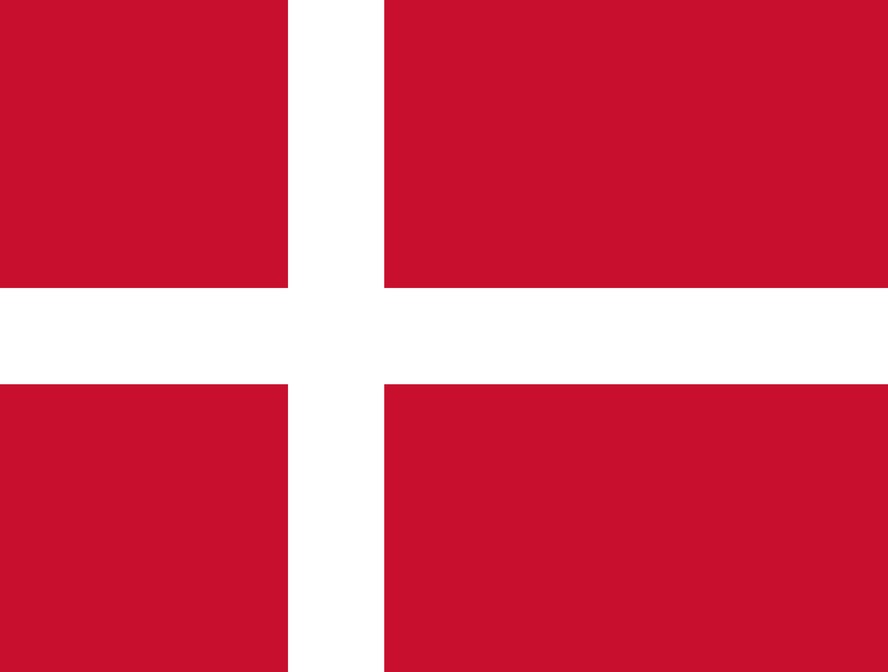
- Flags in 1716. The Dannebrog, a white cross on red, flies over Fort Christian and from Danish ships.
St Thomas was founded at a heavy cost: of 190 who sailed in 1672, 29 were alive a year later. Four taverns stood by the water in 1675. By 1680 the enslaved outnumbered Europeans, and by 1715 they did five to one. In the war after 1702 it was the one neutral port in the Caribbean, and its trade swelled; in 1699 Governor Lorentz turned Captain Kidd away. It is not a free port: in 1716 it is a hungry one, its planters' Spanish partners cut off by Utrecht. The planters sent a delegation to Copenhagen in 1715. On 16 August 1716 the king's resolution cut the emigration tax from 25 to 10 per cent and opened trade to all nations (except the Danish realm, Hamburg and Bremen) at 6 per cent on exports and 5 per cent on imports. Crone, who had traded with Puerto Rico's governor himself, died on 8 August; his council was later convicted of fraud. A privateer who brings a prize in faces a Danish prize inspection, not a free sale: Crone ruled in 1710 that prizes needed approval before sale.
St John remains unsettled despite Denmark's claim since 1675. Governor Esmit sheltered Jean Hamlin a generation earlier, in 1682 to 1684. Danish Guineamen are infrequent: about twenty vessels between 1697 and 1733, generally sailing in pairs.
- The New Governor. A Company with a prize at St Thomas in September 1716 meets Governor Bredal, elected on 5 September, and a council still loyal to Crone's debts.
Brandenburg's foothold has vanished. Benjamin Raule leased part of St Thomas for thirty years on 24 November 1685; Denmark seized it in 1693, and no factory is recorded in 1716. Gross Friedrichsburg at Pokesu on the Gold Coast is also near its end. Its last governor, Anton Günther van der Menden, serves in 1716 to 1717; Akan merchant-chief John Konny holds it from 1717 to 1724. Courland's Tobago settlement of 1654, with 45 cannon and 80 families, failed. Several powers claim the island in 1716, but none occupies its ruined forts. London merchants have held the Duke's title since 1681.
The African Company and the South Sea Company
The African Company
The Royal African Company
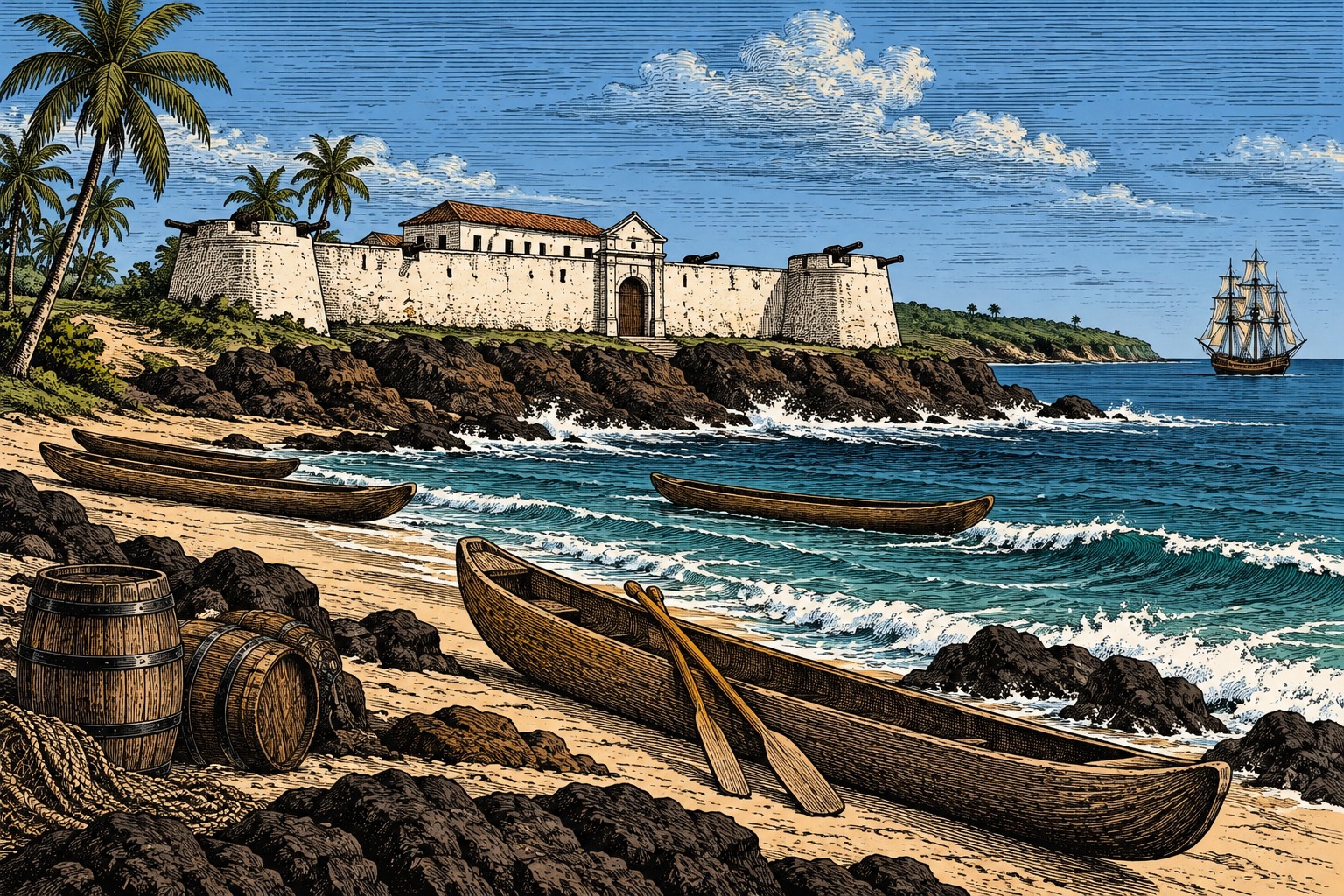
- Holds. Cape Coast Castle (English from 1664; a 1728 account is said to give it four bulwarks and 70 guns, a Legend), James Fort on the Gambia, William's Fort at Ouidah, and other Gold Coast forts.
- People. 186,748 people carried on 652 voyages, 1672 to 1731.
- Trade. Captives, gold (which coins the guinea) and ivory; cloth, kettles, iron bars, guns and brandy out.
The Company of Royal Adventurers was chartered on 18 December 1660, given the trade in people in 1663, and succeeded in 1672 by the Royal African Company, which got forts, troops and martial law. It moved about 5,000 people a year in the 1680s. The African Company was insolvent by 1708; Bristol entered the trade at once, and separate traders now carry most of it. On 23 February 1716 the Privy Council saw no need to send a warship to guard the African trade in peacetime. At Cape Coast Castle the African Company is landlord, jailer and court (Historical Reference, The Cape Coast trials). Fort James on the Gambia, English since Holmes took the island in 1661, about twenty miles up the river, is so ill supplied that about 1720 to 1721 its engineer, John Massey, turns pirate. The African Company supplied gold to the Mint from 1668 to 1722, and the guinea bears an elephant for it. It will give up slaving for ivory and gold dust in 1731. A full Guinea ship carries about 300 people with a crew of thirty to thirty-five and a surgeon (Trade and Shipping, The Crossing; Ships), and one voyage in ten meets a rising aboard. Pirates take a few captives and the gold, not the whole hold: a Guinea ship lost 40 captives and her gold off Jamaica in December 1716.
LEGEND
One account gives a 1713 contract to supply the South Sea Company at Jamaica: the African Company would charge 10 pounds per person over sixteen and 8 pounds for ages ten to sixteen. The basis of these prices is uncertain.
The South Sea Company
The Asiento Company
- Holds. The asiento from 1 May 1713 for thirty years: 4,800 people a year, 144,000 in all; one ship of up to 500 tons a year to Portobelo; offices at Buenos Aires, Caracas, Cartagena, Havana, Panama, Portobelo and Veracruz.
- Trade. A duty of 33 pieces of eight a head to the Spanish Crown, a quarter of the profits to the King of Spain, and an advance of 200,000 pesos.
- Ships. The Royal Prince, the first annual ship, sails in August 1716.
The South Sea Company was formed in 1711 to hold government debt against the Spanish trade. Its supply base is Jamaica: 1,230 people in the first year, 2,680 in 1714, about 13,000 in 1716 to 1717. In 1716 it protested a Jamaica duty on exported people reported as 40 shillings a head. London repealed Jamaica's duty acts in 1718. A pieza de Indias is a unit of account for a healthy adult, with children and older people counted as fractions, so the number of people is higher. Its factors are lawful English residents in Spanish towns, and the Kingston wharf in 1716 is a fight between company agents and the Assembly over the 40 shillings. Spain seized the company's American assets in 1718, which the company valued at 300,000 pounds. The share peaks at 1,060 pounds on 25 June 1720 and is under 200 by December.
The Other Companies
The Dutch WIC held its slave monopoly to 1730 or 1734. France's Compagnie du Sénégal (a third company, 1709 to 1718) and the Compagnie de Guinée, which held the Spanish asiento from 1701 to 1713, gave way to private merchants by the letters patent of January 1716, and John Law's Compagnie des Indes took the monopoly of the French trade in September 1720. The Danish company ran about twenty vessels. Portugal is the biggest carrier: its Cacheu and Cape Verde Company held the asiento from 1695 to 1701, and the Portuguese fort at Ouidah was begun in 1721. Portuguese ships carried about 19,000 people a year in 1701 to 1725, the largest flag, mostly from Angola to Brazil, a separate circuit a Caribbean Company rarely meets. The record read names no company agent on the ground at Cape Coast Castle or Kingston in 1716; a GM invents one.
Part Three: The Free Ports and the Free Peoples
The Free Ports and the Republic of Nassau

Harbours That Ask No Papers

- Holds. In the Bahamas, New Providence with Nassau, Eleuthera, Harbour Island and Spanish Wells: English on paper under the Lords Proprietors' grant of 1670, and without a governor at work from 1704 to 1718. Beyond them, Curaçao (a free port since 1674), Sint Eustatius and Danish St Thomas.
- People. New Providence had about 500 people in 1670; in 1706, 27 families; from 1707 to 1715 about 600 people on Eleuthera, Harbour Island and New Providence together (Nassau); in July 1717 a visiting captain found about 30 families at Harbour Island. Curaçao held about 6,000 around 1700, three in five enslaved; St Thomas, 3,042 Africans and 547 Europeans in 1715.
- Trade. Wrecks, salt, fish, turtle, conch, ambergris, braziletto. Curaçao sells Venezuelan cacao, tobacco, hides, mules and salt.
- Ships and Defense. Nassau's fort (built 1697; 22 guns taken and the work dismantled in the raid of 1703) has guns mounted again in 1716. Curaçao: Fort Amsterdam. St Thomas: Fort Christian and a harbour guard of six soldiers and fourteen colonists (1710).
- Officials in 1716. None at work at Nassau; Roger Mostyn, approved as Governor on 10 March 1716, is not shown to have sailed. Curaçao: Jonathan van Beuningen, provisional governor. St Thomas: Crone until 8 August; Bredal from 5 September.
- Reach. Nassau; Other Ports; Money and Credit; Infamy.
Trade and Economy
Wrecking sustains the Bahamas. Under the Eleutheran Adventurers' Articles and Orders of 1647, salvors kept a third of recoveries and shared rescued ordnance for defence. Bermudians settling New Providence in the 1660s called themselves wrackers and claimed all salvage. Islanders also produce salt, fish, turtle, conch, ambergris and braziletto. Bermudian salt raking began in the Caribbean in the 1630s and the Turks Islands in the 1670s; its fleet grew from 18 vessels in 1708 to 65 in 1716. At least 20 sloops equipped for the Spanish fleet's 1715 wrecks. Balchen's report of 13 May 1716 records twenty more following the first two from Jamaica.
Nassau lacks legal free-port status. Curaçao obtained it from the WIC in 1674, after becoming a slave depot in 1662. Its harbour asks few questions: about 90 per cent of captives landed are reshipped, half illegally. Sint Eustatius remains a small depot under one commander in 1716; formal free-port status follows in 1756, outside the play range. St Thomas's legal status also comes decades later. For now, the royal order of 16 August 1716 admits all flags at duties of 5 and 6 per cent.
Ships, Forts and Force
These ports have no navy. Nassau's fort was built in 1697, dismantled in 1703 and rearmed by pirates in 1716 (Nassau). Its crews first used two-masted rowing periaguas, then captured sloops. Spanish expeditions repeatedly destroyed the wreckers' settlements: burning them in 1684, sacking them in October 1703 and raiding again in 1706.
Society and Law
The Lords Proprietors retain their charter, and Admiralty judge Thomas Walker holds a commission, but the Bahamas lack effective government. Each Company's vote supplies its working law (Nassau, Who Rules). Before 1703, Nassau had about 250 white inhabitants and as many of African and mixed ancestry (Nassau, The People). Families inhabit separate settlements on Harbour Island and Eleuthera; Harbour Island's Sir Edmund Haldane is fictional (Adversaries). WIC law and merchants govern Curaçao, where Sephardic traders owned 34.5 per cent of wealth by 1702 (Churches and Faiths). At St Thomas, privateers must establish their identity and obtain approval before selling prizes.
From 1660 to 1730
Eleuthera is settled in 1648, New Providence from Bermuda in 1666, and the Proprietors' patent follows in 1670. Spain burns the settlements in 1684; Jamaica resettles them in 1686. Charles Town is rebuilt and renamed Nassau in 1695, the fort goes up in 1697, and in 1696 Henry Every buys shelter from Governor Trott. The raids of 1703 and 1706 end the town and, with it, the Proprietors' will to govern; Governor Birch finds Nassau abandoned in 1704. The Proprietors give up the government in 1717; Woodes Rogers lands on 27 July 1718 and holds against a Spanish force of about 1,200 in February 1720. A hurricane in 1729 brings down most of Nassau's houses. At Curaçao the asiento supplied from 1662 passes to Britain in 1713, and the depot's imports fall from as many as 4,400 people a year to about 500 to 600.
In 1716
On 13 September 1716 the Board of Trade calls the Bahamas the key to the Gulf of Florida, warning against French, Spanish or pirate possession. Walker reports pirates remounting the fort's guns in August. Jamaica's acting head describes the island as the sloops' chief rendezvous on 3 December. Curaçao has a provisional governor and reduced trade since 1713. St Thomas buries Crone and elects his replacement within four weeks.
Pirates, Privateers and Smugglers
Coin buys a Company welcome at Nassau, provided it brings no navy. Curaçao discounts risky cargoes; St Thomas demands fees and documents. See Law at Sea and Ashore for prize recognition, and Infamy and Money and Credit for the reach of a Name or purse.
Meeting Them
- The Wrecker's Third. A Harbour Island salvor claims one third of a wreck by the old Eleutheran custom against a Company that raised the cargo. The wreck lies in Spanish waters.
- The Turks Escort. A Bermuda salt master hires a Company to cover his sloops in the salt season against the sloops that hunt the rakers.
- The Discounted Prize. A St Thomas prize inspector refuses a sale. A Curaçao broker on the same quay will buy at a third less and ask nothing.

The Maroons and Free Black Communities

Hill Towns, Free Quarters and the Hold
- Holds. Maroon towns in the Blue Mountains and the interior of Jamaica; free quarters in Port Royal and Kingston; Havana's free militia companies; the free of Saint-Domingue and Martinique; the plantations and ships where most Black people of the Caribbean are held in bondage.
- People. Jamaica held about 7,000 white people and 55,000 enslaved in 1713, eight enslaved to every white person. Havana had four companies of free pardos and four of free morenos about 1700. Martinique in 1700 held 507 free people of colour and Indians beside 14,566 enslaved people and 6,597 whites. Landless free Black people in Antigua had to choose a master from 1702.
- Trade. Labour, skilled work, sea service, privateering.
- Ships and Defense. Maroon ambush and mountain towns; free Black companies in the Spanish colonial militia; the planters' militia and watch.
- Officials in 1716. The Maroon towns keep their own captains; the record names them only from about 1720 (Nanny, Quao, Cudjoe). Peter Heywood, acting at Jamaica; Vicente de Raja at Havana from 26 May; Mithon, French intendant at Léogâne.
- Reach. Prejudice markers: legal status; Origins in Character Creation and Roles; People Held Aboard.

Trade and Economy

Caribbean exports depend on labour. Jamaica surpasses Barbados in sugar during the 1710s or 1720s, depending on the accounts; by 1730 it has about 400 plantations. Trade and Shipping, The Crossing and The Landing and the Price, covers transportation, ships' loads, deaths, sales and prices.
Free Black sailors can earn shares. Roberts's two ships include 70 African men among 276, with 45 of 157 aboard Royal Fortune. La Buse's 64-man sloop is half French and half Black. San Juan's Miguel Enríquez, born to a freed woman about 1674, rises from shoemaker to privateer and Captain of Sea and War. In 1712 he becomes the first Puerto Rican knighted with the Medal of the Royal Effigy. A 1716 decree credits him with ten or twelve corsair vessels.
Ships, Forts and Force
Mountain passes, ambushes and concealed settlements protect Maroon communities from militia and redcoats. Morgan failed against Juan de Serras's Karmahaly Maroons in the 1670s; campaigns ordered in 1686 and 1702 achieved little. Free Black men also serve Spain as soldiers. Havana's eight pardo and moreno companies carry distinct flags. St Augustine has a Black unit from 1683 and, from 1726, a militia under Menéndez. In Jamaica a dispute with Francis Williams, a free Black man from a property-owning family, prompts the Assembly's 1724 ban on any Black person striking a white person, even in self-defence.
Society and Law
Legal status determines rights. Jamaica's 1664 slave code copies Barbados's 1661 code (Britain, Society and Law). Legally freed people live among the enslaved; fugitives maintain independent settlements inland. Proof of freedom requires papers. France's Code Noir of 1685 grants freed people other subjects' rights, but from 1713 manumission requires permission and a fee (France, Society and Law). Saint-Domingue's discriminatory legislation against free people of colour begins in the 1760s, outside this book; no count of free people of colour for 1700 to 1730 is given here. Martinique first regulates their dress in 1720.
Enslaved Jamaicans rise against plantation rule: 200 in St Ann in 1673, then about 300 to 500 at Sutton's Clarendon estate on 31 July 1690. The latter kill the owner and overseer, and over 200 remain free. Both risings strengthen the Leeward Maroons; sources disagree over which founded them (Historical Reference, Risings in Jamaica). For Barbados, Bermuda, Saint-Domingue and New York risings, see Trade and Shipping, On the Plantation.
From 1660 to 1730
When the English took Jamaica in 1655 the Spanish freed or lost their enslaved people, who formed communities in the hills; the Windward Maroons date from those years. Juan de Bolas came over to the English in 1660, and Governor Lyttelton signed the first Maroon treaty with him in 1663; he was killed in an ambush in 1663 or 1664. Modyford declared war on Juan de Serras's Karmahaly Maroons in 1665. The Leeward Maroons grow from the risings of 1673 and 1690. About 1720 a stronger Windward community forms around Nanny Town under Nanny and Quao, and Governor Lawes signs with the Miskito king Jeremy II on 25 June 1720 for fifty men to track Maroons (Historical Reference). The First Maroon War begins about 1728; the treaties with Cudjoe (1 March 1739) and Quao (1739 or 1740) lie past the range. Spain, meanwhile, founds Curiepe in 1721 as a town of free Black settlers to guard the Venezuelan coast.
In 1716
Jamaica's oldest Windward towns have survived sixty years. The island holds eight enslaved people per white inhabitant. Heywood governs in place of a royal appointee from 1716 to 1718, alongside an Assembly with fifty years of disputes against governors.
Pirates, Privateers and Smugglers
The GM and table decide a Maroon town's response to a Company; the record supplies none. Capturing a slaver puts people's lives to the Company's vote. Pirates took skilled captives, especially surgeons. Those held aboard need food; the Company's articles govern whether sale is allowed (Era Rules, People Held Aboard; Trade and Shipping). A free Black seaman accepted as a hand in Nassau risks detention in Spanish Town.
Meeting Them
- Papers. A free Black seaman of a Company is held in a Port Royal watch-house because his papers are lost. The watch-keeper knows his price.
- The Reward. A Clarendon planter's agent offers a reward for a runaway he says is aboard a Company's prize. The man signed the Company's articles at sea.
- The Free Companies. A Havana militia captain of pardos wants a Company to carry a letter to a brother in St Augustine, where a Black unit has stood since 1683.
The Peoples of the Islands and Coasts

Miskito, Kalinago, Southeastern Nations and Taíno
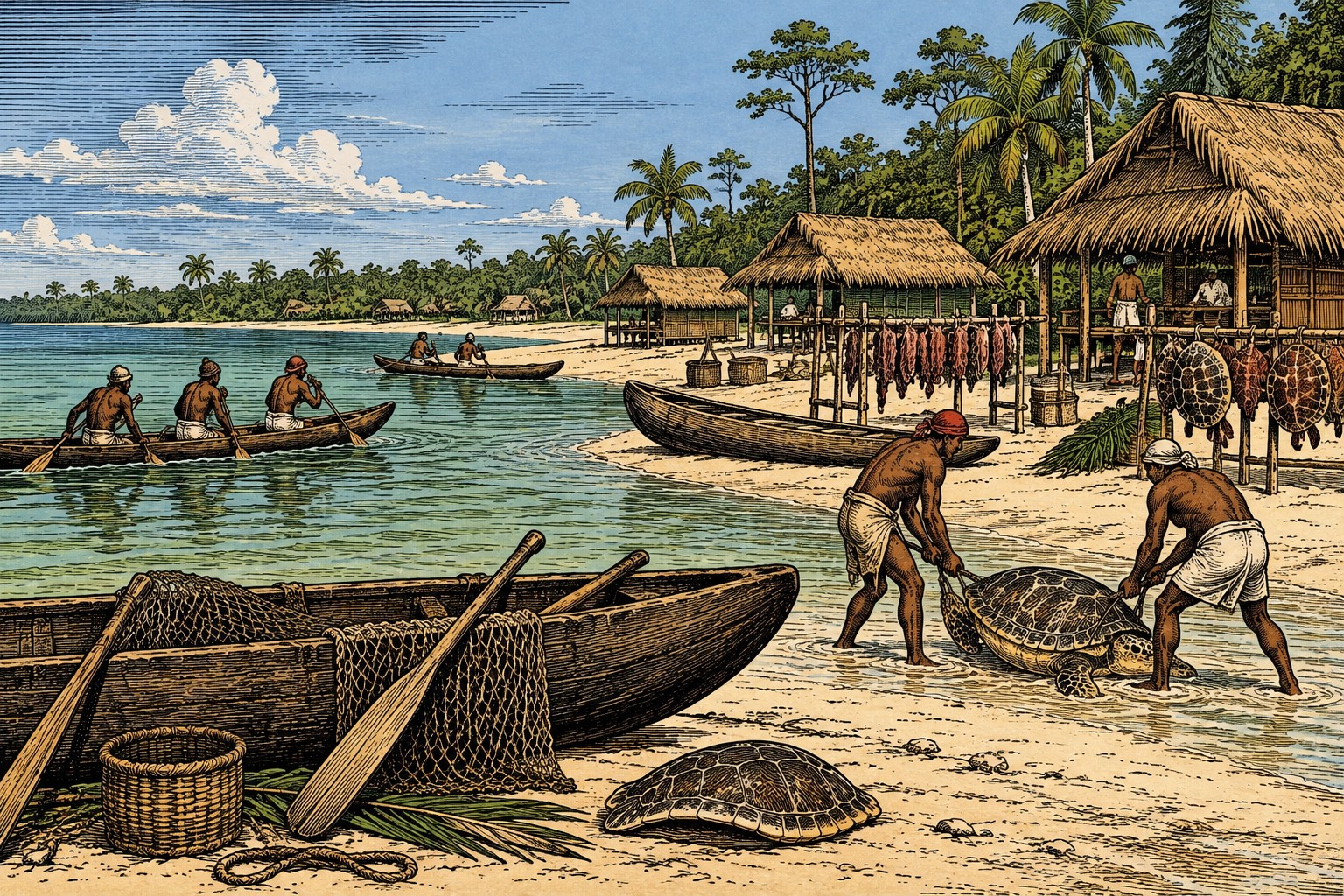
- Holds. The Mosquito Coast (Miskito); Dominica and St Vincent (Kalinago); the Southeast (Yamasee, Creek, Cherokee and Apalachee); small Taíno communities in eastern Cuba, Puerto Rico and the Jamaican hills.
- People. The Yamasee counted 413 men and 1,215 people in 1715, before the war; the wider Yamasee confederacy was above 4,000 early in the century. St Vincent holds several thousand people, most of them Black Caribs. Apalachee had 14 missions and about 8,000 people in 1680; fewer than 650 were counted on the Savannah in 1715.
- Trade. Deerskins: Carolina exports about 54,000 a year from 1699 to 1715. Turtle shell, meat, timber and hides from the Miskito; guns, powder, beads, cloth and rum come back.
- Ships and Defense. Miskito sea service in English ships; Kalinago raids by sea; in 1715 the Carolina record puts the enemy at 8,000 to 15,000 against 1,500 to 2,000 white men.
- Officials in 1716. Jeremy I, king of the Miskito, to 1718. Brims, mico of Coweta. Robert Daniell, Carolina's Deputy Governor.
- Reach. Prejudice markers: nation and faith; Origin: Indigenous; Gear and Prices.
Trade and Economy
Each nation has its own trade. The Miskito sell turtle shell, meat, timber and hides, take English beads, rum, clothing, firearms and training, and sell captives from raids as far as Yucatán and Costa Rica to Jamaica traders for the sugar estates. The Creek, Cherokee and Yamasee feed the Carolina deerskin trade; a Cherokee agreement of 1717 prices a gun at 35 skins, a yard of strouds at 8 and a white duffel blanket at 16. A trader's pack carries guns, powder, bullets, flints, knives, hoes, kettles, hatchets, looking glasses and rum. Carolina also exported 24,000 to 51,000 Native captives between 1670 and 1715, and before 1720 sold as many or more Native captives as it imported Africans. Carolina's census of 1708 counts 4,100 enslaved Africans and 1,400 enslaved Indians. Households holding Native slaves fall from 26 per cent in 1714 to 2 per cent in 1730.
Ships, Forts and Force
The Miskito are English allies who strike turtle and manatee and are esteemed by privateers as fishermen, hunters, navigators and fighters. The Kalinago are a sea power as well as an island people: the Kalinago and the mainland Kalina raided Dutch Tobago in 1668, with the Nepoyo of Trinidad, and Suriname's settlements, Jodensavanne among them, in late 1678. St Vincent turns back a French force in 1719 (some accounts 1717) and a British attempt in 1723. The Creek meet Carolina's trade and Spain's gifts with a policy: Brims, mico of Coweta, negotiates the Coweta Resolution in 1718, under which the Creek stay neutral between Britain, France and Spain and trade with all three.
Society and Law

The Miskito are scattered communities in which the king and the governor hold power only in war, and no European settlement stands on the Shore in 1716, only traders; the Sambu hold the titles of King and General in the north and the Tawira those of Governor and Admiral. The Sambu descend from Africans wrecked on the coast who married into the Miskito. Jeremy took a commission under the seal of Jamaica in the Duke of Albemarle's time, 1687 or 1688; Oldman was received by Charles II. The Kalinago of Dominica and St Vincent hold two islands that the crowns leave to them. In 1626 English and French settlers on St Kitts killed about 120 Kalinago, including the chief Tegremante, ninety years before the map year, and by 1640 the Kalinago of St Kitts had been removed to Dominica. By the early eighteenth century St Vincent's population is mostly African-descended. French woodcutters from Martinique and Guadeloupe camp on Dominica; there is no governor. The Yamasee are a people of several nations, first named in Spanish papers in 1663, who revolted in 1687 when the Spanish tried to ship captive Yamasee to the West Indies and moved into Carolina, then fought Carolina in 1715 over debts, enslavement and land. The Taíno were declared extinct in Spanish papers as early as 1550, and small communities persisted: Jiguaní in eastern Cuba was founded in 1701 on land an Indigenous pueblo donated, and Taíno and African people intermarried in Jamaica's Blue Mountains. Curaçao kept about thirty Taíno families after 1634.
From 1660 to 1730
France and England sign a treaty in 1660 confining the Kalinago to Dominica and St Vincent. Moore's raid on the Apalachee in January 1704 breaks their missions; by the end of 1706 Spanish Florida is reduced to St Augustine and Pensacola. The Yamasee War begins in April 1715 and the Cherokee ally with Carolina in early 1716; the war's dates are in the Historical Reference, The Yamasee War. Peace with the Creek comes in late 1717; the French build Fort Toulouse at the fork of the Coosa and Tallapoosa the same year. Yamasee refugees go south to St Augustine and Pensacola.
In 1716
War continues along Carolina's frontier (Other Ports, Charles Town). Britain, France and Spain all seek Creek support. Miskito pilots bargain for powder and muskets.
Pirates, Privateers and Smugglers
Companies seeking water, turtle, landing places or guides can hire Miskito pilots and hunters. The record supplies no account of Kalinago or Yamasee dealings with pirate Companies.
Meeting Them
- The Pilot. A Miskito pilot offers a passage through a lagoon's reef for powder and muskets, and says an English trader promised the same last season and did not come back.
- The Skin Price. A Charles Town trading house offers guns for deerskins to be carried up the Altamaha. The nation at the other end has been at war with Carolina for a year.
- The Mico's Message. A Coweta messenger needs a letter carried to St Augustine and another to Charles Town, and will pay for neither to be read.
Churches and Faiths
Establishment, Holy Office and Dissent
- Holds. The Church of England in the English colonies, with the Bishop of London's commissaries and the Society for the Propagation of the Gospel (chartered 16 June 1701). The Catholic Church in Spain's and France's colonies, with the Inquisition tribunal at Cartagena de Indias (1610) and the Dominicans, Jesuits and Capuchins of the French islands. Sephardic congregations at Curaçao, Spanish Town, Kingston and elsewhere. Quakers in Pennsylvania. Huguenots on St Kitts and in Suriname.
- People. Curaçao had 140 Jewish families in 1713 beside 320 Dutch and other northern European families. About 1720 some 18 per cent of Kingston's people were Jewish.
- Trade. Church livings, plantations (the SPG's Codrington estates in Barbados held 600 to 1,200 enslaved people from 1710), hospitals and schools.
- Officials in 1716. Gordon, the Bishop of London's commissary at Barbados; Lowther, governor there.
- Reach. Prejudice markers: faith; Cover and Sponsor (Era Rules, Prejudice); the Chaplain, Priest or Pastor and Minister Roles.
Society and Law
Church authority forms part of colonial law. Anglicanism is established in English colonies. Pennsylvania's Quaker Council sought Gookin's removal after the deputy governor interpreted a parliamentary act as excluding Quakers from office. Gordon, London's episcopal commissary at Barbados, disputed an ecclesiastical court with Lowther in 1717. London repeals Antigua's anti-Papist act in 1718.
Only Catholic worship is lawful in Spanish colonies. Cartagena's Inquisition tribunal covers the audiencias of New Granada, Santo Domingo and Panama, the captaincies of Cuba, Nicaragua, Puerto Rico and Venezuela, and the Windward Islands. Indigenous people fall outside its trials. Sorcery, witchcraft and blasphemy form its main charges; early confiscations targeted prosperous free women of African descent. Across its entire history it punishes 767 people and holds five autos de fe. Little is recorded for 1716.
France's Code Noir of 1685 mandates baptism and Catholic instruction for enslaved people, prohibits other worship and orders Jews to leave within three months. Dominicans, Jesuits and Capuchins own estates and maintain hospitals and schools. The Dominican Labat modernised Fonds-Saint-Jacques, his order's sugar plantation, between 1694 and 1705.
From 1660 to 1730

Sephardic families come to Curaçao from Dutch Brazil and Amsterdam: about a dozen families in 1651, refugees in 1654, about seventy colonists in 1659. Mikvé Israel meets in a house in 1674, a new house in 1690 and a synagogue in 1703. By 1702 Sephardic merchants hold about a third of Curaçao's wealth. Jews settle at Port Royal after 1655, with a Jew Street; 31 Port Royal merchants petition against Jewish retailers in 1672; the Neveh Shalom synagogue is consecrated at Spanish Town in 1704 and Neve Tsedek built in 1719. In Barbados Jews may own sugar plantations from 1706; in Jamaica they can neither vote nor hold office. Governor Lawes is instructed to protect the Jewish settlers in 1718. Huguenots settle with Sommelsdijck's Suriname from 1683, and some are among the grantees of the French lands on St Kitts after 1713; all the St Kitts grants are annulled and the land sold from 1726.
Quakers, Huguenots and Others
Quakers are masters, merchants and seamen. Johnson records a Quaker master who carried eight pirates to Virginia and was given ten chests of sugar, ten rolls of Brazil tobacco, 30 moidores and some gold dust, worth about 250 pounds. A Scots Presbyterian congregation at Charles Town begins with the wreck of the Rising Sun, a Darien ship, in September 1700. The record read for this chapter has no Moravians before the range's end. The Code Noir's ban on other worship is itself the record that African worship went on in the French islands; the English and Spanish records read for this book are silent on it, and the Miskito, Kalinago and Southeastern nations kept their own rites, which no row describes. A GM who wants such a rite decides it at the table.
In 1716
Religion affects permission to land and the reception a Company receives. Catholics face hostility in English ports, as English chaplains do in Spanish ones. Church letters can help: Era Rules, Prejudice, defines Cover and Sponsor. Minister or priest is a Role; taking one aboard also brings a witness to the Company's conduct.
Pirates, Privateers and Smugglers
Crews make binding oaths outside church authority: without a Bible, Phillips's men swore their articles on a hatchet. Churches also collect estate income. Codrington's plantations and French religious orders fund chaplains and hospitals from their land.
Meeting Them
- The Chaplain's Passage. A minister asks passage to Jamaica and will say grace for a Company that keeps the lash off the ship's boy. He knows what the Company has done.
- The Factor. A Kingston merchant of the Jewish community, who may neither vote nor sit in the Assembly, will change a Company's Spanish silver at a fair rate. He wants a letter carried to his partners at Curaçao that the customs house must not see.
- The Friar's Estate. A Dominican at Saint-Pierre will buy rum for his order and wants it delivered to an estate with no excise officer.
How the Powers Fit Together in 1716


Utrecht's peace of 1713 still holds between Britain, Spain and France in 1716. Their governments exchange complaints about maritime robberies while pirates exploit gaps in enforcement. The table summarises each power; figures refer to 1716 unless dated otherwise.
| Power | Holds | People and economy | Force | Officials | Trade partners | Meets a Company as |
|---|---|---|---|---|---|---|
| Britain | Jamaica, Barbados, Leewards, Bermuda, Carolinas, Virginia | Jamaica about 7,000 white, 55,000 enslaved (1713); sugar, tobacco, rice | A few small ships on the Jamaica station | Heywood (Jamaica), Lowther (Barbados), Hamilton (Leewards) | Colonies and Africa | Commission or Name |
| Spain | Cuba, Florida, Mexico, the Main | Havana a city of tens of thousands; silver | Armada de Barlovento, guardacostas, Havana's three castles | Raja at Cuba from 26 May | Contraband with Curaçao and Jamaica | A pirate or a smuggler |
| France | Saint-Domingue, Martinique, Guadeloupe | Saint-Domingue 6,668 white, 35,451 enslaved (1715) | About 600 Marine regulars in the Windwards (1713) | Mithon at Léogâne; Blénac wrote 18 July | Bordeaux, Nantes; Curaçao sloops | A pirate if it takes a French ship |
| The Dutch | Curaçao, Statia, Suriname, Gold Coast forts | Curaçao about 6,000 (c. 1700), three in five enslaved | Company forts, little fleet | Van Beuningen at Curaçao | Spanish Main; everyone's smugglers | A buyer with no questions |
| The Danes | St Thomas | 3,042 Africans, 547 Europeans (1715) | Fort Christian, six soldiers and fourteen colonists (1710) | Crone, then Bredal | All flags from 16 August | A prize inspector |
| The African Company | Cape Coast Castle, Gold Coast forts | Insolvent since 1708 | Said to be a fort of seventy guns (a 1728 account, Legend) | Agents at Barbados and Jamaica | Planters, private traders | A prize or a prisoner |
| The South Sea Company | The asiento | 4,800 piezas a year | One ship of 500 tons a year | Supercargoes | Spanish America | A danger to the contract |
| Nassau and the Free Ports | Nassau, Harbour Island, Eleuthera; Curaçao, St Thomas | Wrecks, salt, cacao, slave depots | Pirate-held fort; Fort Amsterdam | None at Nassau | Any Company with money | Welcome, and watched |
| The Maroons | Jamaican hills | Interior land, hill towns | Ambush and hill towns | Their own leaders | The estates' enslaved people, by night | A stranger at the gate |
| The Peoples | Mosquito Coast; Dominica and St Vincent; the Southeast | Deerskins, turtle shell; 54,000 skins a year (1699 to 1715) | War parties, canoes | Jeremy; Brims | Traders who arm them | A buyer, an ally or an enemy |
| Free Black communities | Free quarters; Havana's militia | Sea service, skilled labour | Militia companies | Their own militia captains at Havana and St Augustine | Each other | A shipmate or a contact |
| The Churches | Livings, plantations, tribunals | Land and hospitals | The Holy Office at Cartagena | Gordon at Barbados | Their flocks | A congregation or a cause |